
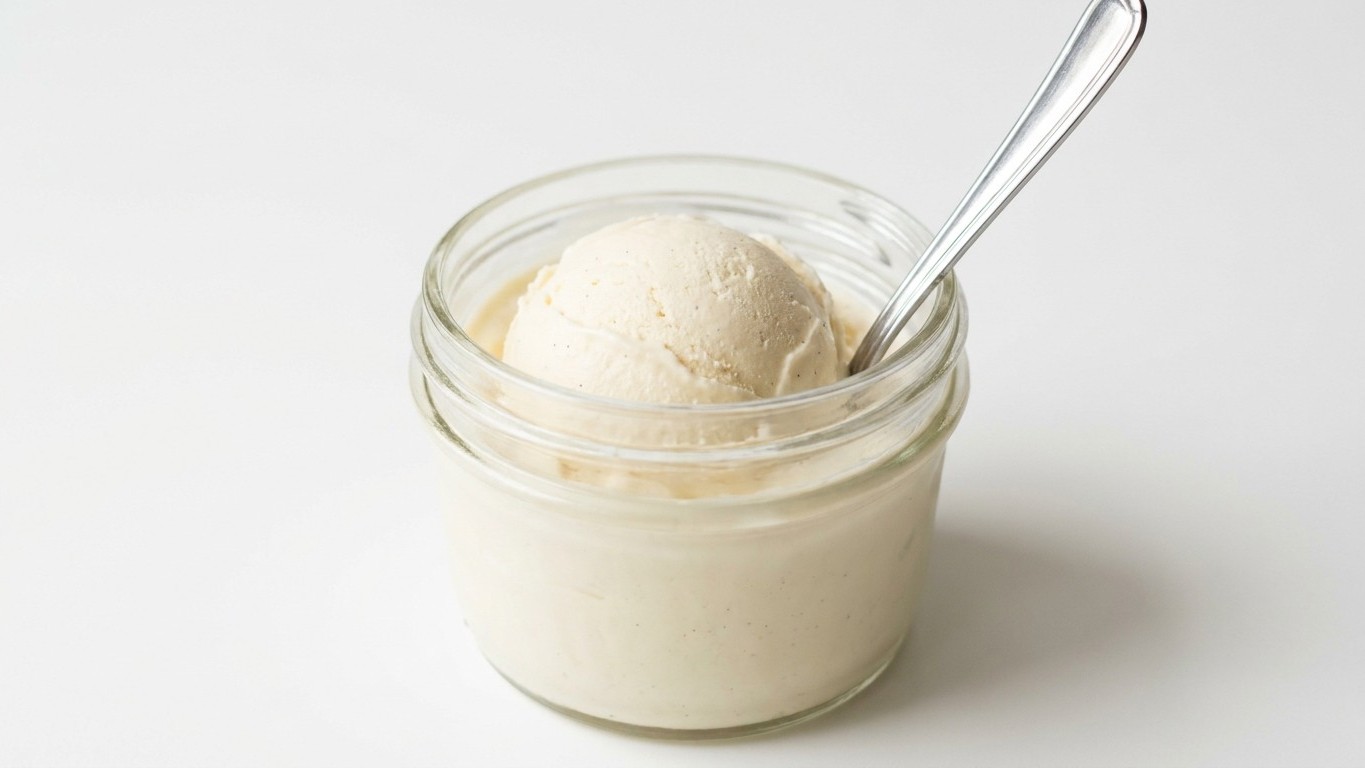
Grab a tub of vanilla ice cream that never seems to get icy, or a bagged salad dressing that stays silky for months in the fridge, and you’re holding two ingredients doing quiet work on your intestinal lining: carboxymethylcellulose and polysorbate 80. These emulsifiers keep oil and water from separating in thousands of packaged foods. They also happen to be the two additives most consistently shown, in lab and animal studies, to thin the protective mucus layer that lines the gut.
Key takeaways
- Two invisible additives in your freezer are opening a door you didn’t know was closed
- Your gut has a protective barrier—and these ingredients have a direct mechanism to weaken it
- Not everyone reacts the same way, but the personalized risk may be hiding in your microbiome
Two names you’ve never noticed on the label
Carboxymethylcellulose (listed as CMC or cellulose gum, additive code E466) and polysorbate 80 (E433) belong to a category of ingredients food Scientists call dietary emulsifiers. Polysorbate 80 (P80, E-433) is a low molecular weight surfactant, and sodium carboxymethylcellulose (CMC, E-466) is used as a thickener and an emulsion stabilizer. They’re everywhere, and I mean everywhere. Polysorbate 80 was listed as an ingredient on the labels of 2,311 products as of May 2025, while carrageenan appeared on 8,100 labels and maltodextrin on nearly 12,769.
You’ll find them in ice cream and frozen desserts, salad dressings, mayonnaise, packaged bread, cake mixes, coffee creamers, and even some liquid medications. Franchement, that’s the part that gets me: an ingredient meant to keep your dressing from separating is also showing up in fewer, but far from rare, chocolate coatings and gravy mixes. Some chemical names that appear on product labels don’t appear in the FDA’s “Substances Added to Food” inventory, and carboxymethyl cellulose is also known as carboxymethylcellulose and cellulose gum, which makes it genuinely hard for a shopper to spot on a busy ingredient list.
What actually happens to the mucus layer
Here’s where it gets less abstract. The gut isn’t just a tube; it’s lined with a gel-like mucus barrier that keeps trillions of bacteria at arm’s length from the intestinal wall. In the colon, this inner mucus layer is dense and largely impenetrable to bacteria under homeostatic conditions, and goblet cells synthesize the gel-forming mucin MUC2, which is essential for mucus barrier integrity and mucosal immune homeostasis. Disrupt that gel, and bacteria suddenly have direct access to cells they were never meant to touch.
That’s precisely what researchers have documented with these two emulsifiers. Carboxymethylcellulose and polysorbate 80 induce intestinal inflammation and metabolic syndrome by thinning of the intestinal mucus layer and altering gut microbiota composition, increasing gut epithelial permeability and lipopolysaccharide levels. Lab experiments on human gut lining cells make the effect almost visible: testing the effect of these emulsifiers on the protective mucus layer in petri dish cultures of human gut lining cells shows they can partially disrupt the protecting layer, with green staining marking the mucus and both emulsifiers cutting down its levels.
The bacterial fallout doesn’t stop at a thinner barrier. Non-absorbed food additives including CMC and P80 negatively impact intestinal microbiota, leading to microbiota encroachment and chronic low-grade intestinal inflammation, and detrimental impacts include depletion of the health-associated mucus-fortifying bacteria Akkermansia muciniphila. Losing Akkermansia is no small thing. This particular microbe essentially patches and reinforces the mucus gel; strip it away, and the barrier gets thinner from both directions at once, less mucus produced, less mucus maintained.
Interestingly, the two additives don’t behave identically once inflammation starts. CMC treatment significantly increased fecal inflammatory markers compared to P80 and water treatment by one week, and increased histologic inflammatory scores and colonic inflammatory cytokine gene expression compared with P80 and water controls in mice colonized with human IBD-associated bacteria. So this isn’t a single blunt mechanism, it’s two chemically different molecules converging on the same vulnerable structure through somewhat different paths.
The human data is catching up
Mice aren’t people, and for years that was the fair critique of this research. That gap started closing with an actual controlled feeding trial in humans at the University of Pennsylvania. Healthy adults consumed only emulsifier-free or CMC-containing diets in a double-blind controlled-feeding study, and the results were not reassuring. Carboxymethylcellulose consumption by humans impacted the microbiome, supporting the notion that wide use of this compound in processed foods may have contributed to increased incidence of chronic inflammatory diseases.
One nuance worth sitting with: not everyone reacted the same way. Responses to CMC and likely other food additives are highly personalized, and researchers are now designing approaches to predict which individuals might be sensitive to specific additives. That’s a genuinely counterintuitive twist. The additive isn’t universally toxic in the way a contaminant would be, it’s more like a stress test that some gut ecosystems shrug off and others don’t tolerate well.
Regulators, for their part, haven’t budged much. Under FDA regulation, polysorbate 80 remains classified as Generally Recognized as Safe for use in food, and the EFSA re-evaluation confirmed its safety as food additive E433. But even public health advocacy groups have started flagging the gap between decades-old approval standards and newer mucus-layer research. For patients already managing gut disease, the caution has been more concrete. As far back as 2020, an international organization for the study of inflammatory bowel diseases advised that, for people with those conditions, it “may be prudent to limit intake” of maltodextrin, carrageenan, carboxymethyl cellulose, and polysorbate 80.
What this actually means at the grocery store
Nobody needs to swear off ice cream forever over this. But scanning ingredient lists for “carboxymethylcellulose,” “cellulose gum,” or “polysorbate 80” takes about four extra seconds, and premium or minimally processed versions of the same products (bread, dressing, frozen dessert) frequently skip them entirely. The organisms most capable of rebuilding a thinned mucus layer, fiber-fed, Akkermansia-friendly bacteria, thrive on the very foods ultra-processed meals tend to crowd out: legumes, plantains, oats, fermented vegetables.
One detail from the emulsifier research rarely makes headlines: in tissue experiments, adding plantain fiber to gut samples exposed to these additives could reseal the barrier nearly as fast as the emulsifier had opened it. Adding fiber, in this case fiber from plantains, could seal up the gut wall tissue twice as tight compared to untreated tissue. The mucus layer, it turns out, isn’t a passive casualty. It’s a battlefield, and what you eat next may matter just as much as what you ate last.
Sources : ncbi.nlm.nih.gov | pubmed.ncbi.nlm.nih.gov