
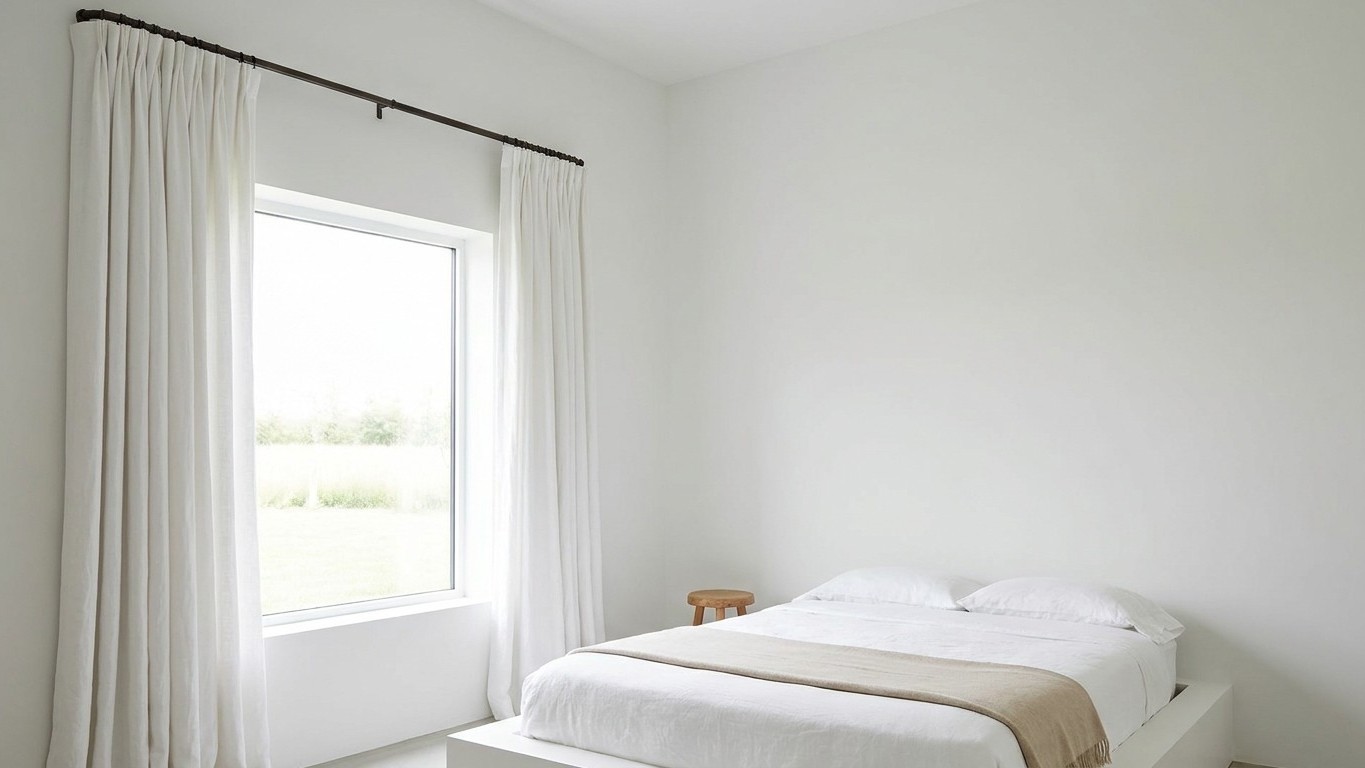
Most people install a curtain rod using one instinct alone: center it above the window frame, screw the brackets in, done. But the detail that actually shapes how a room reads to the eye isn’t the height of the rod. It’s the width, specifically those extra few inches of open wall on either side of the window that most homeowners skip entirely.
Roughly 20 centimeters, or about 8 inches, is the sweet spot interior designers keep coming back to. It’s recommended that each end of your curtain or tension rod extends 3 to 6 inches beyond the frame of the window on both sides. Some professionals push that even further. Curtain rods are placed about 4 to 8 inches above the window, and extend 6 to 12 inches beyond the window on each side. Eight inches sits right in the middle of that range, wide enough to matter, narrow enough to still look intentional rather than random.
Key takeaways
- A simple spacing rule most homeowners completely ignore could transform how spacious your room actually feels
- The exact measurement that separates a cramped window from one that commands the room
- Why hanging your rod higher AND wider works together in ways hanging just one way never could
Why a Few Inches of Bare Wall Change Everything
Here’s what actually happens when a rod hugs the window frame too tightly. The curtain panels, once pulled open, have nowhere to go but onto the glass itself. A rod that barely clears the window frame is one of the most common mistakes. It makes the window feel smaller, and it forces the curtain fabric to cover part of the glass even when open. That blocked light doesn’t just dim the room, it visually shrinks the one architectural feature that’s supposed to make the space feel open.
Extending the rod those extra centimeters solves a purely mechanical problem before it becomes an aesthetic one. The space between your window frame and the edge of the rod is called stack width. When your curtains are pulled back, they should cover just the window frame and nothing more or less. This does three things, it allows more light to fill the room, it makes the window look bigger, and it allows your curtains to hang neatly without being squished to the side. A window that gets to breathe on both sides reads as larger than its actual dimensions, and that illusion does more heavy lifting for a room’s sense of scale than most people give it credit for.
There’s a formula worth keeping in your back pocket if you want to get more precise than “a few inches.” A good rule to follow is to use a rod that is one-third wider than your window when allowing for stacking width. On a standard 54-inch window, that math plays out cleanly. For example, on a 54-inch-wide window, you could extend your curtain rods up to 9 inches on each side (54 divided by three equals 18, so your rod can be up to 72 inches long). That’s the difference between a curtain that hangs flat against the wall like an afterthought and one that gathers into soft, generous folds.
Height Still Matters, Just Not the Way You Think
Width isn’t the whole story, of course. The vertical placement of the rod plays its own role, and the mistake there is almost the mirror image: mounting the rod flush against the top of the frame instead of giving it room to climb. Hanging it too low can visually shrink your ceilings and make the whole room feel cramped. The trick designers use is to mount the rod 4 to 6 inches above the top of the window frame. This simple move draws the eye upward, creating an illusion of height that makes the entire room feel more spacious and airy.
Kelly Simpson, senior director of design and innovation at Budget Blinds, puts it plainly: “If your ceiling allows it, you’ll want to go higher than the window frame.” And when there’s a generous gap between the window trim and the ceiling, designers treat that space as an opportunity rather than empty wall. “If you have 6 to 12 inches between the ceiling and window frame, hang the curtain midway between the ceiling and the top of the window frame.”
The two adjustments, width and height, aren’t independent tricks. They compound. When you hang curtains higher and extend rods wider, you create both vertical and horizontal movement. This is what makes a space feel larger and more balanced. Skip one and the other does only half the work. A rod mounted high but kept narrow still traps light against the glass. A rod extended wide but hung too low still compresses the ceiling line. Franchement, it’s the combination that fools the eye, not either measurement in isolation.
What Changes With Ceiling Height
Standard 8-foot ceilings and 9-foot-plus ceilings don’t call for identical treatment. Higher ceilings (9-foot+) let you add drama: mount rods 8–10 inches above the frame (10–12 inches for 10-foot+ ceilings, or just below crown molding). In a lower-ceilinged room, the instinct should run the opposite direction, hugging the ceiling rather than splitting the difference. If your ceiling height is on the lower side, move the rod closer to the ceiling. This draws the eye upward and makes the room feel less compressed.
The width adjustment scales too, particularly once ceilings climb. Standard Windows: Follow the ceiling height rules above, 4–6 inches above the frame for 8-foot ceilings, 8–10 inches for 9-foot+. Keep the rod extended 8–12 inches beyond the frame on each side to make the window look wider. That upper range, close to 30 centimeters per side, is where designers land when a room already reads as generous and they want to lean into that feeling rather than just correct a proportion problem.
One measurement nobody talks about enough: fabric fullness. Even a perfectly placed rod looks thin and flat if the panels themselves are too skimpy for the width they’re covering. For a full, elevated look curtains should be 1.5-2 times the width of your window. For example, If your window is 60 inches wide, you’ll want about 120 inches of curtain width total. Get the rod placement right and skimp on fabric, and the whole effort still falls flat, literally.
Sources : theyellowdwelling.com | justaprettyspace.substack.com