
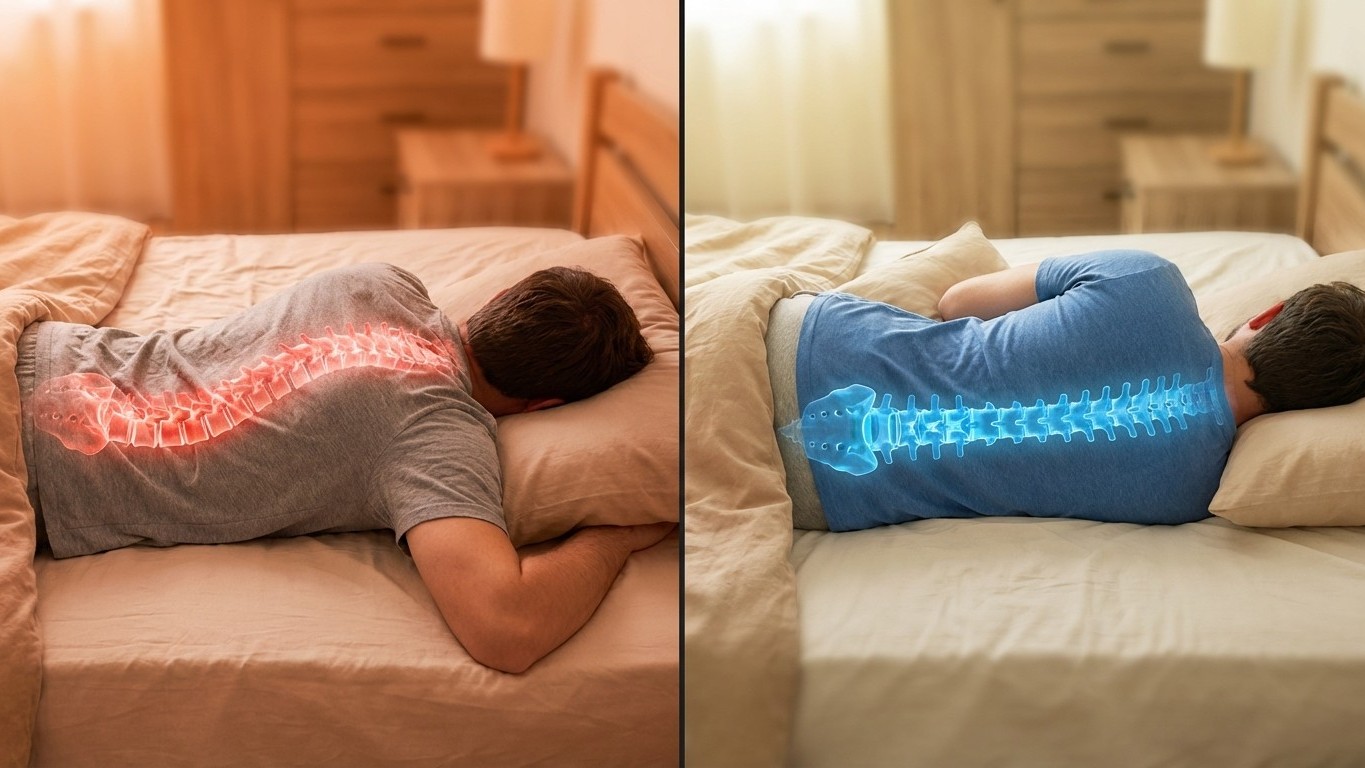
That cozy position you instinctively curl into every night might be the hidden culprit behind your Morning stiffness and chronic back pain. Physical therapists across the country are sounding the alarm about one particular sleep position that millions of Americans unknowingly rely on, despite its devastating effects on spinal Health.
The position in question? Sleeping on your stomach. While it might feel natural and comfortable initially, this face-down sleeping habit creates a cascade of biomechanical problems that compound night after night, leading to long-term damage that many People don’t connect to their sleep habits until it’s too late.
The Hidden Mechanics of Spine Destruction
When you sleep on your stomach, your spine is forced into an unnatural curve that maintains pressure on your Lower Back throughout the entire night. Dr. Sarah Mitchell, a physical therapist specializing in postural rehabilitation, explains that this position essentially creates a backward arch in your lumbar spine that your body was never designed to maintain for eight hours straight.
The problem extends beyond just the lower back. Stomach sleeping requires you to turn your head to one side to breathe, creating a twisted position that places enormous strain on your cervical spine. This rotation, held for hours, can lead to neck stiffness, headaches, and even compressed nerves that radiate pain down your arms.
What makes this particularly insidious is that the damage doesn’t announce itself immediately. Unlike acute injuries that cause immediate pain, the effects of poor sleep positioning accumulate gradually. You might notice increased morning stiffness, difficulty getting out of bed, or a nagging ache that seems to have no clear cause. These early Warning signs often get dismissed as normal aging or stress, when they’re actually Your Body‘s desperate attempt to signal that something fundamental is wrong.
The Ripple Effect Throughout Your Body
The consequences of stomach sleeping extend far beyond just back and neck pain. Physical therapists are increasingly documenting how this position affects the entire kinetic chain of the body. When your spine is misaligned during sleep, your body compensates by adjusting other structures, leading to a domino effect of problems.
Your hip flexors, the muscles that connect your thighs to your lower back, become shortened and tight from the prolonged arched position. This tightness pulls on your pelvis, creating additional stress on your lower back during daily activities. Meanwhile, your chest muscles become tight from being compressed against the mattress, leading to rounded shoulders and forward head posture that persists throughout the day.
The breathing implications are equally concerning. Stomach sleeping compresses your diaphragm and restricts your rib cage expansion, leading to shallower breathing patterns. This reduced oxygen intake can affect your sleep quality, leaving you feeling tired despite spending adequate time in bed. Some people even develop sleep-related breathing issues that they never connect to their preferred sleeping position.
Breaking Free from the Stomach Sleep Trap
Transitioning away from stomach sleeping requires patience and strategic planning, as this position often develops from deeply ingrained habits or underlying comfort needs. The most successful approach involves gradually training your body to accept new positions while addressing the root causes that make stomach sleeping feel necessary.
Side sleeping emerges as the optimal Alternative for most people, particularly when properly supported. The key lies in maintaining spinal alignment through strategic pillow placement. A pillow between your knees Prevents your top leg from pulling your spine out of alignment, while a supportive pillow under your head keeps your neck in a neutral position.
For those who find side sleeping initially uncomfortable, the transition can be eased by using a body pillow that provides support along your entire front side. This creates a sense of security similar to stomach sleeping while maintaining proper spinal alignment. Some people find success with a gradual approach, starting by sleeping at a slight angle rather than completely flat on their stomach, then progressively moving toward full side sleeping over several weeks.
Reclaiming Your Spinal Health
The journey away from destructive sleep positions isn’t just about avoiding harm—it’s about unlocking your body’s natural healing potential. When your spine is properly aligned during sleep, your intervertebral discs can rehydrate and repair themselves, your muscles can fully relax and recover, and your nervous system can function without the constant stress of compensating for poor positioning.
Many people report dramatic improvements in their daily comfort levels within just a few weeks of changing their sleep position. Morning stiffness decreases, energy levels improve, and chronic pain patterns that seemed permanent begin to fade. The investment in learning new sleep habits pays dividends not just in immediate comfort, but in long-term spinal health and overall quality of life.
Your spine supports you through every activity of your waking hours—it deserves the same support and care during the night. By recognizing stomach sleeping for what it truly is—a nightly assault on your spinal health—you can take the first crucial step toward better sleep, reduced pain, and a stronger, more resilient body.