
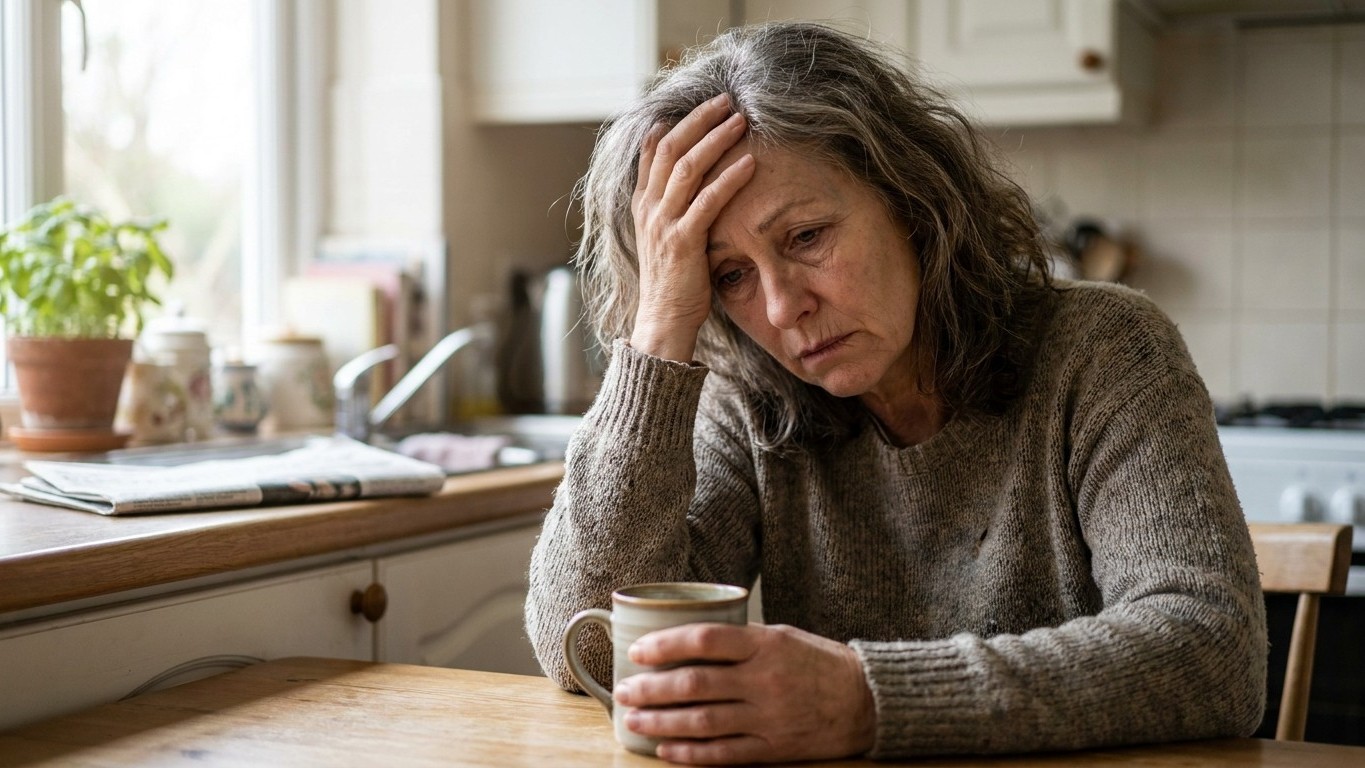
Morning headache that ibuprofen barely touches. A fog so thick you forget why you walked into the kitchen. An irritability that makes you snap at your partner over nothing. None of that sounds like sleep apnea, and that’s exactly the point, because for millions of women, this crushing daytime exhaustion, not loud snoring, is the real tell that their brain is starved of oxygen every single night.
For decades, the poster patient for obstructive sleep apnea has been a middle-aged man who saws logs loud enough to rattle the windows. That image isn’t wrong, but it’s incomplete. Obstructive sleep apnea is disproportionately under-diagnosed and under-treated among women. And the reason has less to do with biology being kind to women’s airways and more to do with the fact that doctors, partners, and women themselves have been trained to listen for the wrong noise.
Key takeaways
- Women with sleep apnea report dramatically different symptoms than men, yet doctors continue screening for the wrong signs
- Even mild sleep apnea in women produces daytime impairment comparable to severe cases in men
- Post-menopausal women are three times more likely to have sleep apnea, but the condition gets masked as menopause itself
The symptom that hides in plain sight
Women with obstructive sleep apnea are less likely to report daytime sleepiness and snoring when compared to men, and are more likely to report insomnia, depression, and morning headaches. That distinction Matters More Than it seems. Sleepiness is the urge to nod off during a boring meeting. What women describe instead is something closer to a bone-deep exhaustion that no amount of coffee or rest seems to fix, paired with brain fog, mood swings, and headaches that show up almost every morning.
Morning headaches are a common symptom in women with sleep apnea, caused by blood oxygen deprivation during sleep and a subsequent increase in blood pressure. That’s the mechanism worth remembering: the airway collapses, oxygen dips, blood pressure spikes to compensate, and the brain wakes up hours later with a headache that feels random but isn’t. Add to that restless legs, nightmares, and heart palpitations, and you get a symptom cluster that looks nothing like the textbook definition of sleep apnea, which is precisely why it gets missed.
A study presented at the SLEEP 2026 annual meeting drove the point home with numbers. Despite having a similar mean apnea-hypopnea index as men, women reported significantly higher scores for nocturia, headache, and nightmares, as well as worse scores for sleep disturbance, sleep-related daytime impairment, anxiety, anger, fatigue, depression, and cognitive function. women’s bodies were experiencing the same number of breathing interruptions as men’s, yet they felt considerably worse during the day. The lead researcher put it bluntly: current algorithms used by clinicians to diagnose and treat patients with obstructive sleep apnea continue to focus on classical symptoms and do not consider the broader range of symptoms women may experience.
Why even mild cases hit harder
Here’s the part that upends conventional wisdom: severity on paper doesn’t predict how much a woman suffers during the day. One study found that mild sleep apnea in women produces daytime impairment similar to moderate or severe apnea in men. A woman with what a sleep lab would call a “mild” case can walk around feeling as wrecked as a man with a severe one. That single fact should change how anyone, doctor or not, interprets a normal-looking sleep study result in a woman who insists something is wrong.
Part of the explanation lies in when the breathing interruptions happen. Women with OSA tend to experience a greater percentage of their breathing events during REM sleep and fewer during non-REM stages, which some experts argue could explain why less severe OSA has a greater effect on women. REM sleep is when the body does much of its emotional processing and memory consolidation, so repeated oxygen dips during that stage may hit mood and cognition disproportionately hard, even if the total number of events looks unremarkable on a report.
The menopause trap
Timing makes diagnosis even trickier. Post-menopausal women are more than three times as likely to have sleep apnea. The problem is that menopause itself produces an almost identical list of complaints. Menopause can also cause insomnia, headaches, and daytime fatigue on its own, which can make it harder for a person or their doctor to identify sleep apnea. A woman in her early fifties who mentions fatigue and brain fog to her physician is far more likely to walk out with a hormone conversation than a referral for a sleep study, even though the two conditions frequently overlap and compound each other.
The scale of the miss is staggering. Nearly 1 in 5 women have sleep apnea in the US, but about 9 in 10 women with sleep apnea don’t know they have it. That’s not a small gap in awareness, that’s a near-total blind spot, and it helps explain why some women spend years cycling through antidepressants, migraine medications, and thyroid panels before anyone thinks to ask how they’re actually sleeping.
The consequences of leaving it untreated go well beyond feeling tired. It is commonly mistaken for depression, hypertension, hypochondria, and other disorders. Untreated oxygen drops during sleep strain the cardiovascular system over years, not months, which is part of why researchers keep pushing for broader screening criteria that don’t hinge on whether a partner has ever heard snoring through the wall.
What actually helps
If mornings have felt like wading through wet sand for weeks, and the exhaustion doesn’t budge no matter how early the bedtime, that’s worth mentioning to a doctor as a possible sleep issue, not just a stress or hormone issue. A home or in-lab sleep study remains the only way to confirm the diagnosis, and treatment, typically CPAP therapy, tends to bring noticeable relief once the underlying breathing problem is addressed. Self-advocacy matters here too: women who believe they have sleep apnea may need to advocate for themselves, as the disorder is often misdiagnosed as menopause, depression, or high blood pressure.
One detail rarely makes it into the conversation: because women are more likely to attend medical appointments alone rather than with a partner who witnessed the night’s events, doctors often never hear the one detail that would have flagged the case immediately. So the next time a morning headache and a foggy afternoon feel unusually familiar, it might be worth asking not what’s wrong with the day, but what happened, unnoticed, the night before.
Sources : sleepmeeting.org | ubiehealth.com