
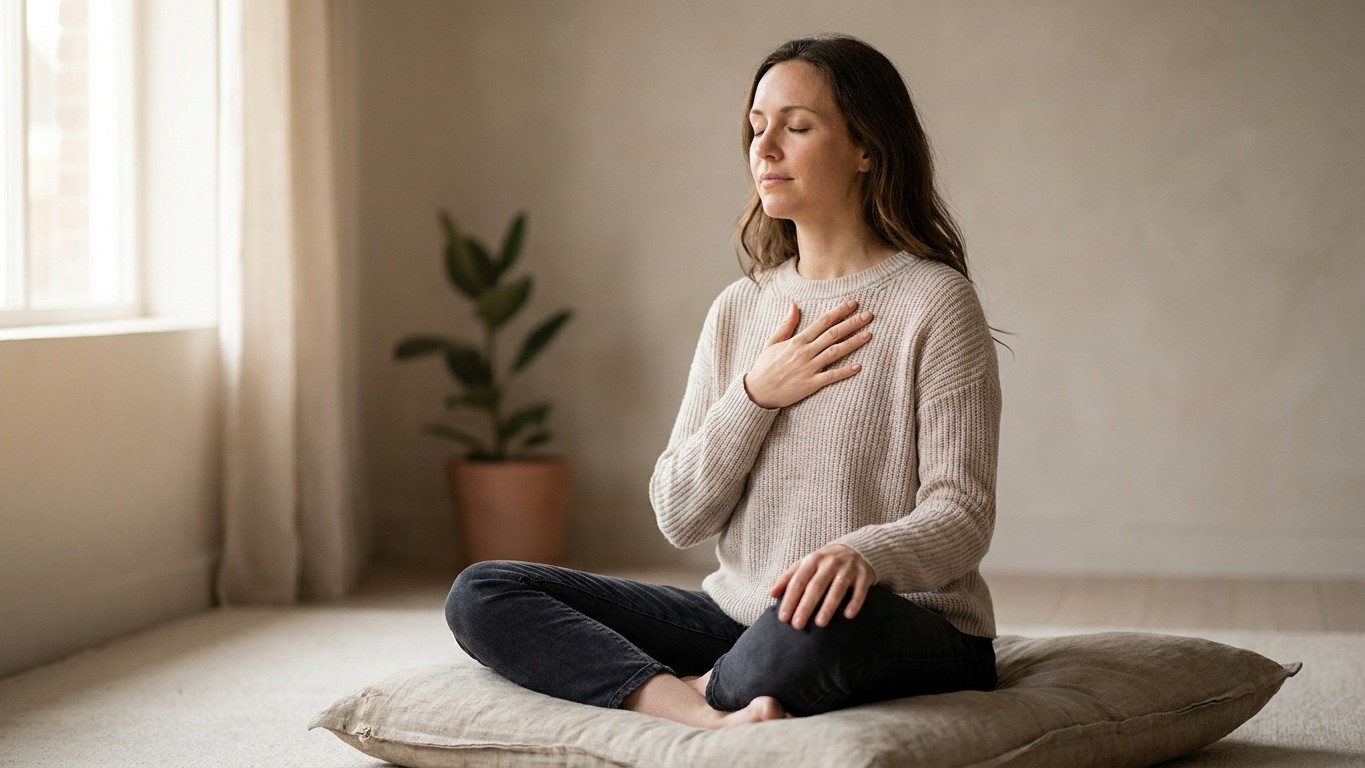
Twelve to twenty. That’s the entire range most healthy adults fall into at rest, and yet almost nobody has ever actually counted their own number. Grab a watch, sit still, count every inhale-exhale cycle for sixty seconds, and write it down. That single figure, according to physiologists, says more about what stress is doing to your nervous system right now than a mood journal ever could.
The exercise sounds almost too simple to matter. But respiratory rate, the count of breaths taken per minute, is one of the four core vital signs doctors track, right alongside pulse, blood pressure, and temperature. The normal respiratory rate for an adult at rest is from 12 to 20 breaths per minute. Fall outside that window consistently, and it’s worth paying attention.
Key takeaways
- Your resting breath rate (12-20 per minute) is a vital sign most people have never actually measured—and stress changes it before you feel anxious
- Two people feeling identical anxiety levels can show wildly different breathing responses, meaning your body’s reaction exists independent of how stressed you think you are
- The breakthrough: respiratory rate is the only major vital sign you can consciously override in real time, turning it into an actionable stress-management tool
Why counting breaths reveals more than you’d think
Here’s what makes this test genuinely revealing, not just another wellness gimmick. Psychological stress can result in respiratory patterns that differ from those produced by metabolic needs, since limbic, cortical, and forebrain regions receiving unpleasant feedback from the environment have a direct stimulatory effect on respiratory motor neurons of the spinal cord, increasing ventilation. Translation: your brain doesn’t wait for permission before it starts changing how you breathe. Stress hijacks the process before you’re even consciously aware you’re anxious.
Stress and anxiety activate your body’s “fight or flight” response resulting in rapid, shallow breathing. During stressful situations, the body activates the ‘fight or flight’ response, resulting in shallow, rapid breathing, also known as tachypnea. I find that detail almost comically appropriate, given how often we describe modern life as a low-grade emergency. Your body, quite literally, treats a stacked inbox the same way it once treated a saber-toothed cat.
The research backs this up with actual numbers, not vague impressions. A 2022 study using wearable ECG and respiration sensors found that RSP is closely related to autonomic nervous system activity: negative mood states such as anxiety and stress activate the sympathetic part of the nervous system, resulting in faster and shallower breathing during stress-inducing conditions. Researchers detected measurable shifts in mean breath rate between calm and anxiety-inducing states in controlled lab settings. The body doesn’t lie, even when we tell ourselves we’re “fine.”
What your specific number is telling you
So you’ve counted. Now what does the figure actually mean? For a healthy adult at rest, 20 breaths per minute is at the high end of the normal range, and while it can be normal for some individuals, a rate consistently at or above 20 could be worth monitoring. If you land at 18, 19, or 20 breath after breath, day after day, that’s your nervous system quietly signaling it’s running in a semi-activated state, even if you feel outwardly calm.
Go below 12 and the story changes entirely. A respiratory rate of 8 breaths per minute is below the normal range for adults and may indicate bradypnea, which can result from medication effects, neurological conditions, or respiratory disorders, and medical evaluation is recommended if this persists. Context matters enormously here, though. Someone who meditates daily or practices controlled breathing techniques might naturally sit at 10 or 11 breaths per minute without anything being wrong; it’s often a sign of a well-trained parasympathetic system rather than a red flag.
Age changes the equation too, and this is where a lot of people misread their own results. The regular respiratory rate changes with age, with 12 to 20 respirations per minute for a resting adult, but in the elderly population, an individual with more than 28 respirations per minute is deemed tachypneic. Fitness level shifts the baseline as well, since well-conditioned lungs and hearts process oxygen more efficiently, which tends to lower the resting count over time.
The counterintuitive part nobody expects
Here’s where it gets genuinely interesting, and slightly humbling if you’ve ever assumed your breathing rate directly mirrors how anxious you feel. A study on patients undergoing MRI scans, a classic anxiety-inducing scenario for people with claustrophobia, found something unexpected. Breathing rate increased during scan-related anxiety to about 19 breaths per minute on average and in some cases up to 30, but there was no correlation between subjective anxiety level and the actual breathing rate values.
your number can climb even when you don’t feel panicked, and two people reporting identical anxiety levels can show wildly different respiratory responses. The body sometimes reacts before, or independently of, the conscious feeling of stress. That’s precisely why the one-minute count is worth doing rather than simply asking yourself “am I stressed?” and trusting the answer.
The reassuring news is that this number isn’t fixed. A large 2024 study involving over 800 participants across two countries tested guided slow-breathing sessions and found something worth remembering next time your count comes back high. Slower respiration rates during a single-session breathing exercise are linearly associated with lower post-test anxiety levels in a large and varied sample. Researchers sampled deliberate rates as slow as six breaths per minute during the intervention, well below the resting norm, and still saw measurable calming effects.
Turning the number into action
Once you have your baseline, the real value comes from repetition, not a single reading. Count first thing in the morning before checking your phone, then again during a stressful afternoon meeting, then once more before bed. The spread between those numbers, more than any single figure, maps how reactive your nervous system actually is throughout an ordinary day.
What surprised me most digging into this isn’t that stress speeds up breathing, everyone half-expects that. It’s that the fix runs in the opposite direction too: respiratory rate can return to normal with stress management exercises, meaning the breath isn’t just a passive readout of your stress level, it’s one of the only vital signs you can consciously override in real time. Try counting again after five minutes of slow, deliberate breathing, and compare the two numbers side by side. That gap is the most honest conversation you’ll have with your own nervous system all week.
Sources : onlinelibrary.wiley.com | whoop.com