
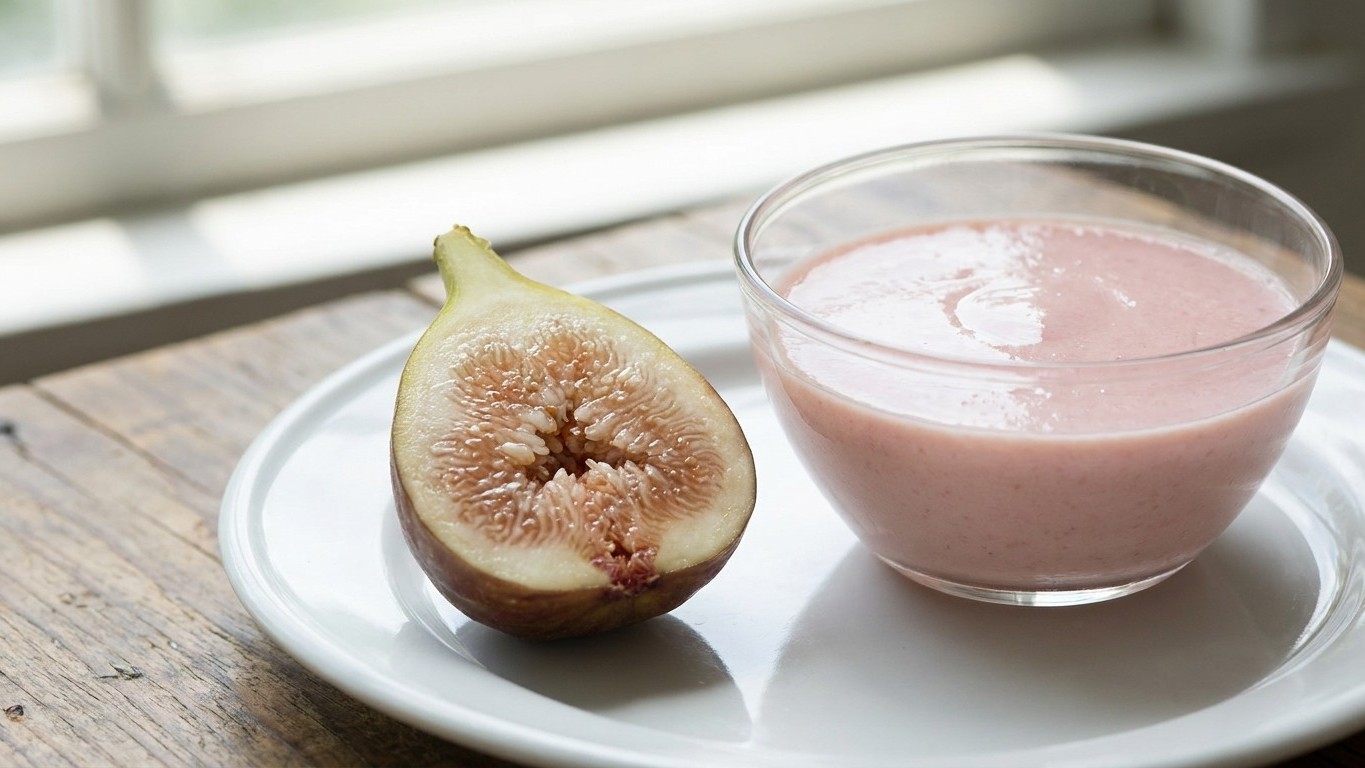
The mousse looks perfect in the bowl: silky, pale pink from the fig purée, whipped to soft peaks. Three hours later, it’s still soup. The gelatin gets blamed every time, an expired packet, a bad bloom, a mismeasured teaspoon. But the real saboteur is sitting right there in the fruit, doing exactly what nature designed it to do.
Fresh figs carry a protein-cutting enzyme called ficin, and it has one job: dismantling other proteins on contact. Gelatin, which is almost pure collagen protein, doesn’t stand a chance against it.
Key takeaways
- Ficin, a hidden enzyme in fresh figs, acts like molecular scissors that slice gelatin’s protein chains into unusable pieces
- Pineapple, kiwi, and papaya share this same destructive trait through different but equally aggressive proteases
- A single simmer destroys the enzyme’s ability to attack—but lukewarm temperatures are exactly where it thrives
The real culprit: ficin, the fig’s built-in scissors
Ficin is a proteolytic enzyme found primarily in the milky latex sap of the fig tree, though it’s also present in the unripe fruit, leaves, and stems. It belongs to a specific family of enzymes that food scientists have studied for decades because of how aggressively they behave in the kitchen. Cysteine proteases contain cysteine in their active site and are commonly encountered in fruit, including papaya (papain), pineapple (bromelain), fig (ficin) and kiwifruit (actinidin).
What that means in plain terms: ficin acts like a molecular pair of scissors, snipping the long collagen chains inside gelatin into pieces too short to link back together. The enzymes ficin (in figs) and bromelain (in pineapple) are proteases that break down the protein chains in gelatin, preventing it from forming a solid mesh. No mesh, no set. The mousse stays a mousse-flavored liquid no matter how much gelatin gets added, because the enzyme keeps cutting faster than the protein can reassemble.
Franchement, it’s a little humbling to watch. You can double the gelatin, chill the bowl for a full night, and the fig will still win. That’s not bad technique. That’s biochemistry doing exactly what it evolved to do.
Figs aren’t the only fruit playing this trick
This isn’t some obscure quirk unique to figs. It’s a whole club of fresh fruits that pastry cooks learn to distrust the hard way. Gelatin packaging often warns not to add fresh or frozen pineapple, kiwi, mango, gingerroot, papaya, or figs because the gelatin will not set. Kiwi contains actinidin, pineapple contains bromelain, papaya contains papain, and figs contain ficin. All four belong to the same broad enzyme family, all four attack the same target, and all four have humbled a home cook mid-recipe at least once.
The stinging sensation some of these fruits leave on the tongue is the same phenomenon in miniature. Figs also have a proteolytic enzyme called ficin, and interestingly, papayas don’t sting the tongue because, unlike pineapples and kiwis, they aren’t acidic; the acid and proteolytic enzyme combine to hurt your tongue. Fig latex is milder on the mouth but no gentler on gelatin.
What’s genuinely unexpected is how far ficin’s reputation travels outside the dessert bowl. Fig-derived aqueous solutions can hydrolyze gelatin, coagulated protein, cheese casein, and meat, and even digest parasite eggs such as roundworms and whipworms. Traditional medicine used fig latex as a deworming remedy long before anyone understood the enzyme responsible. The same molecule that wrecks a panna cotta has been used, in concentrated form, as a meat tenderizer and even a milk-clotting agent in cheesemaking.
Heat is the fix, not more gelatin
Here’s the workaround, and it’s almost too simple: cook the fig first. The enzymatic activity of ficin is destroyed by heat, which is why cooked or canned versions of these fruits lose their tenderizing and anti-gelling properties. A quick simmer, a few minutes of poaching, even a light roast, denatures the protein structure of ficin so it can no longer cut anything. Once that happens, the fig purée behaves like any other cooked fruit addition and the gelatin sets exactly as expected.
Canning proves the same point on an industrial scale. Canned figs, unlike fresh ones, solidified as expected in gelatin because the canning process includes a heating step that inactivates the enzyme before it ever reaches the mixing bowl. That’s the whole trick, no special product, no extra dose of gelatin sheets, just enough heat to switch the enzyme off before it touches the collagen.
Worth noting: ficin has a fairly specific comfort zone. Its optimal pH sits around 5.7 and its optimal Temperature is about 65°C, which happens to overlap uncomfortably well with the gentle warmth many mousse and bavarois recipes call for when melting gelatin into a base. A lukewarm fig purée folded into warm gelatin isn’t neutral ground, it’s the enzyme’s ideal working temperature. Pushing past a real simmer, rather than just warming through, is what actually shuts it down.
One more wrinkle worth knowing
Not every enzyme-bearing fruit behaves with perfect consistency, and that’s the detail most gelatin guides leave out. In one documented experiment, gelatin samples containing papaya and mango still solidified despite containing papain, and one possible explanation is that enzyme levels vary with ripeness. Figs likely follow the same logic: a fig picked slightly underripe, when latex concentration runs highest, will sabotage a mousse far more reliably than one that’s fully soft and sweet. So the next time a dessert refuses to set, check the fig before blaming the box on the shelf, and maybe give it thirty seconds in a warm pan before it goes anywhere near the cream.
Sources : quora.com | outerideas.com