
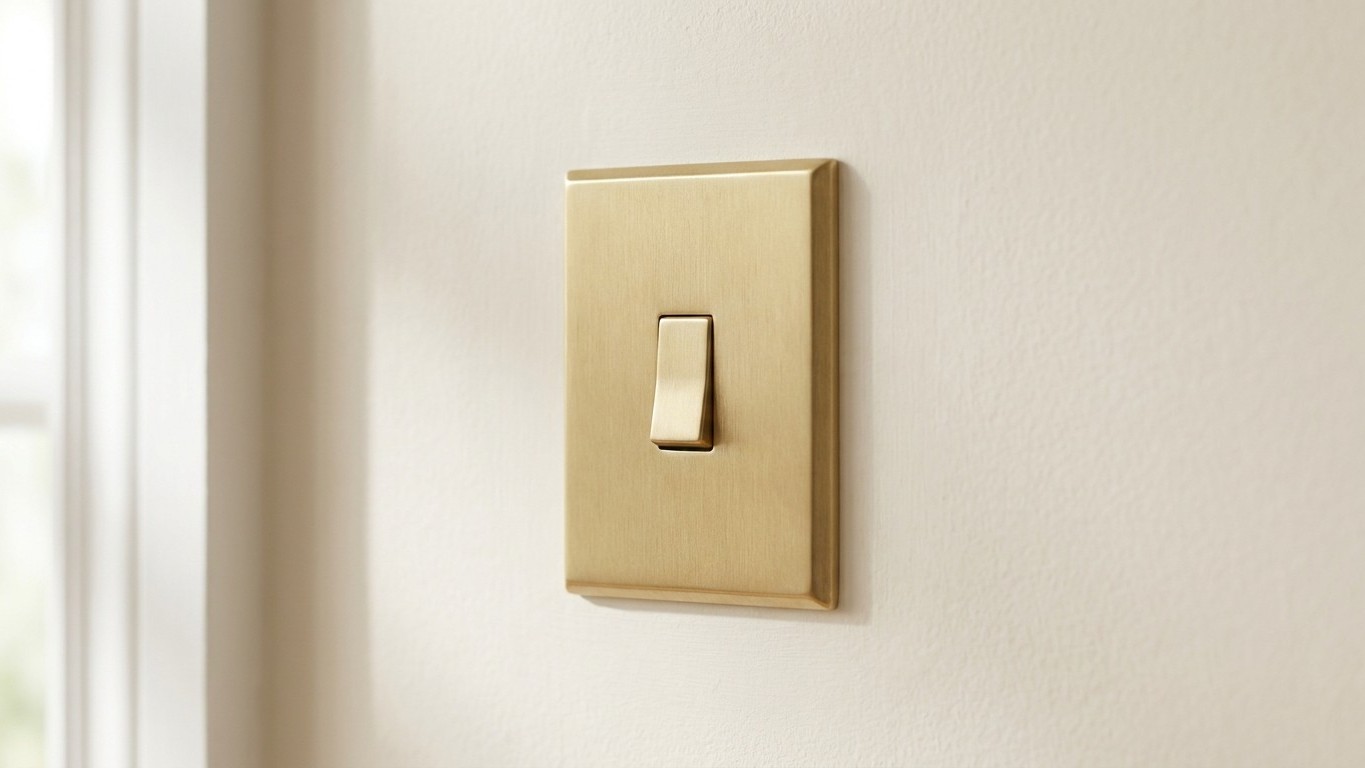
That yellowed almond-colored switch plate, the one with the two crooked screws staring back like tired eyes, isn’t getting a fresh coat of paint this year. It’s getting ripped off the wall entirely. Screwless, magnetic, metallic, sometimes touch-sensitive: the humble wall plate has quietly become one of the most reworked details in American homes, and the numbers back it up.
The category everyone used to ignore is now growing at a real clip. Market volume for light switch cover packs is estimated to be in the range of roughly 500–700 million units annually as of 2026, with revenue growth outpacing volume due to ongoing mix shifts toward higher-value products, reflecting steady renovation demand, rising adoption of decorative and smart-compatible products, and the gradual penetration of safety and screwless designs into the mainstream market. Translation: people aren’t buying more plates, they’re buying better ones. A basic plastic cover that used to cost pocket change is being swapped for something that actually looks intentional.
Key takeaways
- Screwless, magnetic switch plates are now the standard in luxury interiors, not an upgrade
- Over 68% of homeowners now demand smart features integrated into their switch plates
- High-end plate upgrades can boost property resale value by 5-15%, making this a legitimate investment
Screwless is the new baseline, not the upgrade
Forget hunting for a screwdriver every time you repaint. The plate everyone’s specifying now clicks or snaps into place, no visible hardware, no crooked screws catching the light at the wrong angle. Screwless (magnetic/clip-on) and slim-profile plates are dominating luxury interiors to provide a flush, minimalist look. It’s a small mechanical shift with an outsized visual payoff. A wall with zero exposed fasteners simply reads as calmer, more finished, less “builder-grade rental.”
The material story has shifted just as much as the mounting hardware. There is a surge in premium metallics like brushed brass and gunmetal grey, alongside sustainable materials such as recycled plastics and bamboo. Gone is the assumption that a switch plate has to be white plastic or nothing. Brushed brass in particular keeps showing up because it plays nicely with the warm, unlacquered hardware trend that’s dominated kitchens and bathrooms for a few years now. Matching your plates to your cabinet pulls sounds excessive until you see a hallway where every metal surface tells the same story instead of five different ones.
Color has crept in too, and not timidly. Plain white switches are being replaced by vibrant colours and unique finishes, from metallic gold to matte blacks, with designer switches in bold shades and textures acting as focal points in any room. Earthy, mocha-adjacent tones are showing up as well, inspired by Pantone’s Colour of the Year, with mocha brown switches complementing warm interiors. Honestly, treating a switch plate as a decorative object instead of an afterthought still feels a little indulgent. But walk into a room where the plate disappears into the wall color instead of announcing itself in scuffed beige, and the logic clicks immediately.
The smart layer nobody saw coming
Here’s where it gets less about aesthetics and more about function creep. Switch plates aren’t just covers anymore, some of them are the switch. Over 68% of homeowners now prioritize switch plates with integrated smart features like Matter and Zigbee connectivity, touch-sensitive capacitive sensors, and built-in energy monitoring. That’s a startling number for a product category most people can’t name a single brand from.
Dimmers, in particular, are having a moment that goes beyond mood lighting. Smart dimmer adoption among affluent residential consumers in North America and Northern Europe has accelerated home automation investment, with 34% of high-income households exceeding $150,000 annual income installing networked dimmer switches during 2025 and 2026. That’s not a niche gadget purchase anymore, that’s mainstream renovation behavior. And the broader market reflects it: the global dimmer switch market reached USD 0.78 billion in 2026 and is projected to grow to USD 1.45 billion by 2035, expanding steadily as demand rises for energy-saving lighting controls across homes, offices, retail spaces, and hospitality facilities.
What’s interesting is how invisible the tech is meant to be. Nobody wants a switch plate that screams “smart home.” The best ones on the market now look identical to a high-end mechanical plate, slim profile, no visible screws, until you tap it and realize it’s controlling a whole lighting scene. That’s the quiet flex of 2026 interiors: technology that performs but doesn’t perform for attention.
Why a two-dollar detail is suddenly a resale conversation
This is the part that surprises people. A wall plate swap sounds like the smallest possible renovation move, yet it’s being treated as a legitimate value driver. High-end switch plate upgrades can boost property resale value by 5% to 15%. That’s a wide range, and it obviously depends on the rest of the home, but even the low end of that figure is a strange amount of leverage for a part that costs a few dollars to replace.
Part of the explanation is structural. The structural aging of the United States housing stock, with the median age of owner-occupied homes rising above 40 years, is creating sustained demand for exactly this kind of low-cost, high-visibility refresh. A 40-year-old house has a lot of yellowed almond plastic hiding under fresh paint jobs, and buyers notice those tiny inconsistencies even when they can’t articulate why a room feels dated. Swapping every plate in a house takes an afternoon and costs less than a single throw pillow from a design showroom, yet it removes one of the last visible clues that a renovation was rushed or incomplete.
There’s also a European influence bleeding into American design conversations, where the plate is treated as part of the wall’s overall composition rather than an electrical necessity bolted on afterward. In premium homes across Italy and Switzerland, designers carefully match wall plates with door handles, lighting fixtures, and furniture accents to maintain visual unity. That level of coordination used to feel like overkill for anyone outside a design magazine spread. Now it’s showing up in regular renovation checklists, right alongside paint color and cabinet hardware, treated as one more decision instead of an afterthought nobody budgets for until the walls are already dry.
Sources : reports.valuates.com | cognitivemarketresearch.com