
The bag said Marketside iceberg, Best If Used By August 2, and it had been sitting in my crisper for four days before I even glanced at the recall alert on my phone. My first instinct was ridiculous in hindsight: I held it under the kitchen tap, swished the shreds around with my fingers, and told myself that was good enough. It wasn’t until a food-safety lab technician swabbed my draining board that evening, as part of a story I was reporting on the summer’s cyclospora outbreak, that I understood how naive that ten-second rinse had actually been.
Key takeaways
- A simple kitchen tap rinse spreads deadly parasites and bacteria across your entire countertop—and the lab proved it
- The FDA explicitly tells people to throw recalled produce away, not wash it, but most home cooks have no idea why
- Even ‘clean’ surfaces harbor thousands of pathogens after rinsing contaminated food—and your sponge makes it worse
The recall that started it
The lettuce in question came from Taylor Farms de Mexico, which said back in July it was voluntarily removing all iceberg lettuce sourced from central Mexico from the U.S. market, a recall that included Marketside-brand iceberg salad and shredded lettuce sold at select Walmart stores. Taco Bell pulled the same supplier’s lettuce the same day. By the time I was reporting this, the outbreak wasn’t a footnote anymore. The parasite behind an outbreak that had reached thousands of illnesses does not behave like the bacteria most people have in mind when they rinse a head of lettuce, and that difference explains both why the contamination happened and why washing would not have prevented it.
Former CDC director Robert Redfield put it bluntly on national television: “This is a very hard parasite to get off by washing,” he said. “It’s very sticky.” Cyclospora, unlike a lot of the bacteria we associate with food poisoning, doesn’t sit politely on the leaf surface waiting to be dislodged by tap water. And officials were explicit about it: rinsing alone may not remove cyclospora, and the CDC says cooking produce to at least 158 degrees is needed to kill the parasite.
Why rinsing never really had a chance
Here’s the part that reframed Everything for me. I’d always assumed washing was a meaningful safety net, a last line of defense between a contaminated bag and my dinner plate. It isn’t, not really. “It is very difficult to remove bacteria from leafy greens,” says James Rogers of Consumer Reports. “Bacteria have the ability to adhere to the surface of the leaves, and to get stuck in microscopic crevices.” Some pathogens go even further than sticking to the surface. Washing does not reliably remove E. coli from lettuce because the bacteria can attach to leaf surfaces and penetrate tissue through natural openings, which means the threat is sometimes living inside the leaf, not on it.
Francisco Diez-Gonzalez, who directs the Center for Food Safety at the University of Georgia, told me something similar when I called him for context. “Washing may not eliminate all pathogen contamination,” he said, though through washing, cooks may get roughly a 90% reduction in pathogens. Ninety percent sounds reassuring until you remember that foodborne pathogens don’t need much of a foothold. A handful of surviving Cyclospora oocysts, or a few thousand Listeria cells, is enough to make someone seriously ill. That’s why the FDA’s explicit guidance for recalled leafy greens is disposal, not washing. Not a rinse under the tap. The trash.
What the lab actually found on my draining board
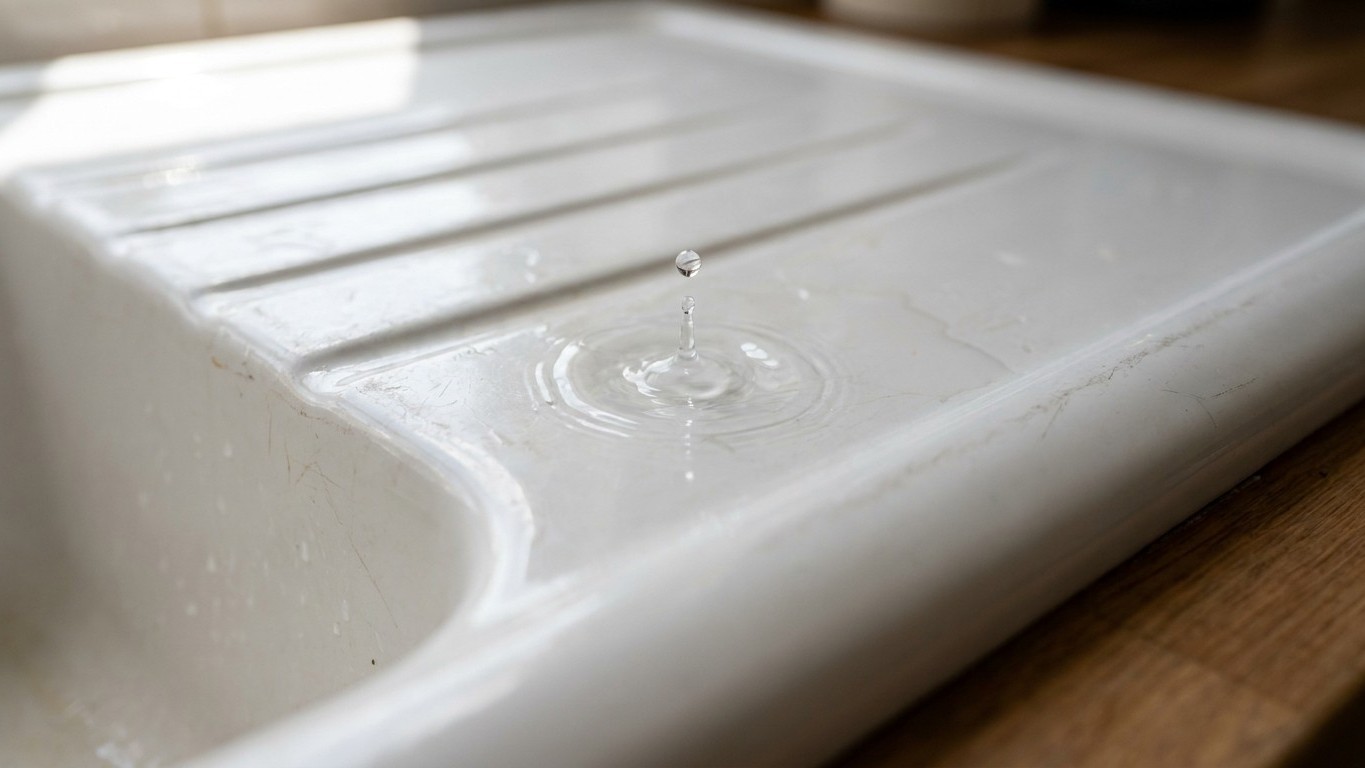
This is where the evening got uncomfortable. The technician ran a sterile swab across my draining board, the strip of counter where I’d set the dripping colander after rinsing that lettuce, and across my sponge for good measure. Domestic kitchen surveys routinely treat that exact spot as a hotspot worth checking: one large hygiene study of one hundred households listed the sink draining board alongside the raw meat shelf, the salad drawer, and the chopping board as a standard site for microbiological sampling, precisely because pathogens migrate there so predictably during meal prep.
It isn’t just an academic concern. Laboratory modeling of kitchen cross-contamination has shown just how efficiently bacteria hitch a ride from one surface to another: in one experiment, roughly 100,000 CFU of bacteria per square centimeter transferred from contaminated meat to a cutting board and to hands, with thousands more colony-forming units per gram ending up on lettuce and cucumbers prepared afterward. Water splashing off a rinsed, contaminated bag of salad works the same way, sending droplets across the board, the tap handle, and whatever dish towel happens to be within reach.
Then there’s the sponge, the tool most of us reach for to wipe it all up. A landmark NSF study that had 22 families swab household items found that 75% of dish sponges and rags contained E. coli and salmonella, and 45% of kitchen sinks had these bacteria too. Scrub your draining board with that sponge afterward and you haven’t cleaned anything. You’ve just redistributed the problem.
What actually stops the spread
Once I understood that washing recalled produce is close to theater, the more useful question became what to do instead. The CDC’s own protocol for a recall like this one is refreshingly unglamorous:
- Throw out the recalled food immediately, don’t rinse it or save part of it
- Empty the refrigerator drawer or shelf it touched
- Wash those shelves and drawers with hot, soapy water
- Sanitize the inside of the fridge before putting anything back
Throw out recalled food, empty the refrigerator before cleaning it, wash shelves and drawers, clean and sanitize inside the refrigerator, then return shelves, drawers and food to the refrigerator. The same extends to the rest of the kitchen. FDA recommends that anyone who received recalled products use extra vigilance in cleaning and sanitizing any surfaces and containers that may have come in contact with these products, since bacteria like Listeria can survive refrigerated temperatures and spread easily to other foods and surfaces.
For greens that aren’t under recall, and you still want the peace of mind of a wash, the University of Georgia’s Judy Harrison recommends discarding the outermost leaves before washing the remainder under running water, two to three leaves at a time, then drying them with a single-use paper towel, which may help remove more pathogens if present. The paper towel step surprised me most. It turns out the drying matters almost as much as the rinsing, since a damp leaf is a better hiding spot for whatever survived the wash than a dry one.
My draining board came back clean that night, for what it’s worth. But the lab tech left with a warning I haven’t forgotten: the next contaminated bag might not announce itself with a recall notice at all, since routine surveillance only catches a fraction of what actually moves through American kitchens every week.
Sources : huffpost.com | foodsafetynews.com