
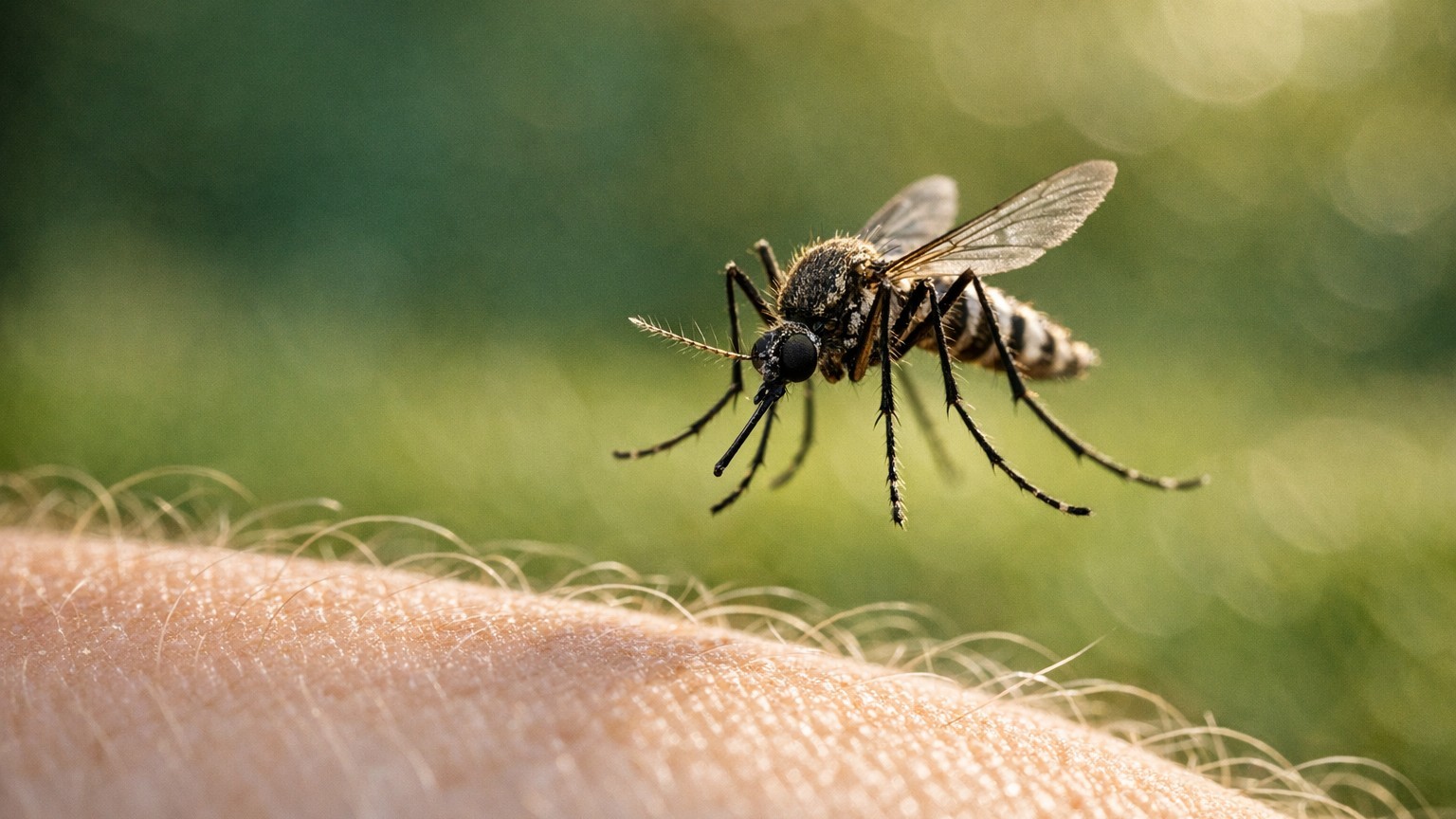
Every summer, same story. The burgers are barely on the grill when the first bite lands, your arm, your ankle, your neck. The person next to you? Totally untouched, somehow scrolling their phone without a care. For millions of Americans, this isn’t just a minor annoyance — it’s a decades-long mystery with a surprisingly clear biological explanation that most people have never bothered to investigate.
The short answer that no one tells you: your blood type is likely broadcasting your location to every mosquito within range.
Key takeaways
- Blood type O individuals are bitten nearly twice as often as type A—but only if their body broadcasts the signal
- Your sweat, breath, and even that cold beer you’re holding matter far more than blood type alone
- A simple genetic test can reveal your mosquito susceptibility, and proven solutions actually work
The O-Positive Curse (and the Science Behind It)
A landmark study published in the Journal of Medical Entomology found that mosquitoes exhibit a marked preference for certain blood types, specifically, individuals with blood type O are bitten nearly twice as often as those with blood type A. The study found that mosquitoes landed on people with blood type O 83% of the time, compared to 47% for those with blood type A. Type B fell somewhere in the middle.
That result has held up over time. In a study published in the American Journal of Entomology in 2019, researchers gave mosquitoes the option to feed on A, B, AB, and O blood types, and the mosquitoes chose the Group O feeder more than any other. That research supports the findings from the 2004 study, which showed that mosquitoes land on people with O positive or O negative blood far more often than those with other blood types.
The counter-intuitive part? This preference is not due to the blood itself, but rather the chemical signals an individual emits that indicate the blood type to the mosquito before it even bites. This detection mechanism relies on a genetic trait known as “secretor” status. Approximately 80 to 85% of the human population are secretors, meaning they possess a gene that allows them to secrete water-soluble antigens corresponding to their ABO blood type onto their skin.
Mosquitoes utilize specialized chemoreceptors to detect these antigens on the skin’s surface. For a Type O secretor, the body releases the H antigen, which is the precursor molecule to the A and B antigens, and this specific chemical signature appears to be highly appealing to various mosquito species. By contrast, Type A secretors release A antigens, which are the least attractive, suggesting the insects actively avoid the chemical compounds associated with that blood group.
A wrinkle worth knowing: non-secretors (about 15% of the population) don’t emit these blood type signals at all, meaning blood type simply doesn’t affect their mosquito attraction. If you’re Type O but a non-secretor, the bugs couldn’t care less. If you’re Type A but a secretor, still some risk, just considerably less.
Blood Type Is Only Part of the Story
Here’s where most articles stop, and where the picture actually gets more interesting. Blood type explains part of the pattern, but about 85 percent of why mosquitoes are attracted to you comes down to your genetics overall, things like your blood type and how much lactic acid you have on your skin play a big role.
Mosquitoes are highly sensitive and drawn to specific chemicals in sweat, lactic acid, ammonia, and uric acid, which are influenced by diet, hygiene, health, and genetics. High levels of carboxylic acid, a fatty acid found in the skin, are also associated with attractiveness. Translation: if you just finished a run before showing up to the barbecue, you’ve made yourself considerably more appealing regardless of your blood type.
While blood group is a factor, the primary long-range locator for mosquitoes is the carbon dioxide exhaled in a host’s breath. Mosquitoes possess a highly sensitive organ called the maxillary palp, which allows them to detect concentration plumes of CO₂ from as far as 100 feet away. Men, pregnant women, and people who are overweight are more likely to be bitten due to the release of carbon dioxide, because their metabolic rate is higher. CO₂ is the initial lure; blood type chemistry is what seals the deal on landing.
Then there’s the beer factor, genuinely underestimated. Research shows that drinking alcohol, especially beer, can make you more attractive to mosquitoes. One study found that people who drank beer were bitten more often than when they weren’t drinking beer. Even a single drink has been shown to make people more attractive to mosquitoes, possibly due to increased skin temperature or changes in sweat composition. Backyard barbecue, cold drinks, high body heat. The combination is practically an invitation.
The bacteria living on your skin can also influence how likely you are to get bitten. These bacteria help break down sweat and produce body odors, some of which are more appealing to mosquitoes than others. Studies have shown that people with certain skin bacteria may be more attractive to mosquitoes. This explains why two Type O people at the same party can have wildly different bite counts.
Research from Yale published in 2024 added another layer: scientists discovered that different tastes may influence biting, feeding, and even egg-laying in mosquitoes. Certain compounds in human sweat led mosquitoes to bite more, while other bitter compounds suppressed feeding behavior. Combinations of compounds affected behavior, while some amino acids and salt did not alter biting when presented on their own, when they were combined, more biting ensued, a result that makes sense since both compounds are found together on human skin.
What You Can Actually Do About It
You cannot change your blood type. You cannot reprogram your microbiome before a backyard dinner. But the gap between “covered in bites” and “mostly fine” is absolutely closeable with the right approach.
23andMe researchers have identified 285 genetic markers associated with mosquito bite frequency, bite itchiness, and bite size, and these markers, along with non-genetic factors such as age and sex, may affect whether you get more or fewer bites than the people around you. Knowing your susceptibility is the first step to managing it seriously rather than just scratching and complaining.
On the repellent front, the science is settled. DEET is a reliable and highly effective insect repellent that has been in public use since 1957. Higher concentrations of DEET mean longer coverage, not more effectiveness, a useful distinction if you’ve ever assumed the strongest formula is automatically the best choice. Picaridin is an effective alternative that provides long-lasting protection comparable to about a 10% concentration of DEET, has been used worldwide since 1998, and compared to DEET, is nearly odorless, does not cause skin irritation, and has no adverse effect on plastics.
For clothing, permethrin is an insecticide that kills or repels mosquitoes, and permethrin-treated clothing provides protection after multiple washings. Treating your outdoor layers once at the start of summer is one of the most underused prevention strategies out there.
The lifestyle adjustments matter too. Shower after exercise before heading outside. Skip the beer until you’re somewhere more enclosed. Once a week, empty and scrub, turn over, cover, or throw out items that hold water, tires, buckets, toys, pools, birdbaths, flowerpot saucers. Mosquitoes can breed in less water than most people realize: even a small coffee cup that’s a third full in your backyard can produce a significant number of mosquitoes, with the full cycle from eggs to adults taking as little as a week to ten days.
One final fact that reframes the whole conversation: researchers have found that some people who seem to repel mosquitoes may actually be giving off a chemical that acts as a natural repellent, but replicating this chemical in the lab has, so far, been unsuccessful. The person next to you at the barbecue who never gets bitten isn’t luckier than you. They’re chemically broadcasting a stop sign. Scientists are still trying to figure out how to bottle it.
Sources : smithsonianmag.com | academic.oup.com