
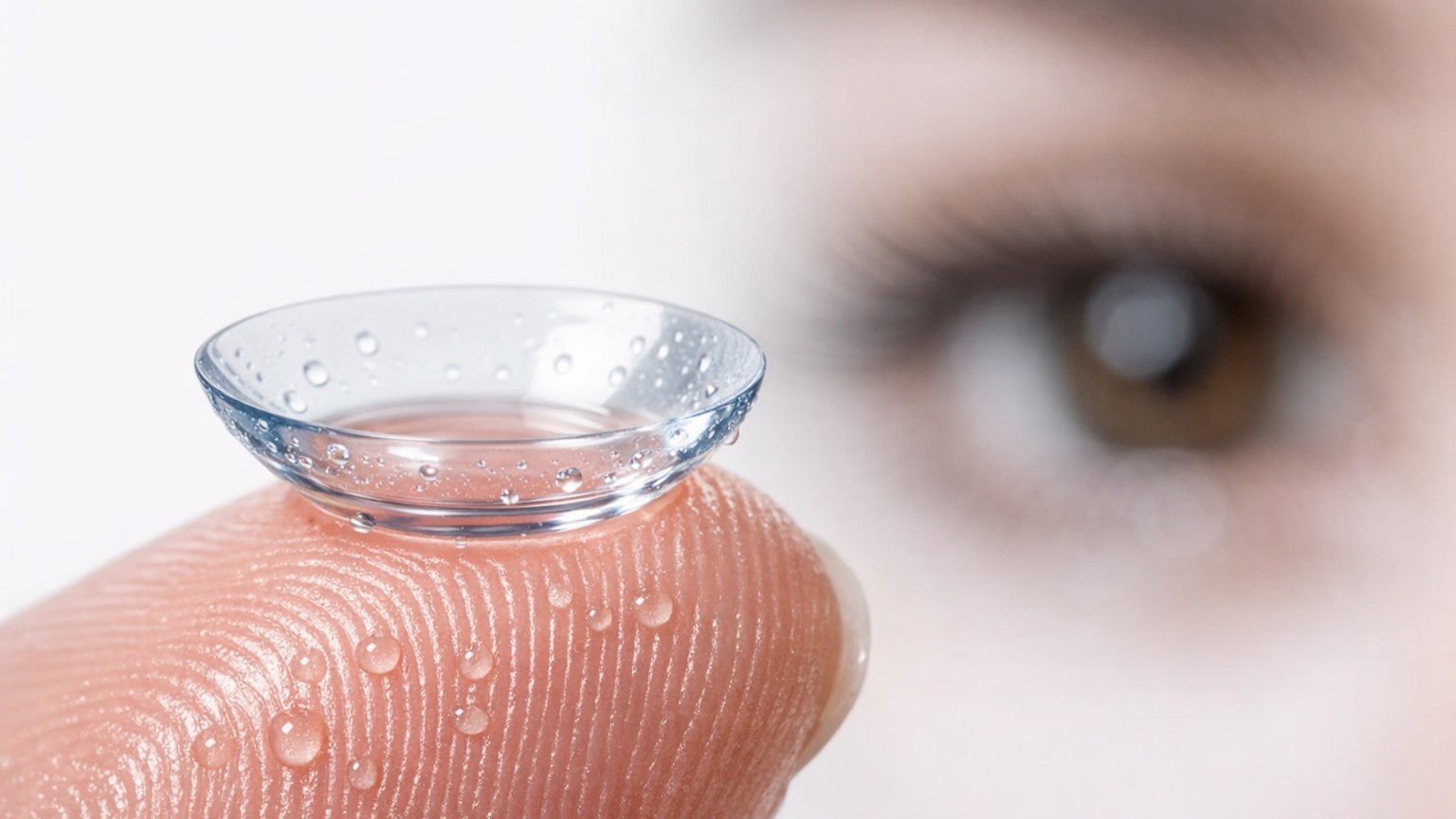
A twenty-minute nap sounds harmless. You settle into the couch after lunch, still wearing your contacts from a full morning, and your eyes close for what feels like a second. Then you wake up, blink, and realize the lenses are glued to your corneas like a dry film. That sticky, gritty sensation is your body’s way of telling you something already went wrong, and what an eye doctor can actually show you under a slit lamp at that moment would make most contact lens wearers permanently rethink their afternoon habits.
Key takeaways
- Your cornea receives only one-third of its normal oxygen when you’re wearing contacts with closed eyes
- Dangerous bacteria like Pseudomonas aeruginosa can colonize a contact lens in minutes, not hours
- Extended-wear and silicone hydrogel lenses offer less protection than their marketing suggests
What Happens to Your Eye in Less Than 20 Minutes
The cornea is not like the rest of your body. It needs oxygen to stay healthy, and unlike most organs, it doesn’t have blood vessels, it draws oxygen directly from the air. When you’re awake and blinking, that system works beautifully. The moment you close your eyes, the supply drops. Add a contact lens to that equation, and the cornea only gets about one-third of the oxygen it normally receives with lids open.
Even if you’re only napping for 20 minutes, dry eyes plus contact lenses can start to deprive your eyes of oxygen. The lens becomes a double barrier, one physical, one metabolic. The combination of reduced tear flow during sleep, decreased oxygen, and increased bacterial growth creates a perfect storm for dangerous infections to take hold and progress quickly.
Here’s the part that surprises most people: the bacteria that colonize a contact lens during sleep aren’t just resting there. The warm, moist space between a contact lens and the cornea under a closed eyelid is an ideal incubator for bacteria, fungi, and other microbes, and this environment allows them to multiply rapidly, greatly increasing infection risk. By the time you open your eyes after a short nap, microbial activity on the lens surface has already shifted.
The Bacteria Your Eye Doctor Sees, and Why It’s Alarming
The name that comes up most often in this context is Pseudomonas aeruginosa. In the eye, it’s a common cause of bacterial keratitis, particularly in contact lens wearers, and it’s known to be especially virulent, with Pseudomonas keratitis being more difficult to treat and having a worse prognosis than other forms of bacterial keratitis. What makes it particularly brutal is its speed. It secretes proteases that can cause liquefactive necrosis of the cornea, leading to rapid corneal weakening and perforation. That’s not a slow, gradual process — it’s aggressive tissue destruction.
Healthy corneas resist colonization by virtually all microbes, yet contact lens wear can predispose the cornea to sight-threatening infection with Pseudomonas aeruginosa. The lens essentially disrupts the eye’s first line of defense. Factors thought to be involved include a disruption to tear exchange or tear function, compromise to epithelial barrier function, reduced epithelial proliferation, suppression of antimicrobial peptide expression, and bacterial biofilm formation on lenses. All of this can begin during a short nap, not just an overnight sleep.
The numbers behind this risk are not soft statistics. Sleeping in contact lenses increases the risk of contact lens-related eye infections by six to eightfold, and approximately one third of contact lens wearers report sleeping or napping in their lenses. The CDC has flagged this repeatedly, and reports of contact lens-related corneal infections demonstrate that these infections can require surgical intervention and result in corneal damage and possible permanent vision loss. For reference, around 18,000 cases of keratitis occur each year among contact lens users in the U.S.
The Counterintuitive Truth About “Extended-Wear” Lenses
A lot of wearers assume that if their lenses are labeled “extended wear” or “silicone hydrogel,” a nap is no big deal. The distinction matters less than the marketing suggests. Newer silicone hydrogel lenses allow more oxygen to pass through compared to older hydrogel lenses, reducing the risk somewhat, but oxygen deprivation still occurs when lenses are worn overnight. And regardless of the type of contact lens worn, one study found that wearing contacts overnight raised the relative risk of microbial keratitis by more than five times.
Daily disposable lenses are not intended for sleeping and should be thrown away if worn during a nap. That last point tends to shock people, not just the infection risk, but the idea that a pair of lenses worn during even a short, accidental nap should be discarded. After being worn overnight, contacts are a breeding ground for bacteria and have microscopic deposits that make them completely unsafe to wear again.
There’s also the issue of corneal neovascularization, a consequence most wearers have never heard of. Chronic hypoxia from regularly sleeping in contacts can cause permanent damage, including the growth of new, abnormal blood vessels into the cornea and the formation of scars, both of which can impair vision permanently. The cornea is supposed to be clear. Blood vessels have no business being there. Once they grow in, they don’t simply disappear.
What to Actually Do When It Happens
The instinct after waking up with contacts in is to yank them out. That’s the wrong move. Resist the urge to pinch the lens out, forcing a dry, stuck contact lens off your eye can literally peel away the top layer of cells from your cornea, and it’s as painful as it sounds. Instead, apply lubricating eye drops first, wait 60 to 90 seconds, blink gently, then remove.
Once the lenses are out, the recovery protocol matters. After removal, rinse the eye with sterile saline or lubricating drops and switch to glasses for the rest of the day, and avoid redness-reliever drops, because they can mask symptoms and worsen dryness. The logic here is subtle but worth understanding: redness is information. If your eye is red, you want to see that clearly, not suppress it with a vasoconstrictor.
Pay close attention to any symptoms of infection like redness, excessive watering, or discharge coming from your eye. If you notice these symptoms or any changes in your eyesight, talk to your eye doctor or a healthcare provider right away. The window between early-stage irritation and a full-blown corneal infection can be surprisingly narrow. Early-stage infections are easy to treat with antibiotic drops, the problem is that people tend to wait, hoping the discomfort will resolve on its own.
One practical shift that eye doctors increasingly recommend: keep a small kit on your nightstand. A pre-filled lens case, a small bottle of rewetting drops, and the habit of removing lenses before you even pick up your phone in bed. According to a CDC survey of 1,000 contact lens wearers, 87% admitted they had napped in their contact lenses, which means this is less a story about carelessness and more about a near-universal blind spot in how we think about contact lens hygiene. The 20-minute nap is deceptively ordinary. What grows on the lens during those minutes is anything but.
Sources : pmc.ncbi.nlm.nih.gov | biorxiv.org