
Forty-seven percent of parents say the week before school starts is the most chaotic of the entire year, according to back-to-school surveys from the National Retail Federation. Add a kid’s room bursting with outgrown toys, broken puzzle pieces, and art supplies from three summers ago, and chaotic feels generous. The fix isn’t another bin from the container store. It’s a system that actually holds up past Labor Day.
Most families attack the closet, sort by category, fill a few trash bags, and call it done. Two weeks later the room looks exactly the same. The stuffed animals migrate back. The action figures multiply. That’s because a one-time purge treats a symptom, not the pattern that created the mess in the first place. What actually works looks less like a weekend deep-clean and more like a rhythm the whole household repeats every few months.
Key takeaways
- What one simple closet fixture prevents the toy explosion from returning two weeks after you organize
- Why researchers found that fewer toys lead to deeper, more creative play—and how to weaponize this insight
- The surprising side effect parents report after sticking with this system for a full school year (it’s not what you’d expect)
The donation box that lives in the closet year-round
Skip the frantic Saturday purge. Keep a labeled box, bin, or even a large tote bag inside the closet, in the room, at all times. Every time a toy stops getting played with, every time a shirt runs too short, every time a book gets read for the hundredth time and loses its charm, it goes in the box immediately. No debate, no “maybe later” pile forming on the floor.
The trick is timing the emptying to something predictable, not to motivation, which never shows up when you need it. Right before school starts works well because closets get reorganized anyway for uniforms and cooler weather. Right after winter break works too, since holiday gifts create natural overflow. Pick two or three anchor points a year and the box never overflows into a project that eats a whole Sunday.
Kids as young as four can participate in this, according to child development specialists who study executive function skills. Letting a child choose what goes in the box, even just one item, builds a sense of ownership over their space rather than the feeling that a parent swept through and made decisions in secret. Framing matters too. “Someone who doesn’t have this toy will get to enjoy it” lands better with a six-year-old than “we’re getting rid of your stuff.”
Why toy rotation beats buying more storage
Here’s the part that surprised me when I first tried it: kids don’t actually play with 100 toys better than they play with 15. A well-cited study from the University of Toledo’s Department of Occupational Therapy found that toddlers in a room with fewer toys played longer, more creatively, and with deeper focus than toddlers surrounded by a full toy chest. Fewer options, not more, produced richer play.
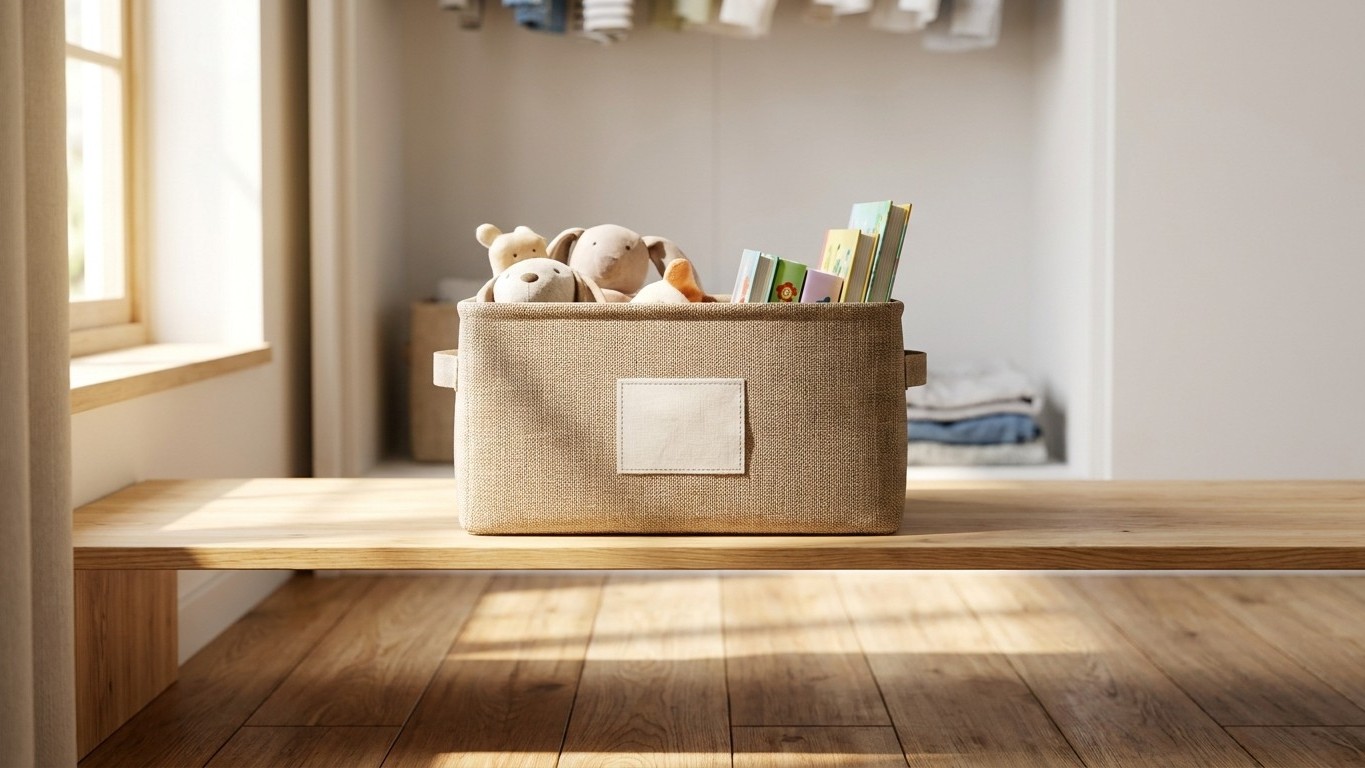
Toy rotation takes that finding and turns it into a household habit. Instead of every toy sitting on a shelf competing for attention at all times, only a portion stays accessible, maybe a third of what the child owns. The rest gets packed into labeled bins and stored in a closet, garage, or under a bed. Every few weeks, or whenever interest visibly drops, one bin comes out and another goes in. The toy that seemed forgotten in June reappears in September looking brand new to a seven-year-old’s brain.
This isn’t about hiding toys as a trick. It’s closer to how museums rotate exhibits: the collection doesn’t shrink, but what’s on view stays fresh. Practically, that means:
- Group toys by type or theme (building blocks, pretend play, puzzles) so each rotation feels like a complete little world, not random leftovers
- Store bins somewhere visible to the parent but out of daily sight for the child, so the swap feels like a discovery, not a chore
- Let the child help decide which bin comes out next, which turns the whole system into something they look forward to rather than something done to them
Rotation also solves the birthday and holiday problem. New toys arrive constantly, but shelf space doesn’t grow. Building rotation into the room from the start means new gifts simply enter the cycle instead of piling on top of everything else, which is usually when a room tips into visual overwhelm.
Making the two systems work together before the first day back
The donation box handles what a child has outgrown. Toy rotation handles what a child still loves but doesn’t need in front of them every single day. Run them at the same time, right before school starts, and the room resets in a way that actually lasts through the semester.
Start with the donation box first, since anything clearly outgrown shouldn’t take up space in a rotation bin. Then take what’s left and split it roughly into thirds. One third stays out for the coming weeks. Two thirds go into bins, sorted loosely by category, and get stored away. Label each bin with a rough date or a simple note like “swap in October” so future you isn’t guessing.
Clothes deserve the same rotation logic, honestly, though most families never think to apply it. A child doesn’t need access to every t-shirt they own during a school week that mostly repeats five outfits. Keeping only the current season’s clothes in the closet, with next size up stored in a labeled bin, cuts morning decision fatigue for both kid and parent. That’s a smaller version of the same principle: less visible, more usable.
None of this requires new furniture or a Pinterest-worthy shelving unit. A few bins, a permanent marker, and two recurring dates on the family calendar do the job. The real shift is mental: treating the kids’ room as something that gets refreshed on a schedule, not something that gets rescued in a crisis. Families who’ve stuck with rotation for a full school year often report the biggest surprise isn’t a tidier room. It’s that toy-related arguments, over which the child wants, where it goes, and why the floor is covered again, quietly drop off almost entirely.