
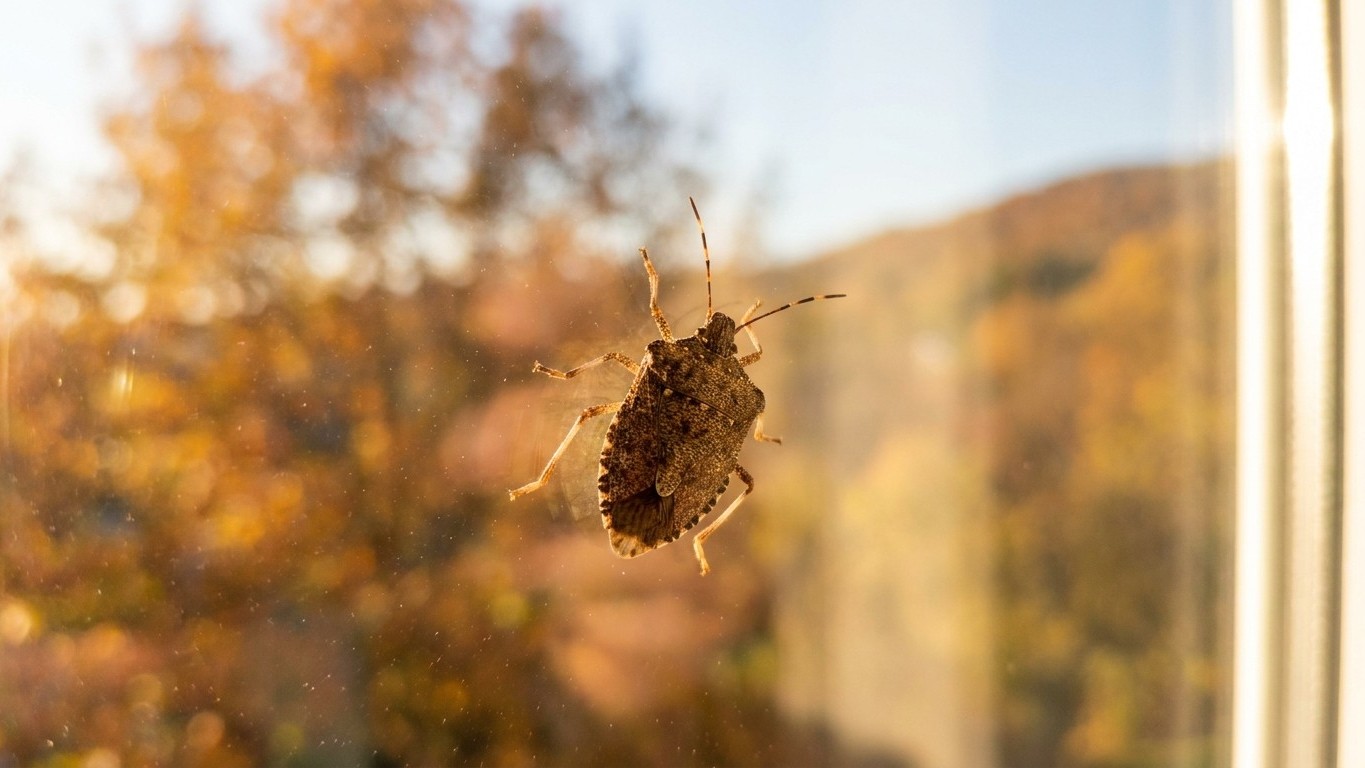
One squash. That’s all it took to trade a mildly annoying bug for a smell that clung to the curtain fabric for what felt like an eternity. The insect in question: a brown marmorated stink bug, the shield-shaped invader that’s been colonizing American windowsills every fall since it hitched a ride into Pennsylvania sometime in the 1990s. What looked like a random late-summer nuisance turned out to be something far more organized, and far more numerous, than a single squashed bug on a tissue would suggest.
The first one showed up on a Tuesday, sunning itself on the inside of a south-facing window. Gone with one tissue, no second thought given. Three days later, four more had taken its exact spot on the glass. By the following week, the windowsill looked like a small convention hall for shield bugs. That’s when the curtains got pulled back for a proper look, and the real picture came into focus: this wasn’t one lost bug. It was a scouting party.
Key takeaways
- That lone bug on your south-facing window wasn’t lost—it was a scout filing an inspection report on your home
- Squashing it didn’t stop the invasion because the real signal was already sent before the tissue came out
- Your house is competing with the woods, and modern homes are winning in ways evolution never prepared stink bugs for
Why That One Sunny Window Becomes Bug Central
Stink bugs are attracted to the south side of structures on warm fall days in search of protected, overwintering sites and can enter homes in large numbers. It isn’t random. South-facing walls get their attention first because these surfaces absorb and hold heat throughout the day, creating warm microclimates that attract stink bugs as temperatures drop. Glass acts almost like a magnifying lens for this effect. South-facing and west-facing walls often hold afternoon heat after the surrounding air begins to cool, and a stink bug may rest there before moving toward a nearby crack or sheltered joint.
Here’s the part that reframes the whole situation: a lone bug on the glass isn’t really the story. One stink bug may be an isolated visitor, but two or three appearing at the same window over several days provide stronger evidence that the area contains a usable opening. That single squashed bug wasn’t an unlucky wanderer. It was the advance scout of a much bigger operation, and its presence was basically a house inspection report written in bug form.
The behavior traces back further than any particular home’s construction flaws. Historically, stink bugs would overwinter under rocks, in dead trees, and within leaf litter, but human development has created structures that offer superior protection from wind, rain, and temperature fluctuations, with modern homes providing consistent temperatures, protection from predators, and easy access through construction gaps that didn’t exist in natural environments. A house isn’t an accidental target. It’s an upgrade, from the bug’s point of view, over anything the woods ever offered.
The Odor Wasn’t the Point, It Was a Warning System
Squashing that first bug released the compound everyone already associates with the name. They have long piercing-sucking mouthparts held under the body between the legs, and often release an odor when disturbed or crushed. But the defensive stink and the reason dozens more showed up are two entirely different chemical stories, and conflating them is where most people get it wrong.
Upon finding a preferred site, stink bugs release pheromones that attract other stink bugs to the site, and these pheromones are different from the pungent chemical stink bugs release in defense against predators or presumed threats. the defensive odor from that squashed bug wasn’t the recruiting signal, but the fact that a bug had already settled on that windowsill in the first place, quietly, calmly, before ever getting squished, was the real broadcast. Once a group of stink bugs finds a good overwintering spot, they release chemical signals called aggregation pheromones that act like a broadcast message to other stink bugs in the area, essentially saying the shelter here is good, come join us.
That explains the timeline precisely. One bug on Tuesday. Four by Friday. A dozen candidates auditioning for windowsill real estate a week later. This behavior explains why one yard can go from having a few stink bugs to having a serious infestation in just a matter of weeks, not because the yard suddenly changed, but because the first arrivals called in reinforcements. Squashing scout number one did nothing to stop the signal it had already sent simply by choosing that spot.
What the Curtains Were Actually Hiding
Pulling back that curtain didn’t just reveal more bugs. It revealed a structural conversation the house had been having with the outside world for weeks. The screen is rarely the main attraction: warm glass, sunlit siding, loose trim, and air leaking around the frame can draw a stink bug toward the window, and once it finds a way through, it may settle behind siding, inside an attic, or within a wall space where it stays hidden for weeks. The window wasn’t the destination. It was a waiting room.
Numbers can get genuinely startling once a site gets marked as viable. Some houses have seen more than 25,000 bugs invade in a single season, which puts one windowsill cluster into sharp perspective. And once a location earns a reputation among the local population, it doesn’t get forgotten. Once they’ve identified your home as a target, they’ll return year after year.
The fix isn’t a tissue, or a vacuum, or a can of spray aimed at the glass. It’s the gaps. Sealing cracks, gaps, and holes in siding, windows, doors, and foundations, replacing worn weather stripping and installing door sweeps, and repairing torn or damaged window screens Matters More Than any reactive squashing ever will. Some fall invaders need as little as a 1/8-inch gap to get in, which is a genuinely humbling number when you consider how confidently a homeowner might caulk “the obvious spots” and call it done.
A Smarter Way to Handle the Ones Already Inside
For the bugs that do make it past the glass, the instinct to crush is understandable and almost always wrong. Crushing them can cause them to release their defensive aroma, which is disagreeable and lingers for a time, and vacuuming BMSB can Permanently impart this defensive odor to the machine. A dedicated shop vac, one that isn’t precious about a stink bug tang, or a simple cup-and-paper method that ends outdoors, beats a tissue every time.
The reassuring detail, buried under all that odor and drama: these bugs are strictly a seasonal nuisance, not a threat. The bugs do not reproduce or feed while overwintering, and they do not bite or carry diseases, but they produce unpleasant smells when crushed, and fill a house with excrement. Small comfort while cleaning stains off a curtain hem, maybe, but worth remembering the next time one shows up alone on the glass, sunning itself, looking utterly harmless. It rarely stays that way for long.
Sources : positivebloom.com | pccil.com