
Thirty degrees Celsius felt like the responsible move. Gentle enough for silk camisoles, warm enough to feel virtuous, and fast enough to get the suitcase emptied before jet lag won. What that cycle actually accomplished, though, was closer to a rinse than a kill shot. Washing at temperatures below 120°F is typically ineffective, allowing bed bugs to survive, while temperatures of 140°F or higher fully kill all bed bug life stages, including eggs. Thirty degrees Celsius sits at roughly 86°F. Not even close.
The suitcase seams told the real story. Days after that “safe” wash, tiny dark specks turned up along the piping of the case, exactly where luggage designers put the stitching that makes bags collapsible and light. That’s not a coincidence, and it’s not bad luck either, it’s biology doing exactly what it’s built to do.
Key takeaways
- A 30°C wash cycle is too cool to kill bed bugs or their eggs, which can survive and reinfest weeks later
- The suitcase itself—not just the clothes—is where bed bugs hide, and one inspection habit changes everything
- The real weapon isn’t the washing machine; it’s either a high-heat dryer for 30+ minutes or a freezer for exactly 3 days
What a lukewarm cycle actually leaves behind
Bed bugs are not squeamish about a 30°C wash. They are sensitive to heat, but surprisingly tolerant of cold and moderate warmth, and cold water washing allows them to survive easily. They may be rinsed off clothing, but they remain alive and capable of reinfesting other areas. The agitation moves them around the drum. It doesn’t cook them.
Eggs are the real problem child. Bed bug eggs are the most resistant life stage, small, sticky, and well protected, and they can survive temperatures that kill adult bugs, especially if washing is done in warm rather than hot water. That’s the mechanism behind the frustrating pattern people describe online: they wash everything, feel confident, and then a new generation shows up within weeks. This is why many infestations return after people believe they have solved the problem through laundry alone, since killing adults without Destroying eggs allows a new generation to emerge within weeks.
The threshold that actually matters, according to pest control research, sits well above home “delicate” or “eco” cycles. Studies have shown that bed bugs, including their eggs, will die when exposed to temperatures of 113°F (45°C) or higher for an extended period. Most agencies recommend padding that margin considerably. To effectively kill bed bugs, you should wash clothes and bedding at a temperature of at least 140°F (60°C), since bed bugs and their eggs can’t survive high heat. A gentle 30°C cycle, however soothing for cashmere, is roughly a spa day for anything hiding in the fabric.
Why the suitcase seam is the real crime scene
The federal health guidance on this is oddly poetic for a government website. Bed bugs spread by getting into the seams and folds of luggage, overnight bags, folded clothes, bedding, furniture, and anywhere else they can hide. And most people never think to check, because most people do not realize they are transporting bed bugs and infecting areas as they travel.
The suitcase itself, not just the clothes inside it, is the vehicle. Entomologists tracking how infestations move between hotels and homes note that even hard-shell luggage isn’t a fortress. Hard-shell suitcases are somewhat less hospitable than soft-side bags because they have fewer seams and fabric folds, but they’re not immune, and bed bugs crawl into wheel wells, hinges, and zipper channels. Soft-sided bags are worse. Backpacks and duffel bags, with their fabric construction and multiple compartments, offer even more places to hide.
There’s a specific, slightly grim signal to look for once you’re home: the CDC advises travelers to look for exoskeletons or bed bugs in folds of mattresses and sheets, but the same logic applies to the case itself, not just the room you slept in. Early detection and eradication of bed bugs can make infestations easier to control, and for those that travel, it may be helpful to look for signs of infestation, such as exoskeletons or bed bugs in folds of mattresses and sheets, in sleeping areas. Translate that habit to your own luggage the moment you unzip it, and you catch the problem before it ever reaches the hamper.
The fix that actually works, and the one habit worth adopting
Heat, real heat, is the non-negotiable part of the equation. Dryers are much more effective at killing bed bugs than washers, a typical high-heat dryer reaches 130°F or more, and running clothes for at least 30 minutes on the highest heat setting can kill bed bugs at all life stages, including eggs. So the washing machine isn’t the hero of this story. The dryer is, provided you run it hot and long enough to matter.
For anything that can’t tolerate a hot dryer, cold is the backup plan, but it demands patience most people underestimate. Cold temperatures can kill bed bugs if they are exposed to it long enough, and all stages of bed bugs will be killed on objects left in a freezer at 0°F for 3 days. Three days, not three hours. A quick overnight stint in the freezer does roughly nothing.
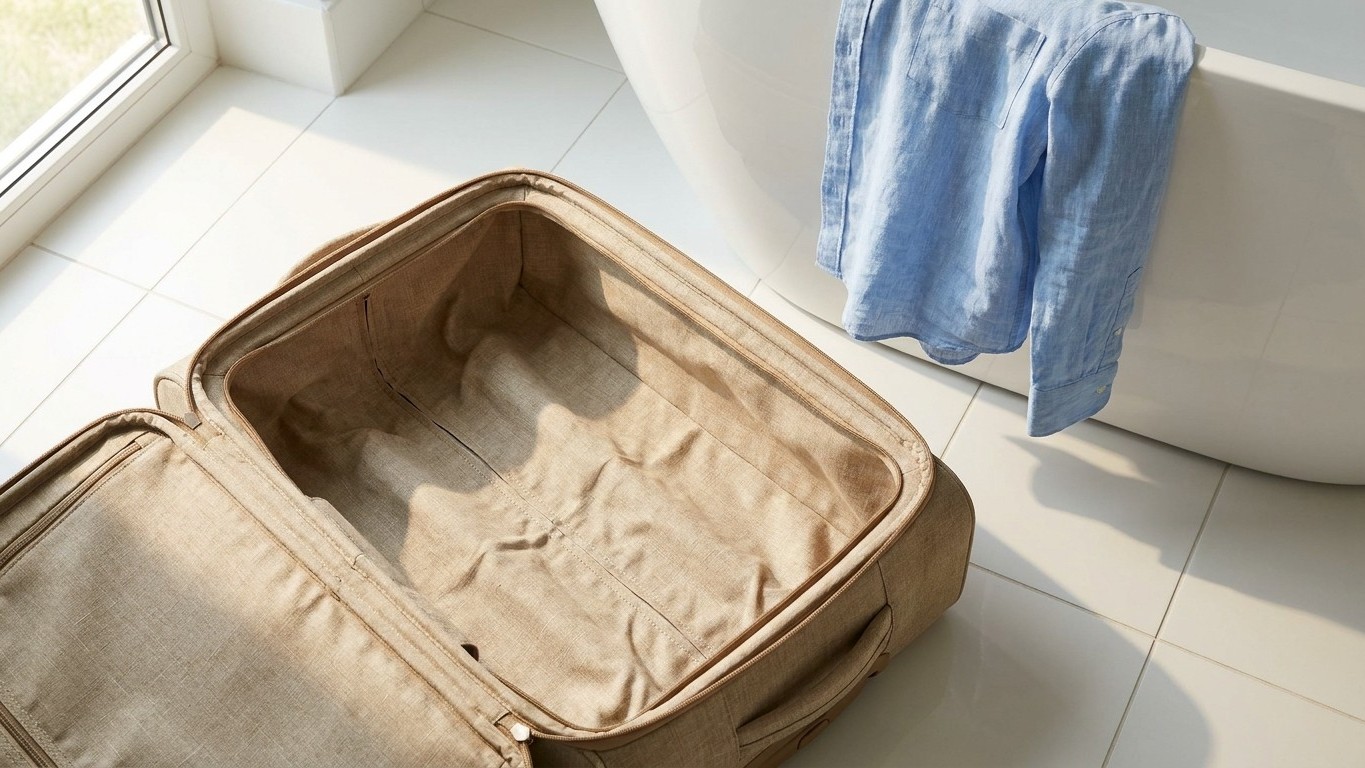
Before any of that, though, the inspection itself Matters More Than most travelers assume. Public health officials in New York, whose advice the EPA echoes, suggest an oddly specific ritual for the moment you walk in the door. If you’re not sure whether your luggage has been exposed but want to be on the safe side when you arrive home, place your bags in a bathtub, shower, light-colored tile surface, or outside, then inspect your suitcase’s seams, pockets, straps, and other crevices, and unpack your clothing onto the same surface and shaking everything out. And there’s one rule that overrides all the others: never store your luggage in your bedroom.
None of this means every trip ends in an infestation, and the odds of picking one up remain fairly low for the average traveler. But the fix isn’t a gentler cycle or a nicer detergent, it’s a hotter dryer, a proper inspection on a hard surface away from the bed, and a little patience with the freezer if delicate fabric is involved. The suitcase seam, it turns out, was never asking for mercy. It was asking for 140 degrees.
Sources : cookspest.com | pest.co.uk