
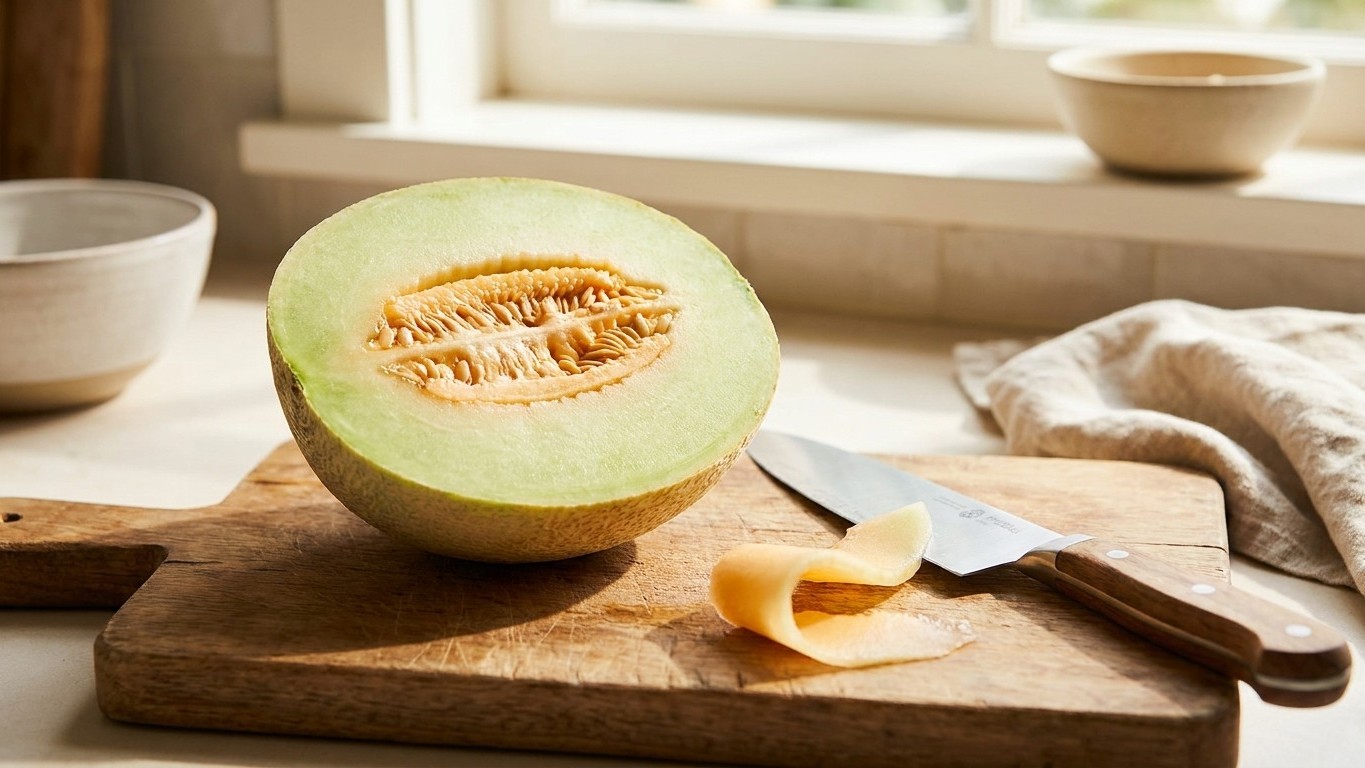
Cut a cantaloupe in half, scoop the seeds, and look closely at that pale green ring hugging the rind. That’s where the trouble starts. The bitterness that occasionally ruins a bowl of chilled melon gazpacho has almost nothing to do with how long the soup sat in the fridge and everything to do with a thin band of flesh most cooks blend in without a second thought.
Melons, like their cucumber and watermelon cousins, belong to the Cucurbitaceae family, a group of plants that evolved a chemical defense system so bitter it can still stop a hungry animal in its tracks. When cucumbers, muskmelons, and watermelons grow in the wild, their fruit contains bitter cucurbitacin molecules, a family of highly oxygenated tetracyclic triterpenes that deter pests from foraging. Domestication bred most of that bitterness out of the edible flesh, but the genetic switch was never fully turned off. Although these defense compounds evolved in the plants millions of years ago, humans have bred them out of the fruits to make them more appealing to our palate, a shift researchers have traced through the biosynthetic pathways responsible for cucurbitacins.
Key takeaways
- A hidden zone of pale green flesh beneath the melon rind concentrates bitter compounds that most home cooks blend in without noticing
- The overnight chill you’ve been doing actually works against bitterness by suppressing taste receptors—but it can’t rescue soup built on the wrong cut
- A surprisingly simple trim and taste test at the cutting board solves the problem that recipes never mention
The bitter zone hiding under the skin
Here’s the contrarian part: chilling a gazpacho overnight doesn’t create bitterness, it can actually soften it. The real offender sits in a specific layer of tissue, not in the fridge. According to research on melon composition, cucurbitacin B (CuB) was identified as the major bitter compound isolated from melons. And that compound doesn’t distribute evenly through the fruit. Studies on cucumber, a close botanical relative that shares the same defense chemistry, show the pattern clearly: the bitter compound is more prevalent in the peel and in the light green area just beneath the peel, according to Oregon State University’s extension service. Translate that to a melon, and it means the last centimeter or two of flesh before you hit rind, exactly the part home cooks scoop generously into the blender because “waste not, want not,” carries a disproportionate share of the bitter load.
This isn’t folklore passed between grandmothers. It’s rooted in plant biology. Cucurbitacins concentrate near vascular tissue and stress points, the zones where the plant channels water, nutrients, and defensive compounds. Research on bitter cucumber found the endocarp had the highest cucurbitacin concentration, followed by the mesocarp, with the exocarp showing much lower levels. The exact ratios shift between species, but the underlying lesson holds across the whole melon family: the compound responsible for that back-of-the-throat harshness doesn’t hide in the sweet, juicy center. It lingers close to the surface.
Heat, drought, and uneven watering during the growing season make things worse. A melon that struggled through a dry August is far more likely to carry a bitter edge near its rind than one grown in a wet, easy summer. Farmers can’t always control that, and neither can you standing at your cutting board, which is exactly why tasting a small sliver of the pale flesh before you blend the whole melon Matters More Than any chilling schedule ever could.
Why the fridge is actually doing you a favor
Ironically, the overnight chill that gets blamed for bitterness is one of the few things working in your favor. Bitter taste receptors respond to temperature, and the science on this is fairly consistent. One of the most significant effects of cold on taste perception is its ability to suppress certain tastes, since cold temperatures tend to dampen the signals sent to the brain from receptors that detect bitterness and sourness, which is particularly advantageous for foods that might otherwise have an overpowering bitter or acidic profile.
Researchers studying green tea found something similar at the mouth level. Low-temperature stimulation may reduce the activation of bitter taste receptors, thereby decreasing bitterness perception. A separate review of temperature and taste noted that the sensitivity and taste qualities of bitterness were affected by temperature, with bitter taste receptors becoming highly sensitive to bitter compounds when the oral temperature is around 35 degrees Celsius. A gazpacho served ice-cold is, biochemically speaking, working against bitterness rather than for it. Skip the fridge and serve it lukewarm on a hot afternoon, and that same soup would taste noticeably harsher.
So the ritual of letting gazpacho rest overnight isn’t wrong, it’s just solving the wrong problem. The resting time helps flavors marry and the garlic mellow, sure. But the frost on the bowl was never going to rescue a soup built on melon flesh scooped too close to the rind.
The fix happens at the cutting board, not the fridge
Once you know where the compound hides, the remedy is almost embarrassingly simple. Slice the melon in half, then trim a slightly more generous margin of flesh away from the rind than you normally would, particularly around the stem end, where cucurbitacin production tends to spike in related cucurbits. In most varieties the highest concentrations accumulate at the stem end, with a secondary peak often found at the blossom end, and because the skin and the first few millimeters of flesh contain the bulk of the compound, removing that outer layer directly targets the source of the flavor issue. The same logic transfers reasonably well to melon, given the shared chemistry.
Taste a small piece from that discarded zone before you toss it. If it registers even faintly bitter, sweeter cousins in the fruit bowl won’t save the blended soup, no amount of overnight chilling included. A few other habits help stack the odds in your favor:
- Choose a fully ripe melon; underripe fruit tends to carry more residual bitterness near the surface
- Balance the base with a splash of good olive oil, since the richness and a touch of bitterness and grassy notes helps balance the soup when the fat coats the palate
- Add acid, whether sherry vinegar or lime, which brightens the overall profile and masks minor bitter notes
- Chill for at least a few hours, not because it removes bitterness, but because storing the blended soup in the fridge for 2-4 hours allows the flavors to come together
None of this means overnight chilling is pointless. It softens sharp edges, lets salt and vinegar settle into the melon’s natural sugars, and turns a rough blend into something silky. The trick is understanding that the fridge was never the villain in this story. The real work happens with a knife, a small trim, and a taste test most recipes never bother to mention.
Sources : jstage.jst.go.jp | primalwellness.coach