
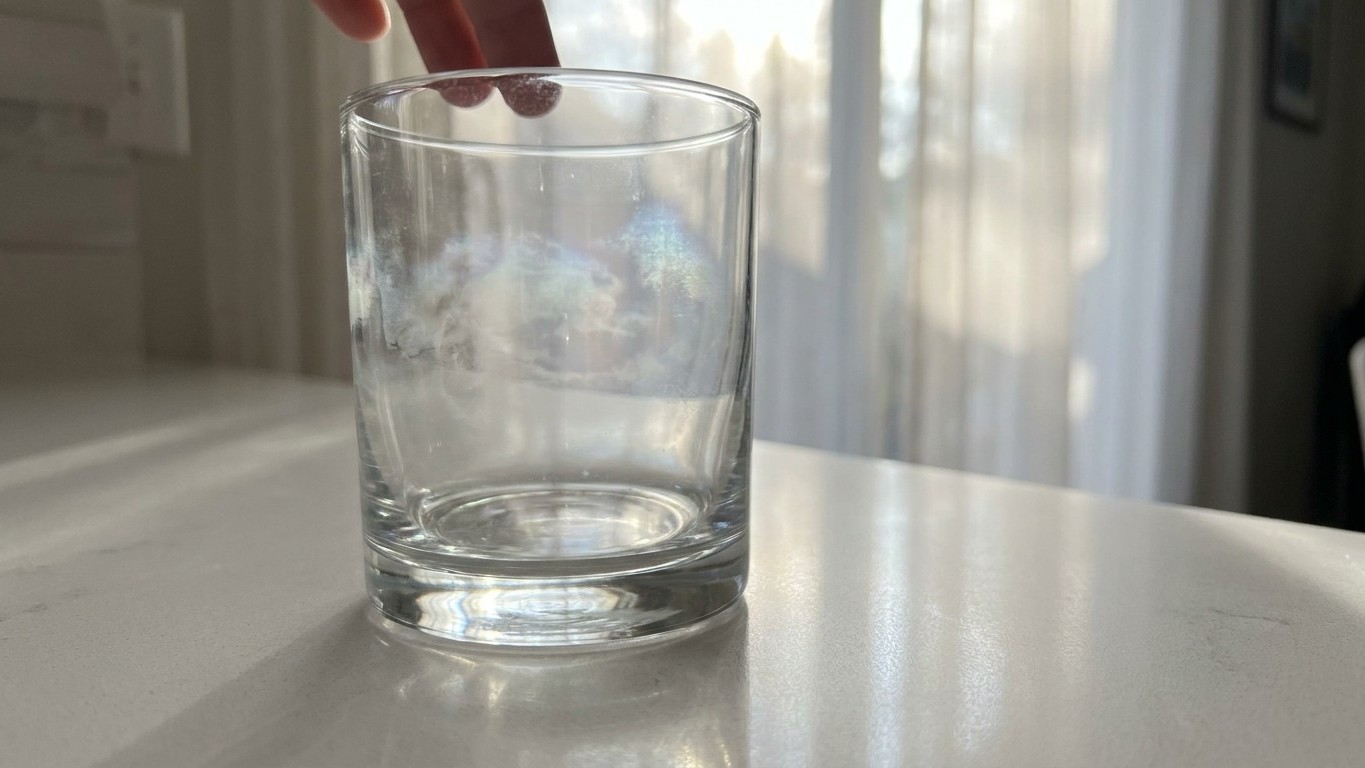
Ask a professional glass restorer what ruins tumblers for good, and the answer comes fast, almost rehearsed: it’s the detergent powder sitting in your dishwasher’s dispenser drawer. Not the water. Not the machine. The powder itself, especially when the water running through your pipes is on the softer side. The result is a permanent cloudy haze that no amount of scrubbing, soaking, or vinegar will ever pull back out.
That haze has a name: etching. And once it sets in, your favorite rocks glasses are done. Not damaged-but-fixable. Done, as in permanently altered at the molecular level.
Key takeaways
- Glass restorers say one household item is silently destroying your tumblers at the molecular level—and it’s not what you think
- There’s a simple 5-minute test that reveals whether your cloudy glasses are saveable or permanently ruined
- The irony that will shock you: soft water actually makes the damage worse, not better
The Powder Problem: Why Detergent Is the Real Culprit
Etching can occur over time as detergent combined with soft water, high water temperature and low soils erodes the surface, leaving behind small scratches and dings that irreparably damage glassware’s appearance. Translation: the alkaline compounds in dishwasher powder are aggressive enough to strip a microscopic layer off the glass surface with every single cycle. Etching is caused by small scratches and nicks in the glass. When enough of these scratches accumulate, the glass will display a milky or cloudy film.
Here’s the part that surprises most people, though. It has been determined that the glassware corrosion problem actually consists of two separate phenomena; one is corrosion due to the leaching out of minerals from the glass composition itself together with hydrolysis of the silicate network, and the second is deposition and redeposition of silicate material onto the glass. In plain terms, the detergent doesn’t just sit on top of your glass. It reacts with it, pulling metal ions out of the glass structure itself. Metal ions have been removed from the glass causing microscopic roughening of the surface. That roughening is what scatters light and gives you that milky, iridescent look instead of a clean, transparent finish. Manufacturers have known about this for decades. Glassware that is repetitively washed in automatic dishwashing machines has a tendency to develop a surface cloudiness that is irreversible, often manifesting itself as an iridescent film that displays rainbow hues in light reflected from the glass surface, becoming progressively more opaque with repeated washings. Chemical companies have spent years patenting zinc and aluminum additives specifically to slow this reaction down, which tells you something about how widespread and costly the problem has been for the industry.
Etching or Just Filming? The Vinegar Test Restorers Swear By
Before you mourn your entire glassware collection, there’s a five-minute test that separates the merely dirty from the truly doomed. Dampen a clean cloth with a bit of household white vinegar and wipe the glass. If the part you wiped is clear when dry, hard water buildup is the culprit, and there’s an easy fix for that. That kind of cloudiness, caused by mineral deposits rather than chemical erosion, is genuinely reversible.
Etching tells a different story. If it’s caused by etching, you might be in a tough spot: if the glass has a rough or rainbow-like appearance that doesn’t improve with cleaning, the surface has been permanently worn down. Restorers describe it almost the same way every time. Unlike the colored film, the cloudiness cannot be scratched off with a knife. Etching is a deterioration of the glass that cannot be reversed. One appliance brand’s guidance is blunt about it too: etched glassware cannot be reversed and cleaning them will not undo the damage, and once you’ve determined whether your glasses are etched, it’s important to be aware that this cannot be removed and is permanent. Run your fingers along the rim in raking light near a window. If you see faint rainbow streaks that don’t wipe away, that glass has already crossed the line.
The Soft Water Twist Nobody Expects
Most people assume hard water is the enemy of clean glassware, and in a sense it is, since if your glasses are coming out of the dishwasher with a cloudy film, it’s likely due to the minerals from hard water, as minerals like calcium and magnesium in hard water leave a cloudy film on glassware. But that film wipes off with acid. The genuinely permanent damage happens in the opposite scenario, and it’s a real head-scratcher for anyone who’s invested in a water softener to protect their appliances.
Etched glassware most often results from washing in soft water and gets even worse with too much dish detergent. Without hard water minerals to neutralize, the alkaline detergent has nothing to react with except your glass. One appliance expert put the mechanism plainly: “When there is no food on the dishes to break down nor any hard water minerals present because of soft water, it can lead to the removal of metal ions in glassware, causing etching to occur.” So the pre-rinse habit so many of us were taught by our mothers, scraping every last crumb off before loading the machine, can actually work against you. The detergent, left with nothing to break down, starts breaking down your glass instead.
What Actually Slows the Damage Down
You can’t undo etching, but you can absolutely stop feeding it. Restorers and appliance makers tend to agree on a short list of habits worth adopting immediately:
- Keep wash temperatures under 140°F, since detergents with phosphates used with a hot cycle can cause etching that can’t be removed, so glasses should be washed below that threshold with mild detergents
- Measure detergent instead of eyeballing it, because too much can lead to a buildup that isn’t getting rinsed off, especially on smaller loads, since a half load doesn’t need the same amount as a full one
- Switch formulas if you have soft water, since a built-in water softener may mean you need a detergent with a glass-protecting formula
- Skip aggressive sanitize cycles for everyday glassware, reserving them for items that truly need it
None of this will bring back a glass that’s already gone hazy for good. But it explains something that trips up a lot of careful home cooks: the fanciest, most concentrated detergent powder on the shelf isn’t necessarily doing your barware any favors. Sometimes the gentlest formula, used in the right amount, at the right temperature, is the one actually worth keeping in that drawer.
Sources : image-ppubs.uspto.gov | patents.google.com