
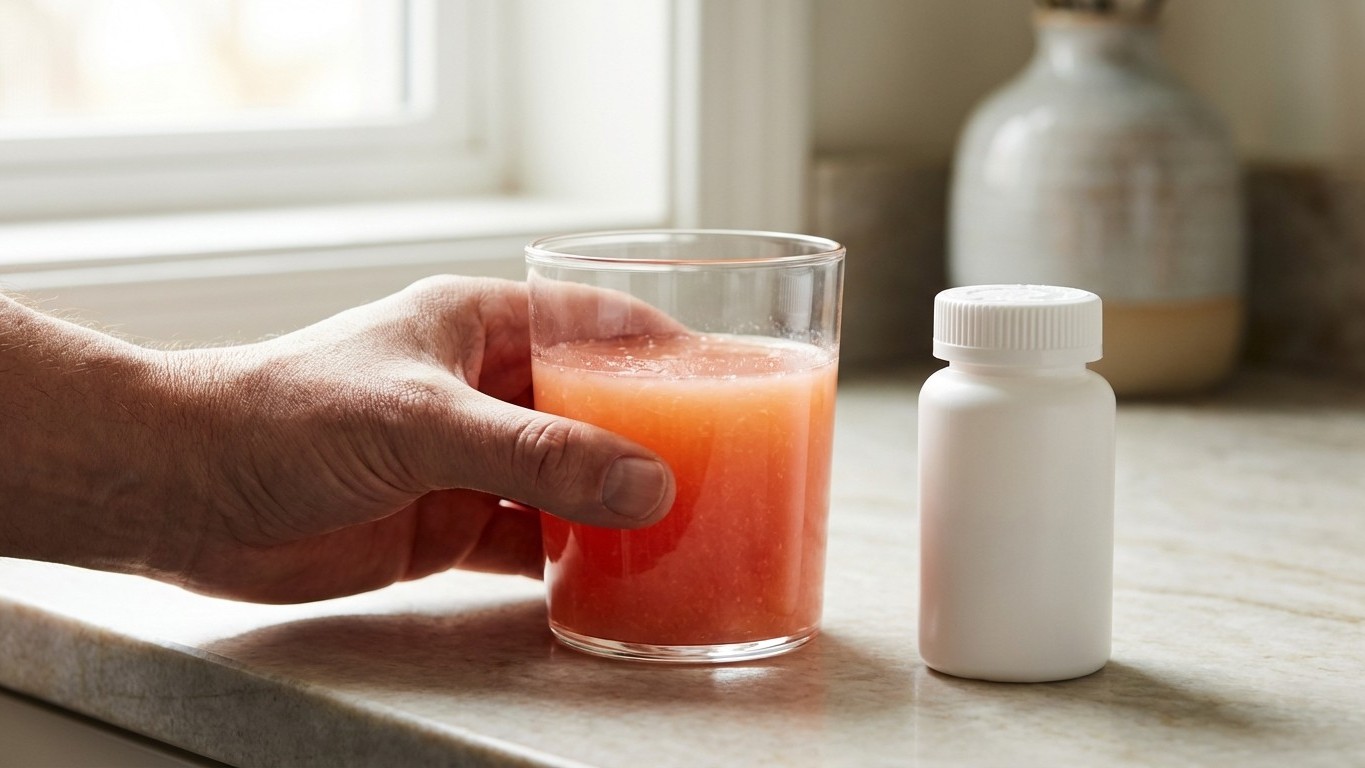
You swallow your pill with a glass of grapefruit juice and consider yourself a responsible adult. Hydrated, punctual, doing everything right. Except that single glass may have just rendered your medication significantly less effective, or dangerously more potent. The interaction between food and pharmaceuticals is one of those quietly important topics that never makes it onto the instruction sheet tucked inside the box, or gets only a vague footnote nobody reads.
This isn’t about obscure supplements or exotic herbs. The culprits are sitting in your refrigerator right now.
Key takeaways
- One glass of grapefruit juice can alter your medication’s potency for up to 72 hours—and tiny amounts trigger the effect
- Your favorite healthy foods (spinach, broccoli, dairy) may be sabotaging blood thinners, antibiotics, and other common drugs
- Aged cheese, red wine, and cured meats create dangerous interactions with certain antidepressants that nobody mentions at dinner
Grapefruit: The Most Famous Troublemaker You’re Probably Ignoring
Grapefruit deserves its reputation. The fruit contains a group of compounds called furanocoumarins, which block a specific enzyme in your gut (CYP3A4, if you want to impress your doctor) that normally breaks down many common drugs before they reach your bloodstream. When that enzyme is inhibited, medication floods your system at levels it was never supposed to reach. The effect can last up to 72 hours after a single glass of juice. One study published in the Canadian Medical Association Journal identified over 85 drugs that interact with grapefruit, including certain statins, blood pressure medications, immunosuppressants, and some antihistamines.
The counterintuitive part? More grapefruit doesn’t mean more of a problem, even a small amount triggers the effect. And the warning, when it appears at all, tends to be printed in font so small it requires reading glasses and good lighting to find.
Seville oranges (the kind used in marmalades), tangelos, and pomelos carry the same compounds. So that sophisticated British Breakfast spread could be working against you too.
Leafy Greens, Dairy, and the Nutrients That Compete With Your Pills
Vitamin K is a brilliant nutrient, it helps your blood clot, keeps your bones strong, and shows up generously in spinach, kale, broccoli, and Brussels sprouts. The problem arises when you’re on warfarin or other blood thinners, which work precisely by blocking vitamin K’s clotting activity. Suddenly eating a kale salad every day throws the delicate balance the medication was calibrated to achieve completely off course. This doesn’t mean avoiding greens forever; it means keeping your intake consistent so your doctor can adjust the dose accordingly. Sudden dietary shifts are what create the real danger.
Dairy is a different kind of interference. Calcium in milk, yogurt, and cheese binds to certain antibiotics (tetracyclines and fluoroquinolones especially) in the digestive tract, forming a compound your body simply cannot absorb. The medication passes through you largely intact, having done nothing. Pharmacists recommend spacing dairy consumption at least two hours from these antibiotics, advice that sometimes gets lost between the prescription counter and the kitchen.
High-fiber foods, meanwhile, can accelerate the transit time in your gut, which means some slow-release medications don’t have the time they need to dissolve properly. A bowl of high-fiber cereal before a morning pill sounds virtuous. For certain drugs, it effectively cuts the dose.
Tyramine, Alcohol, and the Interactions With Real Consequences
Aged cheeses, cured meats, soy sauce, fermented foods, red wine, these are the building blocks of a genuinely enjoyable dinner party. They’re also rich in tyramine, an amino acid that the body normally metabolizes efficiently. Patients taking MAOIs (a class of antidepressants, though less commonly prescribed today) cannot break down tyramine properly due to the drug’s mechanism. The result can be a sudden, severe spike in blood pressure, a hypertensive crisis, triggered by something as ordinary as a slice of aged cheddar or a handful of salami. Even some newer antidepressants carry milder versions of this interaction.
Alcohol, of course, has its own entire category. Beyond the obvious sedative overlap with sleep medications or anxiety drugs, alcohol actively competes with the liver enzymes responsible for processing acetaminophen. That combination, even in moderate amounts, dramatically increases the risk of liver damage, which is why the warning exists on every single bottle of Tylenol and still gets routinely ignored at dinner parties everywhere.
Licorice (real licorice, not the candy) contains glycyrrhizin, which can reduce the effectiveness of blood pressure medications and interact with diuretics. It’s a niche concern, but worth knowing if you have a fondness for European confectionery.
What To Actually Do With This Information
The honest answer is that most people will not radically overhaul their diet when they start a new prescription. Nor should they have to, necessarily. What matters is the conversation, and the frustrating reality is that it often doesn’t happen. A 2022 survey found that fewer than half of patients reported receiving specific dietary counseling when picking up a new medication from a pharmacy.
A few practical moves make a real difference. Ask your pharmacist directly: “Is there anything I eat regularly that could affect this?” Pharmacists are often more accessible for this kind of question than physicians, and the question is more specific (and therefore more useful) than a general “are there side effects?” When you start a new medication, jot down your usual dietary habits for a week, not obsessively, just enough to spot potential conflicts. If you eat grapefruit, drink wine on weekends, or have a green smoothie every morning, say so.
Timing is frequently the simplest solution. Many interactions aren’t about permanent avoidance but about spacing. Taking a thyroid medication at least 30 minutes before coffee (caffeine affects absorption), separating iron supplements from calcium-rich foods, waiting two hours after antibiotics before reaching for the cheese board, these are workable adjustments rather than dietary upheaval.
The larger question this raises is about the design of healthcare communication itself. If a glass of juice can undermine a medication you’re taking every day, and that information lives only in fine print that nobody reads, what else are we quietly getting wrong in the gap between the prescription and the kitchen table?