
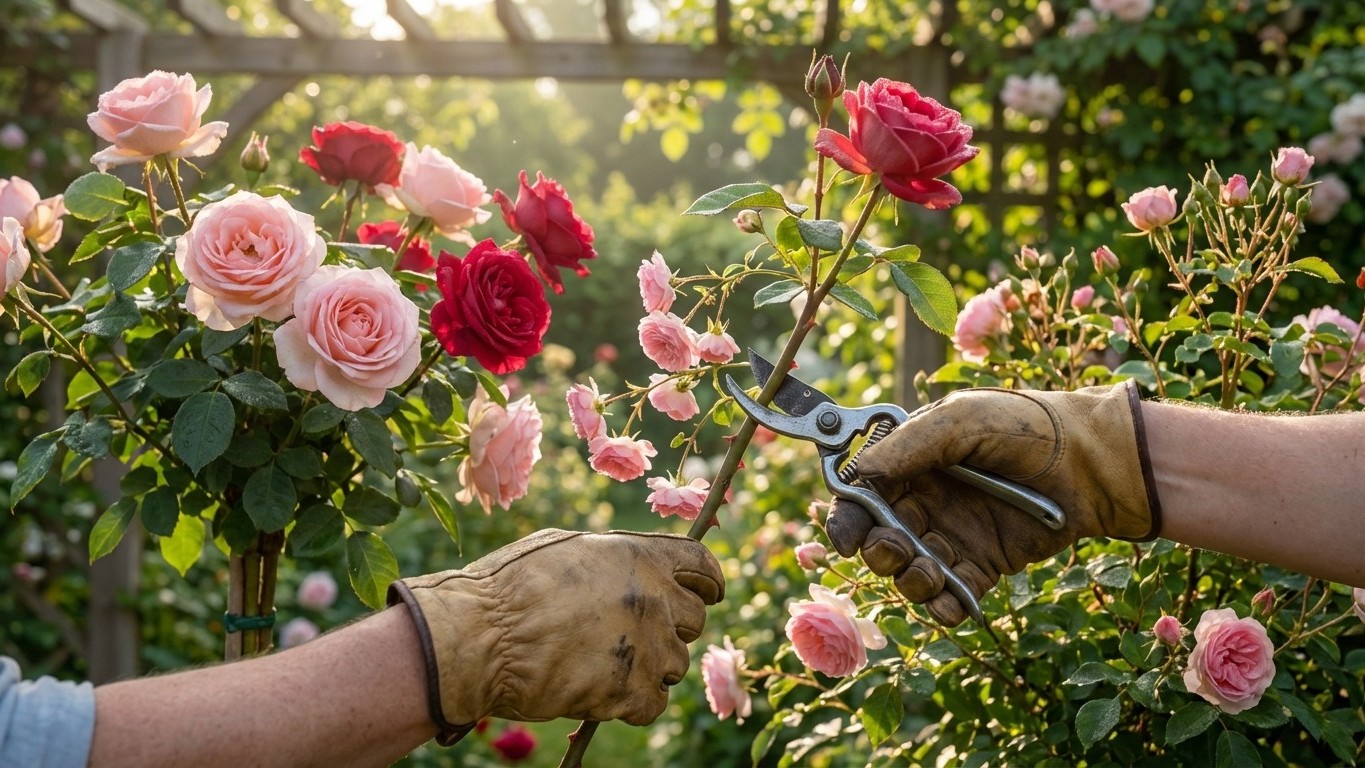
For years, I approached my rose bushes with the Same enthusiastic yet misguided confidence, armed with pruning shears and What I thought was common sense. Every spring, I would trim away with abandon, treating all my roses as if they were the same plant. The results? Disappointing blooms, weak growth, and the nagging feeling that I was missing something fundamental about these queen flowers of the garden.
The revelation came during a conversation with a master gardener who had been tending roses for over three decades. Her changes-everything”>Secret-for-golden-broth”>Secret wasn’t some expensive tool or exotic fertilizer—It Was understanding that different types of roses require completely different pruning approaches. Simple-jar-trick”>Changes–Everything“>This Simple yet profound insight transformed not only my garden but my entire relationship with these magnificent plants.
The Foundation of Rose Intelligence: Understanding Your Varieties
The first step in proper rose care begins with identification. Modern hybrid tea roses, those classic long-stemmed beauties we associate with romance and formal gardens, demand an entirely different approach than old garden roses or climbing varieties. Each type has evolved unique growth patterns, blooming cycles, and structural needs that dictate how and when they Should be pruned.
Hybrid tea roses, for instance, produce their finest blooms on new wood—the current year’s growth. This means aggressive pruning not only doesn’t harm them but actually encourages the vigorous new shoots that will carry the season’s most spectacular flowers. The technique involves cutting back the main canes to about 18-24 inches From the ground, removing all weak, diseased, or crossing branches, and shaping the bush into an open vase-like structure that promotes air circulation.
In stark contrast, many old garden roses and once-blooming varieties flower primarily on old wood—growth from previous seasons. Pruning these roses with the same vigor you’d apply to a hybrid tea is essentially cutting away your entire bloom potential for the year. These heritage varieties require a gentler touch, focusing on removing only dead, diseased, or damaged wood while preserving the mature canes that will burst into flower.
Timing: The Often Overlooked Critical Factor
Beyond the pruning technique itself lies another crucial element that many gardeners overlook: timing. The conventional wisdom of “prune in early spring” oversimplifies what should be a nuanced decision based on your specific rose varieties and climate zone.
For repeat-blooming roses like hybrid teas, floribundas, and grandifloras, late Winter pruning—typically 4-6 weeks before the last expected frost—encourages strong new growth that will support continuous blooming throughout the season. However, once-blooming varieties should be pruned immediately after their flowering period, usually in early to mid-summer. This timing allows the plant to develop new wood that will mature and harden off before winter, setting the stage for next year’s spectacular display.
Climbing roses present their own unique timeline challenges. Established climbers should be pruned in late summer or early fall, focusing on removing the oldest canes and training new growth. The goal is to maintain a framework of strong, well-positioned canes while encouraging the development of flowering laterals—the side shoots that produce most of the blooms on climbing varieties.
The Art of Selective Pruning: Quality Over Quantity
Perhaps the most transformative aspect of proper rose pruning is shifting from a quantity mindset to a quality approach. Rather than Trying to preserve every possible shoot, successful rose gardeners learn to be ruthlessly selective, choosing only the strongest, best-positioned canes to carry forward into the Growing season.
This principle applies regardless of rose type but manifests differently across varieties. For bush roses, this means identifying 4-6 of the strongest, healthiest canes and removing Everything else. These selected canes should be evenly spaced around the plant, creating an open center that allows light and air to penetrate throughout the bush. Weak, spindly growth—Anything-after-a-heavy-meal-anymore-this-infusion-changes-everything-in-5-minutes”>Anything thinner than a pencil—should be removed entirely, as it will never produce quality blooms and only serves to drain energy from the plant.
Shrub roses and landscape varieties often benefit from a different interpretation of selective pruning. Rather than the formal shaping appropriate for hybrid teas, these roses respond well to a more naturalistic approach that maintains their inherent growth habits while removing only the most problematic wood. This might involve cutting out the oldest canes every few years to encourage renewal from the base, rather than the annual comprehensive pruning That Works so well for formal rose types.
Beyond Cutting: Creating Conditions for Success
The most perfectly executed pruning technique will fall short if the surrounding conditions don’t support healthy rose growth. Proper pruning creates opportunities, but follow-up care determines whether those opportunities translate into spectacular results.
Immediately after pruning, roses benefit from a thorough cleanup of the surrounding area. Fallen leaves, old mulch, and debris can harbor fungal spores and pest eggs that will create problems as new growth emerges. Fresh mulch applied after cleanup provides both moisture retention and disease prevention, while a balanced fertilizer gives newly pruned roses the nutritional boost they need for vigorous spring growth.
Water management becomes particularly critical in the weeks following pruning, as roses are directing enormous energy toward producing new growth. Deep, less frequent watering encourages the development of strong root systems, while surface watering can lead to shallow roots that struggle during periods of stress.