
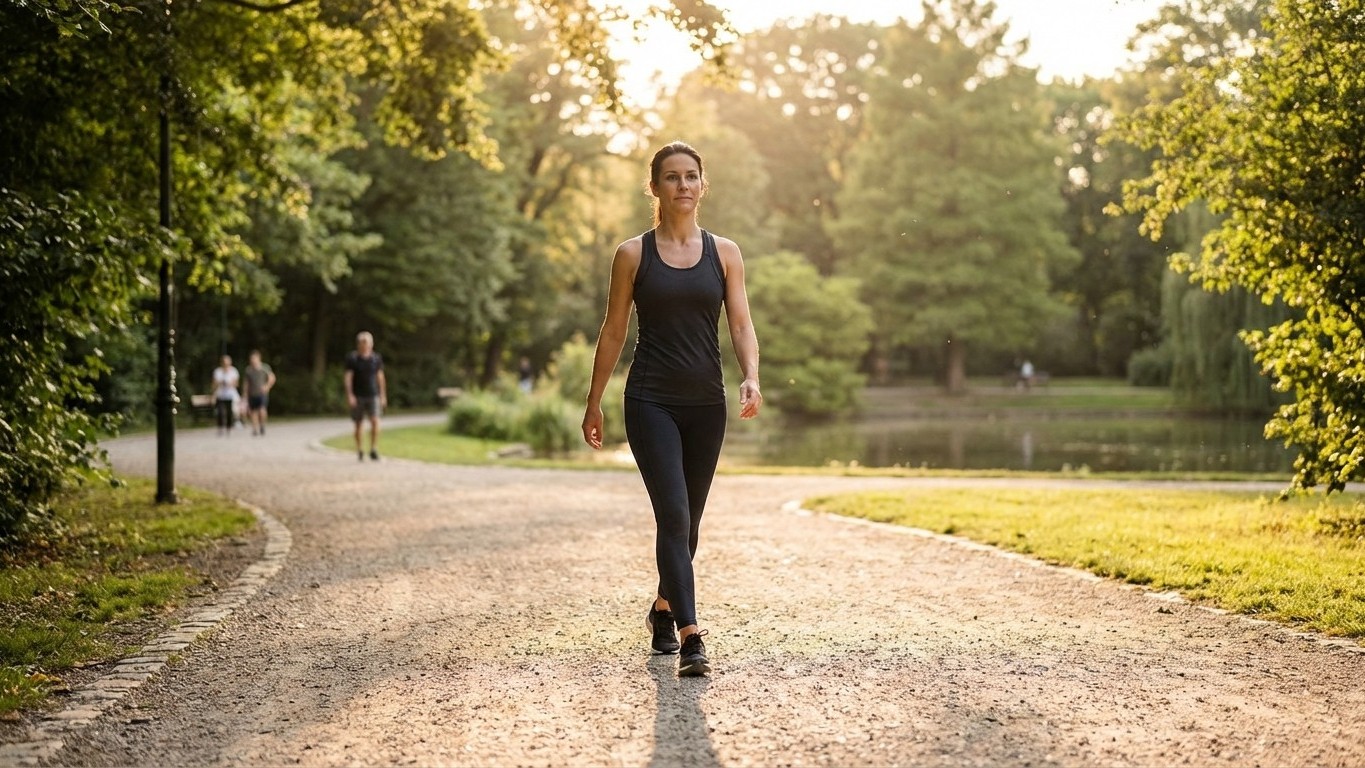
When I first announced to my friends that I’d be Minutes-since-i-do-this-simple-trick-under-the-covers-the-life-changing”>Minutes-since-i-do-this-simple-trick-under-the-covers-the-life-changing”>Minutes-since-i-do-this-simple-trick-under-the-covers-the-life-changing”>Minutes-daily-since-age-50-what-her-cardiologist-discovered-after-one-year”>Walking backwards for thirty days, the reactions ranged from confused stares to outright laughter. But after experiencing the remarkable transformation in my knee health, I’m convinced this unconventional exercise deserves serious attention from anyone dealing with joint discomfort or seeking to enhance their fitness routine.
The idea struck me during a particularly frustrating period when my knees were acting up after years of running on pavement. Traditional forward walking felt increasingly uncomfortable, and I was desperately searching for alternatives that wouldn’t sideline my active lifestyle. That’s when I stumbled upon research From the University of Oregon showing that backward walking can reduce knee stress by up to 40% compared to forward walking.
The Science Behind Reverse Movement
Backward walking, or retro-walking as exercise physiologists call it, fundamentally changes-everything”>changes-everything”>Changes-everything”>Changes-everything-in-5-minutes”>Changes-everything-in-30-seconds”>Changes how our bodies move through space. Dr. Janet Dufek’s biomechanics research at the University of Nevada, Las Vegas, reveals that this movement pattern activates different muscle groups and creates a more balanced loading pattern across our joints. When we walk forward, our heel strikes first, sending impact forces directly up through our skeleton. Reverse walking eliminates this heel strike entirely, replacing it with a gentler toe-to-heel motion that significantly reduces joint compression.
The quadriceps muscles, which are often underdeveloped compared to our hamstrings in our forward-focused world, get exceptional activation during backward movement. This muscle group plays a crucial role in knee stabilization, and strengthening it can dramatically improve joint function. During my experiment, I could literally feel these muscles engaging in ways they never had during traditional exercise routines.
What surprised me most was how quickly my proprioception improved. Proprioception, our body’s ability to sense its position in space, gets a significant workout when we move in unfamiliar patterns. after just two weeks of daily 20-minute backward walking sessions, I Noticed improved balance and coordination that extended into my regular activities. This enhanced body awareness translated into better posture and more mindful movement patterns throughout my day.
The Unexpected Physical Transformation
The changes in my knees became apparent within the first week. The persistent morning stiffness that had plagued me for months began to diminish. By day ten, I could navigate stairs Without-knowing”>Without the subtle wincing that had become my norm. The most dramatic improvement came in my lateral stability – movements that previously felt shaky and uncertain became smooth and confident.
Research published in the Journal of Biomechanics supports these observations, showing that backward walking increases activity in the vastus medialis oblique, a crucial muscle for patella tracking and knee stability. This muscle, often neglected in traditional forward-movement exercises, responds exceptionally well to reverse walking protocols.
The cardiovascular benefits also exceeded my expectations. Backward walking requires approximately 30% more energy expenditure than forward walking at the same speed, According to studies from the American Council on Exercise. This increased metabolic demand meant I was getting a more intense workout in less time, while simultaneously rehabilitating my problematic joints.
Practical Implementation and Safety Considerations
Starting a backward walking routine requires careful attention to safety and progression. I began on a treadmill at the slowest possible speed, holding the handrails for support. The unfamiliar movement pattern initially challenged my balance and coordination, Making-a-major-comeback-in-every-Outfit”>Making safety equipment essential during the learning phase. After mastering treadmill backward walking, I progressed to flat, obstacle-free outdoor surfaces Before eventually tackling gentle inclines.
The key is gradual progression. I Started with five-minute sessions and increased duration by two minutes every three days. This conservative approach allowed my nervous system to adapt to the new movement pattern while preventing overuse injuries. Physical Therapists recommend beginning with no more than 10% of your regular walking time in reverse to allow proper neuromuscular adaptation.
Environmental awareness becomes crucial when walking backwards outdoors. I developed a system of frequent over-the-shoulder checks and chose familiar routes with minimal pedestrian traffic. Parks with wide, smooth paths proved ideal for building confidence and developing rhythm without safety concerns.
Long-term Implications and Lifestyle Integration
After thirty days of consistent backward walking, the benefits extended far beyond my initial knee concerns. My overall movement quality improved dramatically, with better hip mobility and enhanced core stability becoming apparent in daily activities. The mental engagement required for backward movement also provided an unexpected mindfulness component, transforming what could have been mundane exercise into an actively engaging practice.
The rehabilitation potential of backward walking has gained recognition in physical therapy circles, with many practitioners incorporating it into treatment protocols for various knee conditions, including patellofemoral pain syndrome and post-surgical recovery. The low-impact nature combined with targeted muscle activation makes it an ideal therapeutic tool for individuals who find traditional exercises too aggressive for their joint tolerance.
Perhaps most importantly, this experiment demonstrated that innovative approaches to movement can yield remarkable results when we’re willing to step outside conventional fitness paradigms. My knees not only recovered from their previous discomfort but achieved a level of strength and stability that surpassed their pre-problem state. The combination of reduced joint stress, enhanced proprioception, and balanced muscle development created a comprehensive improvement that traditional rehabilitation approaches had Failed-at-crepes-for-years-this-one-whisk-technique-changes-everything”>Failed to achieve.