
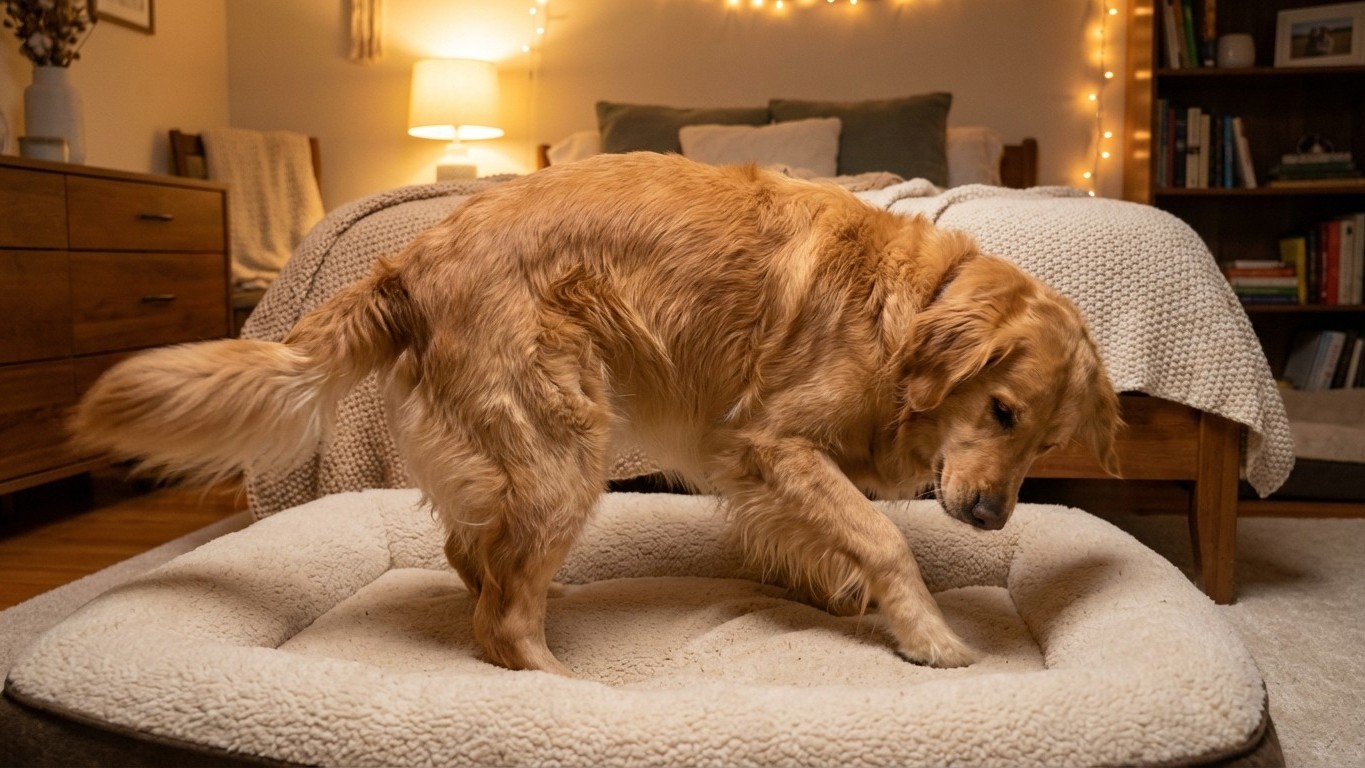
If you’ve ever watched your dog perform their nightly pre-sleep routine—spinning in circles, pawing at their bed, or seemingly “Making” their sleeping spot—you’ve witnessed one of the most endearing yet puzzling canine behaviors. This ancient Ritual, passed down through thousands of years of evolution, reveals fascinating insights into your pet’s wild ancestry and complex psychology.
Recent studies actually-approve”>From the American Kennel Club and animal behaviorists at UC Davis have shed new light on this mysterious bedtime dance. What appears to be quirky behavior is Actually a sophisticated survival mechanism that modern dogs have inherited from their wolf changes-everything”>changes-everything”>changes-everything”>Ancestors, serving multiple crucial purposes that extend far beyond Simple comfort.
The Ancient Survival Instincts at Play
When your dog circles Before lying down, they’re engaging in what researchers call “denning behavior”—a practice rooted in wild canine survival strategies. Dr. Stanley Coren, professor emeritus at the University of British Columbia and renowned canine expert, explains that wolves and wild dogs would perform this ritual to create safe sleeping spaces in tall grass or undergrowth.
The circular movement served to flatten vegetation, create a depression in the ground, and check for potential threats like snakes or insects hiding in the area. This behavior Was So crucial for survival that it became hardwired into canine DNA, persisting even in our pampered house pets who sleep on plush beds rather than forest floors.
Modern research using thermal imaging cameras has revealed another fascinating aspect of this behavior. The pawing and circling motion helps dogs regulate their body temperature by creating air pockets in their bedding material. Even on manufactured dog beds, this instinctive behavior can improve airflow and create a more comfortable microclimate for sleep.
The Scent Marking Component You Never Noticed
Perhaps the most surprising element of your dog’s bedtime ritual involves scent communication that’s invisible to human senses. Dogs have scent glands in their paws, and the pawing motion before settling down serves as a form of territorial marking. They’re essentially claiming their sleeping space and leaving familiar scent markers that provide comfort and security throughout the night.
This scent-marking behavior Explains Why many dogs show strong preferences for specific sleeping spots, even when multiple comfortable options are available. According to veterinary behaviorists, dogs can detect scent molecules at concentrations nearly 100 million times lower than what humans can perceive, making their pre-sleep scent ritual far more significant than we might imagine.
Interestingly, recent studies have found that dogs who are prevented from performing their natural pre-sleep routine often experience increased restlessness and take Longer to achieve deep sleep phases. This suggests that the ritual serves as a psychological transition signal, helping dogs shift from alertness to relaxation mode.
What Different Bedtime Behaviors Actually Mean
Not all dogs perform the same pre-sleep routine, and variations in behavior can reveal interesting insights about your pet’s personality and stress levels. Some dogs perform elaborate spinning sessions lasting several minutes, while others simply paw once or twice before settling down. The intensity and duration of these behaviors often correlate with the dog’s anxiety levels and need for control over their environment.
Dogs who dig extensively at their bedding might be experiencing higher stress levels or may have stronger prey drive instincts. This behavior mimics the wild practice of digging burrows for protection and temperature regulation. Conversely, dogs who settle quickly with minimal ritual might feel more secure in their environment or have been bred for traits that minimize these wild behaviors.
Age also plays a significant role in bedtime rituals. Senior dogs often develop more elaborate pre-sleep routines as their need for comfort increases and their joints require more careful positioning. Puppies, on the other hand, might skip the ritual entirely in favor of immediate collapse after exhausting play sessions.
Supporting Your Dog’s Natural Sleep Needs
Understanding the science behind your dog’s bedtime ritual can help you create a more supportive sleep environment. Rather than discouraging these natural behaviors, veterinarians now recommend accommodating them by providing appropriate bedding that allows for digging and rearranging.
Memory foam beds with removable, washable covers give dogs the comfort they need while allowing for natural nesting behaviors. Blankets or towels that dogs can manipulate and arrange also satisfy their instinctive need to “make” their bed. Some pet owners have found success with elevated cot-style beds that provide the firmness dogs often seek when pawing and circling.
The timing of these rituals can also provide valuable health insights. Changes in bedtime routine intensity or duration might indicate discomfort, illness, or stress that warrants veterinary attention. Dogs who suddenly stop performing their usual ritual or who seem unable to settle despite extensive circling might be experiencing pain or cognitive changes that require professional evaluation.
Next time you watch your dog perform their mysterious bedtime dance, you’ll know you’re witnessing millions of years of evolutionary programming in action. This Simple ritual connects your modern pet to their wild heritage while serving practical purposes that enhance their comfort and security. Rather than a quirky habit, it’s a beautiful reminder of the complex inner lives of our canine companions and their remarkable adaptation to sharing our homes while maintaining their essential dog nature.