
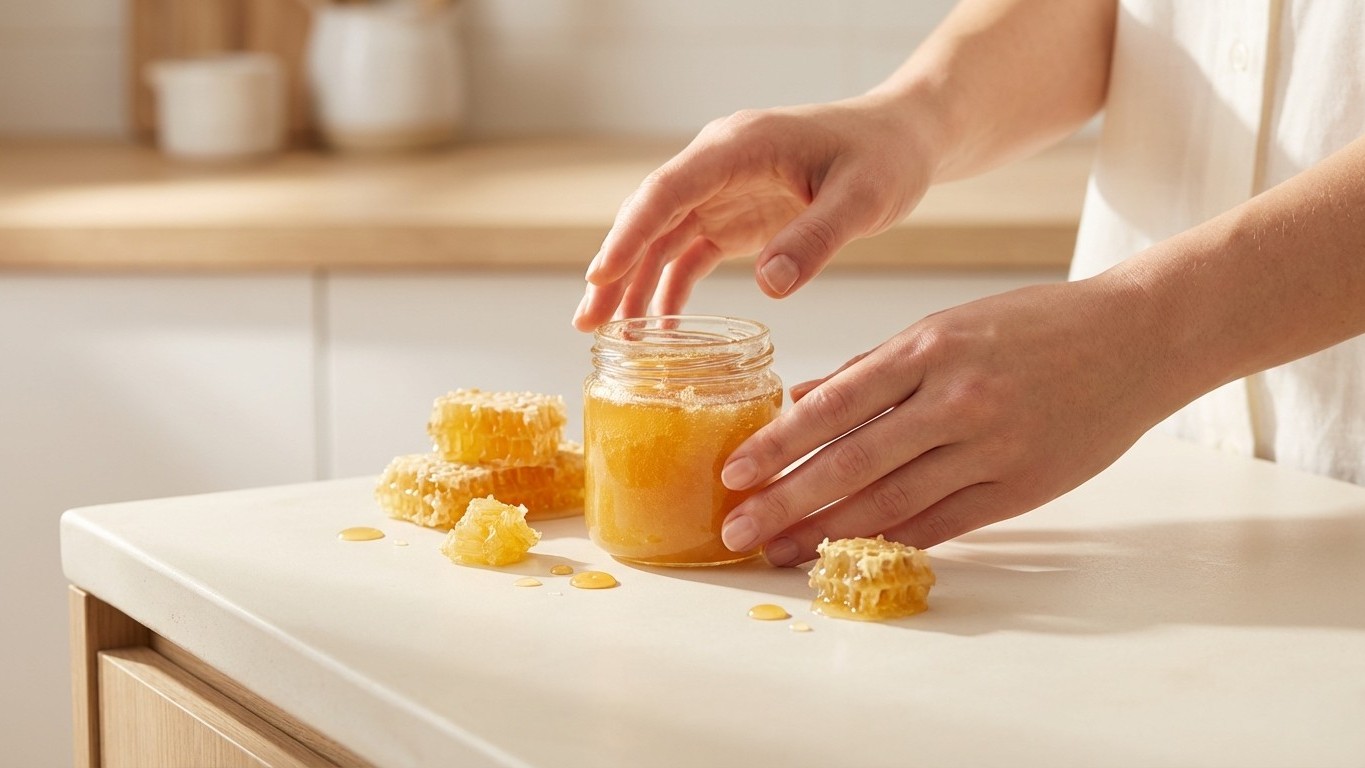
Picture this: you’re standing in your kitchen, a small jar of amber-colored honey on the counter, and the quiet realization that your most effective skincare treatment may have been sitting in your pantry all along. No twelve-step routine, no clinical-grade actives, no $80 serum. Just honey, your fingertips, and ten minutes you actually have.
A honey face mask is one of the oldest DIY skincare rituals in existence.
Honey has been used in skincare for over 4,000 years — the Ancient Greeks, Romans, Egyptians, and East Indians used it to treat skin problems, wounds, and promote healthy, glowing skin.
The common assumption is that this is purely folk wisdom, charming but unscientific. Reconsider.
A bee-derived supersaturated solution composed mainly of fructose and glucose, honey also contains proteins, amino acids, vitamins, enzymes, and minerals — and its antimicrobial properties are pivotal in dermatological applications, owing to enzymatic hydrogen peroxide release or the presence of active components like methylglyoxal in manuka.
That’s not folk wisdom. That’s biochemistry.
But not every skin type responds the same way. And not every honey works identically. This guide covers everything you need: the right honey to choose, recipes adapted to your specific skin concerns, and an honest look at who should think twice before reaching for the jar.
Why Honey Belongs in a Natural Skincare Routine
The Real Skin Benefits of Honey
Raw honey acts as a powerful humectant, attracting moisture to the skin and helping maintain hydration levels for a plump, youthful appearance — and its natural antibacterial qualities help combat acne by reducing the presence of acne-causing bacteria without clogging pores.
Two benefits in a single ingredient. That’s a compelling argument.
In cosmetic formulations, honey exerts emollient, humectant, soothing, and hair conditioning effects, keeps the skin juvenile, retards wrinkle formation, regulates pH, and prevents pathogen infection.
The pH regulation aspect is quietly one of honey’s most underrated qualities.
Honey is naturally acidic, which helps balance the skin’s pH, this can prevent excess oil production while ensuring your skin stays hydrated, healthy, and glowing.
The enzymatic action of raw honey provides mild exfoliation, helping to remove dead skin cells and reveal a brighter complexion without irritation.
And then there’s the healing dimension.
Raw honey promotes faster recovery from wounds and scars due to its anti-inflammatory and tissue-regenerating properties, making it ideal for post-acne care.
This is why dermatologists increasingly point to honey as a serious complementary skincare ingredient, not just a wellness anecdote. For more on how honey fits within a broader ingredient strategy, explore best natural ingredients for skincare routine.
Which Honey to Choose: Raw, Manuka, Acacia
The honey selection question matters more than most people think. The golden liquid you squeeze from a plastic bear-shaped bottle at the grocery store? Probably not your best bet for skincare.
Raw honey is the least processed variety, straight from the hive, since it is unpasteurized, it retains nutrients and antibacterial properties, is a good source of antioxidants, and helps heal wounds, soothe inflammation, and treat acne, eczema, and other skin irritations.
Manuka honey occupies a category of its own.
Regular raw honey is rich in vitamins and beneficial enzymes, while manuka honey contains additional rare and unique nutrients like methylglyoxal (MGO) and antioxidants that offer added skincare support.
Higher UMF grades (15+ and above) are especially effective for managing acne, eczema, and other skin conditions, while lower grades are ideal for daily hydration and maintenance.
The price difference is real, manuka is significantly more expensive, but if you’re targeting active breakouts or inflamed skin, it justifies the investment.
Acacia honey is the quiet third option.
Acacia honey is prepared from nectar collected by bees that feed on acacia flowers, is rich in vitamins, antioxidants, and fatty acids, and aids in wound healing, reducing acne, and hydrating and soothing the skin.
Its lighter texture makes it particularly pleasant to work with in DIY masks, and its mild taste means it tends to be lower in pollen, a practical consideration for those with pollen sensitivities. For a complete overview of how these ingredients slot into a structured routine, the guide on best natural ingredients for skincare routine is worth reading.
Adapting Honey Masks to Your Skin Type
Honey’s gentle yet effective nature makes it a suitable cleanser for all skin types, including sensitive.
True, but “suitable for all” doesn’t mean “used the same way by all.” Here’s how to calibrate.
Oily and Acne-Prone Skin
Honey is beneficial for oily skin due to its antibacterial properties — it helps balance oil production while preventing acne breakouts.
The key is not to over-layer. Pure raw honey applied directly to clean skin, left for 15 minutes maximum, works better than an elaborate mixture that might clog pores with richer additives.
Honey’s low pH (typically 3.2–4.5) inhibits bacterial growth
, which is precisely what acne-prone skin needs. Opt for manuka or raw wildflower honey here. Avoid adding heavy oils.
Dry and Dehydrated Skin
Raw honey adds moisture to the skin and then locks it in, a powerful two-in-one resource, because it is a natural humectant that works like hyaluronic acid or glycerin to draw moisture from the air into skin cells.
For dry skin, pair honey with yogurt or a few drops of jojoba oil to amplify the hydrating effect. Acacia or regular raw honey work beautifully here. Leave the mask on for the full 15–20 minutes before rinsing with lukewarm water.
Sensitive Skin
Sensitive skin demands the most careful approach.
While manuka honey is typically safe for all skin types, very sensitive skin types should exercise caution, beginning with a patch test and working up gradually over time to ensure their skin can handle it.
Use pure, unfragranced honey without additional active ingredients for your first few sessions. No lemon, no essential oils, no cinnamon. Once tolerance is established, cautious additions can be introduced.
Four Simple Honey Mask Recipes
Pure Honey Mask (Universal Starting Point)
The simplest formulation is also the most honest.
Apply a thin layer of raw honey to your face, leave it on for 15–20 minutes, then rinse off with warm water.
That’s genuinely it. No measurement anxiety, no prep time. Slightly warm the honey between your fingers first, it spreads more easily and penetrates better. Always start with a freshly cleansed face. Pat dry with a soft towel afterward, then follow with your regular moisturizer.
Honey & Yogurt Mask (Soothing Hydration)
Both honey and yogurt have moisturizing properties that soothe the skin, making them suitable for even sensitive skin types.
The combination delivers double hydration: honey’s humectant action draws moisture in, while yogurt’s lactic acid gently smooths the surface.
Yogurt provides fatty acids, beneficial bacteria, lactic acid (an alpha hydroxy acid), and vitamins and minerals that can soften the skin and provide a glowy, rejuvenated appearance.
Mix one tablespoon of raw honey with two tablespoons of plain, full-fat yogurt. Apply to clean skin, leave for 15–20 minutes, rinse with warm water. Ideal for dry, sensitive, or dehydrated complexions.
Honey & Lemon Mask (Radiance, With Caution)
This combination is effective. It is also the one that requires the most respect.
Lemon is strong and can irritate sensitive skin or cause sun reactions.
The recipe is straightforward: one tablespoon of raw honey mixed with one teaspoon of fresh lemon juice. Apply for no more than 10–12 minutes, rinse thoroughly, and follow with moisturizer.
Due to the photosensitivity caused by lemon, apply this mask in the evening and always use sunscreen when going out the next day.
If your skin is sensitive, consider halving the lemon quantity or skipping it entirely. Citrus allergy? Hard stop, no lemon, full stop.
Honey & Oatmeal Mask (Gentle Exfoliation)
Oatmeal is a go-to ingredient for irritated or sensitive skin — its soothing properties help with conditions such as eczema or psoriasis, and its anti-inflammatory properties combined with the antibacterial components of honey make this mask an excellent choice for acne-prone skin that is easily irritated.
To make it: grind two tablespoons of rolled oats to a fine powder, mix with two tablespoons of raw honey, and add a small amount of warm water to create a spreadable paste.
Apply to your face and neck, avoiding the eye area, and leave for 15–20 minutes before rinsing with warm water.
The exfoliation here is mechanical (oats) and enzymatic (honey). Gentle, but thorough.
Safety Questions: Who Should Be Careful?
Allergy Risks and Sensitivities
Raw honey is safe for many users, but allergic reactions are possible, especially for those sensitive to bee products or pollen. Watch for redness, itching, or swelling and stop use if any adverse reaction occurs, when in doubt, consult a dermatologist, particularly if you have pre-existing skin conditions or severe allergies.
If you have allergic reactions to pollen, celery, or other bee-related products, steer clear of using honey on your skin.
This is a non-negotiable. Topical reactions to honey can range from mild contact irritation to more significant allergic responses.
If you have an allergy to bees, honey, or pollen, you should steer clear of using any honey product, even if just topically on your skin.
The Patch Test: Non-Negotiable
The patch test is the single most protective step you can take, and the one most consistently skipped.
While honey is generally gentle, some people may be allergic to it — always patch-test a small amount of honey on your inner arm or behind your ear before applying it to your face to ensure you do not have a reaction.
Wait 24 hours before proceeding. This applies to every new recipe, not just pure honey, yogurt, lemon, oatmeal, all carry their own sensitization potential. Two minutes of caution can save days of inflamed skin.
Integrating the Honey Mask Into Your Natural Routine
How Often Should You Use It?
Most people see benefits using a honey mask 1–2 times per week — that gives skin time to respond without overdoing treatment. Adjust frequency based on how your skin reacts, and remember that consistency is often more important than frequency for long-term benefits.
For very dry or irritated skin, twice weekly is a reasonable goal. For oily or acne-prone skin, starting once weekly and assessing the response is the sensible approach. The goal is cumulative benefit, not dramatic overnight transformation.
Which Ingredients to Combine (and Which to Avoid)
Honey can be a great addition to your current skincare routine, but it’s important to consider what other actives you’re currently using — while combining honey with actives like retinol, vitamin C, or niacinamide can be beneficial, using them together may be irritating for some.
On mask days, keep the rest of your routine minimal. Apply the mask to freshly cleansed, slightly damp skin for best absorption. Aloe vera in natural skincare routine pairs beautifully with honey, both are soothing, both work as humectants, and together they create a genuinely calming combination for reactive complexions.
How to Remove the Mask Without Aggravating Skin
Honey is sticky. Removing it abruptly or with cold water can leave residue and cause irritation. The technique: splash your face with warm (not hot) water first to loosen the honey, then use gentle circular motions with damp hands to lift it fully.
You can dilute the honey with purified water to make it less sticky and easier to remove.
Follow immediately with your regular moisturizer while skin is still slightly damp, this seals in the humectant benefit honey just delivered.
For Skin Profiles That Require Extra Attention
Three skin types that deserve specific guidance rather than generic advice.
Acne-prone skin:
Raw honey can help to reduce acne, scarring, and redness while restoring the natural skin barrier and microbiome.
The limitation is that honey alone rarely resolves severe or cystic acne. Think of it as a supportive treatment that reduces bacterial load and calms inflammation between flare-ups, not a substitute for dermatological care when breakouts are significant.
Atopic skin (eczema):
A 2023 study suggests manuka honey can activate certain skin components that may reduce inflammation, which may have implications for allergic skin diseases.
However, atopic skin has a compromised barrier, which means it also absorbs ingredients more readily, and reacts to them more intensely. If you have active eczema, consult your dermatologist before introducing honey masks. Remission periods are the safer window for experimentation.
Reactive and rosacea-prone skin:
In several studies, honey has been shown to benefit various skin conditions such as psoriasis, eczema, acne, and dry skin, but reactive skin can respond unpredictably to the same ingredient on different days. Use pure honey only (no lemon, no cinnamon, no essential oils). Keep application time short — 10 minutes maximum. Always follow with a fragrance-free, calming moisturizer. For a full picture of how to build a routine around reactive skin, the natural skincare routine skin care tips guide covers the complete framework.
FAQ: Honey Face Masks and Natural Skincare
Does a honey mask suit all skin types? With adaptation, yes.
One of the significant benefits of honey face masks is that they can be tailored to fit your skin type — you can mix honey with a variety of other natural ingredients to target your skin’s specific needs.
The base ingredient is broadly compatible; the add-ons are where personalization happens.
What are the real allergy and irritation risks?
Potential honey side effects on face include rare allergic reactions, stickiness, or irritation if the honey contains contaminants or is left too long without proper cleansing.
The patch test protocol eliminates most surprise reactions.
How do you make a honey mask more effective for your specific needs? Match the add-in to the goal: yogurt for hydration and mild exfoliation, oatmeal for calming and exfoliation, a small amount of lemon for brightening (with all the precautions noted above).
You can mix honey with turmeric, yogurt, oatmeal, or a small amount of lemon juice (with caution)
depending on your priorities.
How often should you apply it?
Most people see benefits using a honey mask 1–2 times per week.
More frequent use rarely adds benefit and may disturb the skin’s natural balance.
Which honey is genuinely best for the face? For targeted skin concerns (acne, inflammation), manuka honey offers the most potent antibacterial activity. For general hydration and routine maintenance, quality raw honey is excellent and considerably more accessible.
Raw honey has greater health benefits than honey that has been pasteurized or cut with syrup, and is also more widely available than manuka honey and more affordable as well.
The jar of honey on your counter has more to offer than your morning toast. The question now is simply: which recipe will you try first, and what does your skin actually need right now?