
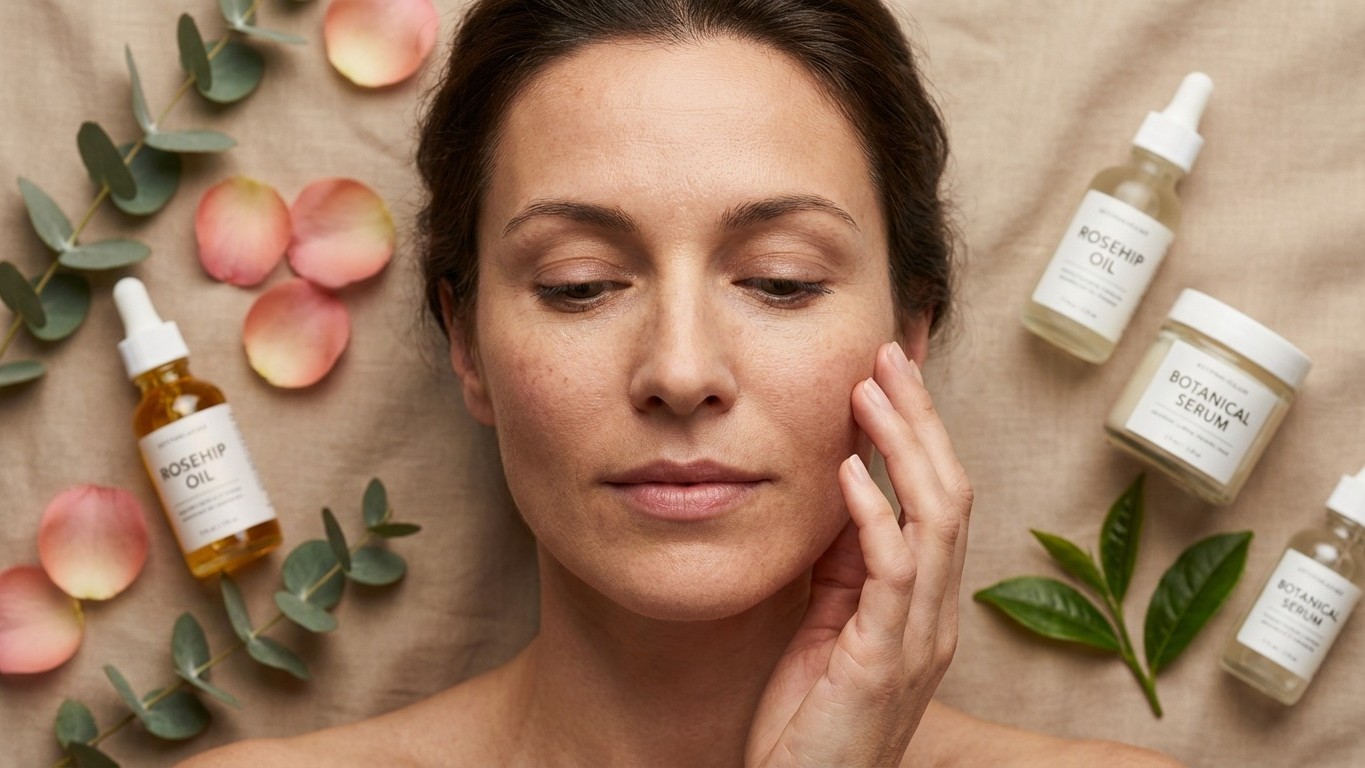
The skin never lies. Touch your face two hours after cleansing: if it’s tight, almost papery, you’re probably dealing with dryness. If it catches the light at every angle, sebum is calling the shots. The problem with most natural skincare guides is that they flatten this reality into a single, generic routine, the same gel cleanser and the same rosehip oil for everyone, regardless of what’s actually happening at a cellular level. Skin type isn’t a personality quiz category. It’s a biological reality that changes with hormones, climate, age, and stress. And the ingredients that save one person’s complexion can wreak havoc on another’s.
This is exactly why a truly personalized approach matters. The natural skincare routine skin care tips framework becomes genuinely effective only when it’s filtered through your skin’s specific needs, not applied as a one-size-fits-all protocol. Below, a skin-type-by-type breakdown, practical enough to actually use, honest enough to challenge what you think you know.
Comprendre les besoins de chaque type de peau pour une routine skincare naturelle efficace
Identifier son type de peau : grasse, sèche, mixte, sensible, mature
Identification comes first, always.
According to the American Academy of Dermatology, oily skin is one of the five main skin types, alongside dry, combination, sensitive, and normal skin.
But the lines between these categories blur more often than skincare brands like to admit. You might have an oily T-zone with genuinely dry cheeks, or sensitive skin that produces excess sebum in summer and flakes in winter.
The simplest at-home test: wash your face with a gentle cleanser, pat dry, wait 60 to 90 minutes without applying anything, then observe.
You know you have oily skin if your skin constantly looks shiny, or your skin feels or looks greasy within hours of cleansing. If you’re dealing with oily skin, implementing a comprehensive natural skincare routine for oily skin can help control sebum production without over-stripping your skin. If you’re dealing with persistent breakouts alongside oiliness, you’ll need a specialized natural skincare routine for acne prone skin that addresses both concerns simultaneously.
Dry skin often becomes tight after washing, has small pores, may contain flaky patches, develops fine lines and wrinkles more quickly than other skin types, and is especially vulnerable to colder temperatures and harsher weather conditions. If you’re experiencing persistent dryness, implementing a comprehensive natural skincare routine for dry skin can help repair your skin barrier effectively. If you’re noticing these signs of aging alongside dryness, consider adopting a natural skincare routine for mature skin that specifically addresses both concerns. Sensitive skin, meanwhile, reacts easily to products and environmental factors with redness, burning, or irritation, requiring a gentle natural skincare routine for sensitive skin that prioritizes soothing and protective ingredients.
Combination skin simply shows both at once, which is the most frustrating of all because it requires a split-zone approach and a specialized natural skincare routine for combination skin.
Sensitive skin is not a diagnosis. It’s a catch-all term indicating that your skin is more reactive than most, with a tendency to become red, inflamed, itchy, or uncomfortable in response to weather, stress, or skincare products.
Mature skin, meanwhile, is less a “type” and more an evolving condition: the barrier thins, sebum production slows, and the priorities shift from oil control to luminosity and suppleness.
Pourquoi adapter sa routine et ses ingrédients selon son type de peau?
Here is the counter-intuitive truth most beauty routines still ignore:
contrary to popular belief, oily skin doesn’t benefit from harsh cleansers or over-exfoliation. Stripping the skin can actually trigger more oil production as the skin tries to compensate for moisture loss.
The same logic applies across skin types. Aggressive actives on sensitive skin don’t accelerate results; they destroy the barrier. Rich butters on oily skin don’t soothe; they congest.
Botanical ingredients are not universally gentle or universally compatible.
Common irritants for sensitive skin types include acids (salicylic, glycolic), dyes, essential oils, fragrances, L-ascorbic acid, parabens, and retinoids.
What soothes one skin type stresses another. A niacinamide serum is a gift for oily and acne-prone skin, while undiluted tea tree oil is a disaster waiting to happen on rosacea-prone complexions.
If you have acne rosacea, you should not use tea tree oil, because it can worsen symptoms.
Knowing your skin type isn’t about finding a label; it’s about knowing which plant-based tools belong in your kit and which ones don’t.
Routine naturelle pour peau grasse : maîtriser le sébum sans agresser
Étapes clés d’une routine naturelle pour peau grasse
For the natural skincare routine for oily skin, every step should work with the skin’s biology, not against it.
Oily skin is primarily the result of overactive sebaceous glands that produce excess sebum. While sebum is essential for maintaining skin barrier function and hydration, an overproduction can lead to a greasy appearance and contribute to clogged pores. Genetics, hormones, environmental factors, and even skincare habits can all influence sebum levels.
A solid natural morning routine for oily skin follows this sequence: a gel or foam cleanser using botanicals like green tea or witch hazel, a lightweight toner to restore pH, a serum targeting sebum regulation (niacinamide or zinc), and a non-comedogenic, water-based moisturizer. Sunscreen, mineral-based, always. Evening adds one key step: a clay mask once or twice a week to deep-clean pores.
Use warm water and don’t cleanse your skin more than twice a day.
Over-cleansing is the most common mistake, and it almost always backfires.
Contrary to popular belief, oily skin still needs hydration. Choose lightweight, non-toxic skincare products with ingredients like tea tree oil, niacinamide from natural sources, and clay-based treatments that balance oil production without stripping your skin.
The moisturizer step is non-negotiable, even when skin feels slick by noon.
Ingrédients à privilégier et à éviter
The botanical world offers genuinely powerful options for oily skin.
Niacinamide can help oily skin in multiple ways. As well as regulating oil production by reducing sebum, it can minimize the appearance of pores and improve texture. It can also strengthen the skin’s barrier, meaning you won’t need to worry about stripping natural oils which can leave complexions dry and irritated.
Witch hazel is a natural astringent that helps tighten pores and reduce surface oil without harsh stripping. It also offers mild anti-inflammatory and antimicrobial benefits, making it useful in toners, spot treatments, and facial mists aimed at oily or acne-prone skin.
Clay is the other hero ingredient, with real distinctions between types:
bentonite is the strongest clay and is extremely effective at removing impurities, making it one of the best ingredients for oily skin,
while
kaolin is considered one of the gentlest exfoliants, making it a good one to start with if you’re new to using clay.
Tea tree oil deserves a special mention.
It may seem counterintuitive to apply oil to already oily skin, but this natural antiseptic has anti-bacterial and anti-inflammatory properties to soothe skin and unclog pores. Tea tree essential oil penetrates and tightens pores, which reduces oil production and can ultimately help balance oily and acne-prone skin.
Ingredients to avoid: heavy oils (coconut oil especially, which has a high comedogenic rating), alcohol-based toners that strip the barrier and trigger rebound oiliness, and synthetic fragrances that inflame without improving anything.
Recette simple : masque naturel pour peau grasse
The most direct natural solution for oily skin is also one of the easiest to make at home. A DIY clay mask requires nothing exotic.
One of the simplest and most effective ways to make a clay mask is to mix equal parts of clay with raw apple cider vinegar. Let it sit on your face for 15 minutes, then rinse with warm water.
For a slightly gentler version, replace apple cider vinegar with rose water and add two drops of tea tree essential oil.
Bentonite clay absorbs unwanted substances but it also absorbs water, so it can dehydrate your skin a little. To avoid over-drying, apply it just a few times a week at first and always follow up with a moisturizer.
One practical note:
always use wooden utensils with bentonite clay, never metal,
as metal reacts with the clay’s ionic charge and reduces its effectiveness. The result is a mask that visibly tightens pores, absorbs midday shine, and keeps congestion in check without the inflammation that harsher treatments cause. Simple. Effective.
Routine naturelle pour les autres types de peau : adapter sans copier
Peau sèche : préserver l’hydratation et éviter le sur-nettoyage
Dry skin has a single, overarching goal: prevent transepidermal water loss. Everything else is secondary.
Those with dry skin should gravitate toward cream or milk-based cleansers that cleanse while adding moisture
, rather than foams or gels that strip what little lipid barrier remains. For a complete approach, explore the dedicated natural skincare routine for dry skin that covers barrier repair in full.
Shea butter helps protect against moisture loss, while rosehip oil has been shown to reduce wrinkles and soothe irritation, and aloe vera is a natural moisturizer that can calm irritated skin.
Layering is the key technique here: apply a botanical hyaluronic acid serum on damp skin, seal with a rich plant butter, and for particularly cold or low-humidity environments, finish with a thin occlusive layer, a dab of squalane or calendula-infused balm.
For the winter, you want to use a thicker, cream-based moisturizer, which will fuse moisture into your skin and not strip it of the oils that are being made naturally.
The natural ingredient to avoid with dry skin: anything drying by definition. Astringents like witch hazel, high-percentage alcohol actives, and over-exfoliation all work directly against the barrier. Exfoliating once a week with a gentle enzyme exfoliant (papaya or pineapple extract) is more than enough.
Peau mixte : équilibrer la zone T et les joues
Combination skin is, honestly, the most demanding to address in a natural routine because it needs two different strategies on the same face. The T-zone (forehead, nose, chin) behaves like oily skin; the cheeks behave like dry or normal skin. A single product applied uniformly will always compromise one zone to help the other.
The solution is multi-zoning: a lightweight gel cleanser across the whole face, then a clay mask applied only to the T-zone once a week, while cheeks receive a nourishing plant oil or balm mask at the same time. Serums with niacinamide work well across the whole face without being too heavy for cheeks or too light for the T-zone.
Niacinamide minimizes the appearance of pores and provides anti-inflammatory and brightening benefits. Its gentle nature makes it suitable for daily use, even in sensitive skin formulations.
Peau sensible ou réactive : douceur avant tout
The rule for sensitive skin is always the same: fewer ingredients, cleaner formulations, and a patch test before everything.
Sensitive skin requires minimal ingredient lists and fragrance-free formulations. Look for soothing botanicals like chamomile, calendula, and oat extract. Avoid essential oils and stick to gentle, proven ingredients.
This last point is particularly important; “natural” does not automatically mean hypoallergenic, and essential oils, however botanical, are among the most common triggers for reactive skin.
Synthetic chemicals and artificial fragrances often irritate sensitive skin, but natural skincare alternatives provide gentle, effective solutions. Whether you’re looking to calm inflammation, prevent irritation, or simply maintain healthy skin, understanding key ingredients is essential.
Oat extract soothes redness and reduces inflammatory responses; calendula repairs the barrier; aloe vera hydrates without weight. The full protocol for reactive skin is mapped in detail in the natural skincare routine for sensitive skin guide.
One practical adaptation for sensitive skin: start with a maximum of three products (cleanser, moisturizer, SPF), and only introduce one new botanical at a time, waiting two weeks between additions. Rushing a sensitive skin routine always ends the same way: redness, irritation, a return to square one.
Peau mature : focus éclat, confort et prévention
Mature skin brings a paradox: it produces less oil but loses moisture faster, so it simultaneously needs both barrier repair and lightweight texture. Heavy creams can feel suffocating; too-light formulas evaporate before they do anything useful. The botanical ingredients that perform best here are layered humectants (plant-derived hyaluronic acid, glycerin), antioxidant-rich plant oils (sea buckthorn, rosehip, marula), and gentle resurfacing agents like fruit enzymes that stimulate cell renewal without aggravating a thinner, more fragile barrier.
Mature skin often benefits from a nourishing facial oil in the evening, something rich in omega fatty acids that support barrier lipid synthesis overnight.
Baobab oil is packed with vitamins A, D, E, and F, which support skin regeneration and hydration. This deeply nourishing oil helps restore the skin’s natural barrier, making it perfect for sensitive and dry skin.
SPF remains non-negotiable at every age, every season, without exception. The connection between UV exposure and accelerated skin aging is one of the most robust findings in dermatological research.
If breakouts are also a concern alongside aging, the natural skincare routine for acne prone skin offers targeted guidance on managing blemishes without disrupting a mature skin barrier.
Adapter sa routine naturelle selon l’évolution de la peau et les saisons
Quand et comment ajuster sa routine?
As the seasons change, so do the needs of your skin. Modifying your skincare routine for each season is crucial to maintaining a healthy, glowing complexion year-round. Each season brings its own unique challenges that can affect your skin differently, from the harsh, cold winds of winter to the hot, UV-heavy days of summer.
Summer tends to amplify sebum production across all skin types.
Warmer temperatures can lead to more sweat and increased oil production, which can lead to clogged pores.
The practical response: switch to lighter textures, gel-based formulas, and increase clay mask frequency if you’re oily or combination.
For the summer, you want to use a gel-based cleanser and then moisturizers that are a bit lighter, typically products that have hyaluronic acid in them, to avoid clogging your pores.
Winter reverses everything. Dry, cold air pulls moisture from the skin’s surface regardless of skin type.
For the winter, you want to use a thicker, cream-based moisturizer, which will fuse moisture into your skin and not strip it of the oils that are being made naturally. Look for products that contain a humectant, which traps water, like glycerin. These ingredients will prevent moisture from evaporating off the skin’s surface.
The signal to adjust is always the skin itself.
No matter what season you are transitioning into, it is always recommended to listen to your skin. Listen to how it is feeling, notice how it appears in the mirror; consider adjusting your skin care regimen to best work with your surrounding conditions.
Tightness, new breakouts, flakiness, or sudden sensitivity are all signs that the current routine has fallen out of sync with what the skin needs right now. The adjustment doesn’t need to be dramatic,
sometimes it’s as easy as adding a hydrating serum or switching to a lighter moisturizer.
Conseils pour une transition douce vers le naturel
Switching from conventional to natural skincare is rarely seamless, especially for oily or acne-prone skin, which may experience a purging phase as the microbiome and sebaceous glands recalibrate. The key is gradualism.
Most people notice improved texture and hydration within 2-4 weeks of consistent use. Significant changes in concerns like hyperpigmentation or fine lines typically take 8-12 weeks, as natural ingredients work more gradually than harsh chemicals.
Replace one product at a time, starting with the product that has the most synthetic ingredients or that has been causing the most irritation. Keep a simple skin journal noting reactions, texture changes, and breakout frequency. This turns anecdotal observation into actual data you can use. And keep the routine minimal:
a good skincare routine is simple, simple, simple. Often people are doing far too much to their skin.
FAQ : Adapter une routine naturelle selon son type de peau
Faut-il tout changer d’un coup?
No, and the impulse to do so is understandable but counterproductive. When you change multiple products simultaneously, you lose the ability to identify what’s working and what’s causing a reaction. Introduce one new botanical product at a time, ideally once every two weeks. If a reaction occurs, you’ll know exactly which ingredient to remove. This is especially important for sensitive skin, where the margin between “soothing” and “triggering” is razor-thin. The exception: if your current routine contains known irritants (sulfates, synthetic fragrance, alcohol denat.), phasing those out more quickly makes sense, since they actively damage the skin barrier while you’re trying to rebuild it.
Quels signes indiquent qu’une routine ne convient pas?
The skin communicates clearly when it’s unhappy. Persistent tightness or flakiness after a cleanser means the formula is too stripping. New breakouts appearing in unusual areas, chin or jawline rather than the T-zone, can indicate a pore-clogging ingredient (comedogenic oils, certain silicone derivatives, heavy butters on oily skin). Redness or stinging after a serum points to an active that’s either too concentrated or incompatible with your current barrier state. Increased sebum production rather than reduced, paradoxically, often means the routine is too drying and the skin is compensating.
Seasonal shifts can trigger breakouts due to increased sweat, humidity, or dryness. Tweaking your routine helps prevent acne by incorporating products that maintain your skin’s equilibrium.
When in doubt, scale back to basics, cleanser, moisturizer, SPF, and reintroduce step by step.
Ressources complémentaires et liens vers les pages sœurs et feuilles du cocon
Each skin type deserves more than a paragraph. The guides below go deeper into each specific protocol, with targeted botanical ingredient lists, step-by-step morning and evening routines, and the nuances that a general overview can’t fully capture.
- For shine control and sebum balance: natural skincare routine for oily skin, with a complete botanical protocol for managing sebum without compromising the barrier.
- For hydration and barrier repair: natural skincare routine for dry skin, focused on plant oils, humectants, and protective layering techniques.
- For redness and reactivity: natural skincare routine for sensitive skin, built around fragrance-free formulations and the most research-backed soothing botanicals.
- For breakout management: natural skincare routine for acne prone skin, covering natural anti-bacterial ingredients and the link between diet, stress, and congestion.
The broader principles behind every type-specific approach, the why behind the steps, the most common mistakes across all skin types, and the foundational philosophy of natural skincare are covered in the natural skincare routine skin care tips guide that anchors this entire content hub.
A personalized natural routine isn’t a destination you arrive at once and maintain forever. It’s an ongoing conversation with your skin, one that shifts with your hormones, your climate, your stress levels, and the decades. The question isn’t just what does my skin need today? but how do I build the attentiveness to notice when that answer changes?