
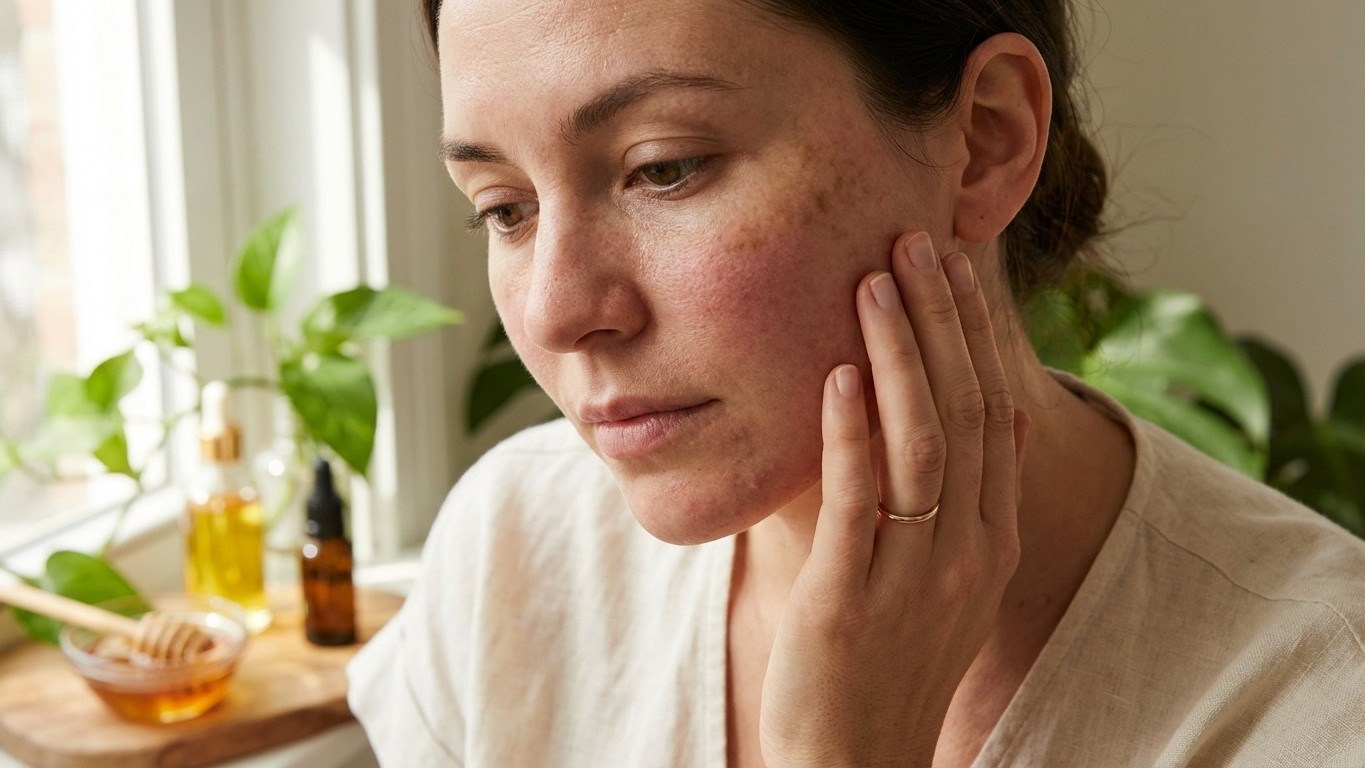
Your skin keeps a record of everything. Every late night, every forgotten sunscreen, every hormonal shift, it shows up, eventually, as a breakout along the jawline, a brown spot on the cheekbone, a flush that lingers longer than it should. The good news? Nature has something to say about all of it. The better news: you don’t need a 12-step routine or a cabinet full of synthetics to address each concern with precision. What you do need is a map, a way to connect the right plant-based solution to the right problem, applied with consistency and intelligence. That’s exactly what this guide is.
Understanding Common Skin Problems: Acne, Dark Spots, Pores, Redness, and Aging
Before opening a single bottle, pause. Skin problems are not interchangeable, and treating them as if they were is one of the most common mistakes in any routine, natural or otherwise. Each concern has its own biology, its own triggers, its own logic.
The Origins and Triggers Behind Each Skin Concern
Acne begins when the skin’s hair follicles become obstructed. This leads to the abnormal accumulation of keratin protein, commonly called comedones, driven by the bacteria Propionibacterium acnes, which produces inflammation and can result in scarring and post-inflammatory hyperpigmentation.
Hormones amplify the problem.
Hormonal shifts, especially around perimenopause and menopause, can ramp up oil production, which means even more potential for clogged pores and inflammation. Fortunately, there are effective natural skin care tips for acne that can help address these concerns without harsh chemicals. Additionally, natural face mask skincare tips can provide targeted treatment for various skin concerns using gentle, plant-based ingredients.
Hyperpigmentation occurs when there is an excess of melanin, the component that gives skin its color, causing patches to darken beyond the surrounding area. Sun exposure, hormonal fluctuations, acne scarring, and inflammation are all potential causes.
Dark spots are frustrating precisely because they’re reactive: they respond to UV rays, to stress, to the aftermath of inflammation. Fortunately, there are effective natural skincare tips for dark spots that can help address these concerns with gentle, plant-based solutions.
UV damage is also the leading cause of premature aging, worsening inflammation and post-acne hyperpigmentation simultaneously.
Enlarged pores feel like a mystery, but the Science is less dramatic.
Enlarged pores usually mean the skin is producing excess oil or has lost elasticity over time. Fortunately, there are proven natural skin care tips for large pores that can help minimize their appearance through gentle, consistent care. more oil — and it’s the repeated congestion or buildup that can stretch the pore over time, making it appear larger. When pores become inflamed or irritated, this can also contribute to redness and skin reactivity. For those dealing with both enlarged pores and sensitive, red-prone skin, gentle natural skincare tips for redness can help address multiple concerns without further irritation.er.
As for redness and reactivity,
a compromised skin barrier is often the root cause of sensitivity: when this protective layer weakens, irritants penetrate more easily, triggering inflammation, moisture loss, and increased reactivity.
The Principles of a Targeted Natural Routine: Right Moves, Fewer Mistakes
The Fundamentals of Natural Skincare
A natural routine isn’t defined by what it excludes — it’s defined by what it intentionally includes. Gentle cleansing. Targeted actives. Hydration. Protection. That’s the backbone. For those specifically concerned with aging signs, a well-structured natural anti aging skincare routine can address these concerns with precision. For more comprehensive guidance on building an effective natural routine, explore these natural skincare tips for glowing skin.
Even the best natural ingredients can’t overcome poor lifestyle habits. Combining quality natural skincare with adequate sleep, stress management, a nutrient-rich diet, and daily sun protection delivers the most dramatic results.
One idea worth questioning: the belief that natural always means harmless.
Like all fragrant essential oils, tea tree oil can be an irritant when applied topically — particularly if it’s used in high concentration.
Frankly, this applies across the board. Plant-derived doesn’t mean infinitely gentle. Concentration, frequency, and skin tolerance all matter just as much with botanical actives as they do with lab-synthesized ones.
Common Mistakes to Avoid in a Natural Approach
When the skin is stripped through over-cleansing or over-exfoliation, it goes into overdrive, pumping out more oil to compensate — which leads to more clogged pores and breakouts. This cycle also leaves skin raw, sensitive, and unable to heal properly.
Less, consistently applied, is almost always more effective than more, applied sporadically.
For most people, cutting back exfoliation to just 2–3 times per week is a genuine turning point.
Another trap: skipping moisturizer on oily or acne-prone skin.
Those with enlarged pores might be tempted to skip a moisturizer altogether, but that can actually trick the skin into producing more oil to moisturize itself — which leads to, yes, enlarged pores.
Hydration is never the enemy. The texture of the moisturizer matters; the category itself doesn’t.
Natural Skin Care Tips by Skin Concern
Acne: Natural Tips, Ingredients, and Routine Essentials
Acne responds well to natural ingredients, provided they’re chosen correctly and not layered aggressively. For natural skin care tips for acne, the starting point is understanding which actives address each phase of the breakout cycle: the bacteria, the excess oil, and the inflammation.
Skin experts recommend tea tree oil as a spot treatment for acne because of its anti-inflammatory and anti-bacterial effects. It helps minimize breakouts and reduce redness and swelling.
Practical application matters here:
you can use a drop of pure tea tree oil, dilute it with jojoba oil, or mix it with water and dab it with a cotton swab on acne, but make sure to only apply a small amount and no more than twice a day.
Niacinamide is a multitasking ingredient loved for its calming and brightening abilities. For acne-prone skin, it helps regulate oil and reduce inflammation — it’s gentle, non-irritating, and highly effective, especially for those dealing with both acne and sensitivity.
Aloe vera, meanwhile, treats various skin issues from burns and rashes to acne, it contains salicylic acid (commonly found in over-the-counter acne products) and zinc, another ingredient found beneficial in treating acne. When used in its natural form as a gel, aloe vera helps reduce and prevent blackheads and whiteheads.
Raw honey is underrated.
Honey has wound-healing and antibacterial properties. It destuffs pores and eliminates acne without drying out the skin. Use it as a 10–15 minute mask or spot treatment.
A 10-minute honey mask twice a week costs almost nothing and is surprisingly effective on inflamed, sensitive breakouts.
Building a simple routine for acne-prone skin:
use a gentle, sulfate-free cleanser with calming botanicals; follow with an alcohol-free toner with green tea or witch hazel; apply diluted tea tree oil or a niacinamide serum as your treatment step; use non-comedogenic oils or light aloe gels as a moisturizer; and always finish with SPF, since even organic acne products can make the skin sun-sensitive.
Dark Spots: Natural Methods for Fading Hyperpigmentation
The most common mistake with dark spots is impatience.
Most natural treatments need 3 to 6 months of regular use to show noticeable improvement.
That’s not a limitation, that’s how cell turnover works. For natural skincare tips for dark spots, the key is interrupting melanin production while protecting new skin from further damage.
Vitamin C is a powerful antioxidant that inhibits tyrosinase, the enzyme responsible for melanin production — making it effective for both preventing new dark spots and lightening existing ones.
Rosehip oil, in particular, is known for its ability to brighten skin and reduce hyperpigmentation with its high vitamin C and retinoic acid content.
A published review in the journal PMC confirmed that
rosehips contain significant levels of vitamin C, making them excellent candidates for skincare formulations used in the treatment of hyperpigmentation, scarring, anti-aging, and wrinkles.
Aloe vera contains aloin and aloesin, two compounds that naturally inhibit melanin production. Fresh aloe gel works best for dark spot removal: simply extract gel from a fresh leaf and apply it directly to affected areas twice daily. Its cooling properties also soothe inflammation, making it ideal for post-acne hyperpigmentation.
One caution worth raising:
citrus juice, when applied directly to skin before sun exposure, can cause phytophotodermatitis — a reaction where plant chemicals plus sunlight lead to burn-like marks, followed by lingering hyperpigmentation. That means lemon can actually worsen the exact problem you’re trying to fade.
If you use vitamin C-based citrus remedies, apply them at night and always follow with SPF the next morning.
Enlarged Pores: Tightening Without Aggression
Here’s a fact that surprises many people:
you can’t actually “shrink” pores permanently.
What you can do is reduce their appearance by keeping them consistently clear and supporting the surrounding skin structure. That shift in mindset changes everything about how you approach this concern. For detailed guidance, see natural skin care tips for large pores.
Niacinamide reduces sebum production in the skin, meaning there’s less oil and debris available to fill the pores and stretch them — making them appear enlarged. Working to replenish the skin’s natural barrier, it helps minimize the appearance of pores.
Clay masks are excellent for absorbing excess oil and impurities from the skin. Ingredients like bentonite or kaolin clay help draw out toxins and reduce the appearance of pores, applying a clay mask once or twice a week can keep skin clear and minimize pore size.
Astringents and toners can help tighten the skin and reduce the appearance of pores. Look for natural ingredients like witch hazel, rose water, or apple cider vinegar — these help balance the skin’s pH and remove residual dirt or oil after cleansing.
Keeping skin well-hydrated is also critical: dehydrated skin can lead to an overproduction of oil, exacerbating pore appearance. Natural oils such as jojoba, argan, or rosehip oil can provide excellent hydration without clogging pores, as they mimic the skin’s natural sebum and help balance oil production.
Redness and Reactive Skin: Calming Naturally and Rebuilding the Barrier
Reactive skin is skin under Pressure. The solution is not to fight it harder, it’s to stop adding to the load. For natural skincare tips for redness, the approach is deceptively simple: calm the inflammation, then rebuild the barrier that should be preventing it in the first place.
In skincare, Centella Asiatica is especially valued for its ability to soothe irritation, reduce redness, and accelerate skin repair — making it ideal for those with sensitive, acne-prone, or damaged skin.
Its power comes from specific bioactive compounds:
Asiatic Acid reinforces the skin’s defenses, strengthening the natural protective barrier, the shield that keeps good things (like moisture) in and bad things (like irritants and pollution) out. A weak barrier is a direct route to redness; Asiatic Acid helps patch the gaps, leading to calmer, more stable skin.
A 2025 clinical study published in the Journal of Cosmetic Dermatology found that
use of a cream containing Centella asiatica leaf extract, ceramide NP, and panthenol effectively strengthened the skin barrier and improved various manifestations of sensitive skin — including reducing skin dryness, relieving sensitivity, and rapidly alleviating facial redness.
Panthenol (vitamin B5) and oat extract are other gentler allies worth layering alongside Cica for a comprehensive calming effect.
Natural Anti-Aging: Prevention and Gentle Correction
The anti-aging space is where the natural approach is most often underestimated. People assume that botanical ingredients can’t compete with prescription retinoids. Enter bakuchiol.
A study published by the British Journal of Dermatology proved bakuchiol to be very similar in terms of anti-aging efficacy to retinol, but without retinol-like side effects such as the dryness some individuals experience.
Bakuchiol is a naturally occurring compound found in the seeds and leaves of the babchi plant (Psoralea corylifolia), native to eastern Asia. It has been studied for its ability to stimulate collagen production, reduce the look of fine lines and wrinkles, improve skin texture and even out tone, and it demonstrates antioxidant and anti-inflammatory properties.
Vitamin C is another cornerstone: by counteracting free radicals, it helps brighten and soften skin while reducing fine lines. It also helps the body produce collagen, the protein that provides structure, support, and strength to skin. The body naturally produces less collagen as we age, which contributes to crepey, saggy, and wrinkled skin.
Any product containing vitamin C should come in an opaque container that reduces light exposure, as vitamin C can be inactivated by light.
Although pore size is largely genetic and varies from person to person, enlarged pores can also develop over time when collagen and elastin weaken, allowing for the widening of pores.
This is where consistent SPF use, vitamin C application, and nightly bakuchiol become less of a luxury and more of a long-term structural investment.
Choosing Natural Ingredients Suited to Each Concern
The Key Ingredients: Tea Tree, Niacinamide, Honey, Aloe Vera, and Plant Oils
The confusion in natural skincare often comes from treating every ingredient as universally applicable. It isn’t.
The “best” natural ingredient depends entirely on skin type and concerns. Oily, acne-prone skin thrives with tea tree oil and niacinamide. Dry skin needs aloe vera and shea butter. Aging skin benefits from vitamin C and bakuchiol. There’s no one-size-fits-all solution.
A quick reference for the most scientifically supported naturals:
- Tea tree oil:
A well-known antiviral, antibacterial, and antifungal essential oil, extracted from the tea tree plant. It’s a natural blemish fighter and one of the best ingredients for acne-prone skin, fighting odor, fungus, or bacteria.
Always dilute before use. - Niacinamide (vitamin B3):
It effectively reduces inflammation and controls sebum production, helping minimize the appearance of breakouts.
It also brightens post-acne marks and reduces pore visibility. - Aloe vera:
Beyond its scar-fighting powers, aloe vera gel offers anti-inflammatory compounds that calm irritated skin while promoting cellular regeneration. - Rosehip oil:
Rosehip seed oil is rich in vitamins A and C, which work together to fade dark spots, smooth skin texture, and stimulate healthy cell turnover. Its essential fatty acids support the skin barrier, making it ideal for repairing sun-damaged or unevenly toned skin. - Centella Asiatica (Cica):
Its anti-inflammatory properties help calm irritated skin, making it ideal for those dealing with flare-ups or sensitivity, while simultaneously supporting skin barrier repair and improving resilience.
Building a Coherent Daily Routine
Sample Daily Routines by Skin Concern
The structure of a natural skincare routine skin care tips guide matters as much as the ingredients themselves. Without a clear order of application and a defined purpose for each step, even the best actives underperform.
For acne-prone skin: a gentle gel cleanser, an alcohol-free witch hazel or green tea toner, a niacinamide serum, a lightweight non-comedogenic moisturizer, and mineral SPF in the morning. At night, swap SPF for a diluted tea tree oil spot treatment or a calming aloe mask.
Use salicylic acid (where applicable) in the morning to keep pores clear throughout the day, and save any retinol-equivalent like bakuchiol for the nighttime routine, or alternate them, using one per night.
For dark spots and uneven tone: vitamin C serum each morning (followed immediately by SPF), rosehip oil at night, and a gentle enzyme-based exfoliant (papaya or lactic acid) two to three times per week.
Alternate between different remedies to prevent overexfoliation, for example, vitamin C treatments on some mornings while applying aloe on others. This approach ensures skin receives diverse beneficial compounds without being overwhelmed.
For reactive, redness-prone skin: prioritize barrier recovery above all else. A Cica-rich serum layered under a ceramide and panthenol moisturizer.
If you’re using a retinoid that leaves skin red and flaky, layering a Cica serum or cream can help mitigate that irritation, allowing you to stay consistent with your routine without compromising the skin barrier.
Hold off on any acids or actives until baseline reactivity improves.
For anti-aging concerns:
simplicity is best for an anti-aging routine, a gentle cleanser, vitamin C, a retinol alternative like bakuchiol, moisturizer, and SPF 30+ sunscreen forms a strong daily foundation.
Testing, Adjusting, Observing: The Practice of Building Healthy Skin
Patch Testing and Monitoring Your Skin’s Response
Every new ingredient is an unknown variable, regardless of how clean or natural it claims to be. The patch test is non-negotiable: apply a small amount of any new product to the inner arm or jaw, wait 24 hours, and look for redness, swelling, or itching before applying it to the full face.
Start with one treatment at a time to see how your skin responds.
This isn’t excessive caution — it’s the only way to know what’s actually working. When you introduce three products simultaneously and your skin reacts, you’ll have no way of identifying the culprit. Introduce one new product per week, at most.
Listen to your skin. If you see unusual redness, dryness, or sensitivity, that’s your cue to pull back.
Document your progress.
Take clear photos every two weeks in the same lighting to track improvements accurately.
Skin changes slowly, and without visual records, it’s easy to become discouraged by progress that’s very real but invisible to the untracked eye.
For acne-fighting ingredients like salicylic acid or tea tree, you might notice fewer breakouts within a few weeks. But for the heavier-lifting anti-aging benefits from ingredients like bakuchiol or vitamin C, think smoother fine lines and a firmer feel, you’re looking at a commitment of 3 to 6 months.
Natural skincare rewards patience, not urgency.
FAQ: Natural Targeted Skincare
Quick Answers to Common Questions
What are the most effective natural tips for treating acne without aggressing the skin? Prioritize anti-inflammatory ingredients: diluted tea tree oil as a spot treatment, niacinamide serum to regulate sebum, aloe vera gel to soothe active inflammation.
Don’t try to treat everything at once. Focus on calming breakouts first — then build in ingredients that support skin renewal without clogging pores.
Avoid harsh scrubs and alcohol-based toners, which strip the barrier and trigger compensatory oil production.
How can you fade dark spots naturally and prevent them from coming back?
Always wear sunscreen — even the best natural brighteners won’t help if UV rays keep triggering pigmentation.
Daily vitamin C in the morning, rosehip oil at night, and a gentle enzyme exfoliant two to three times a week forms an effective trio.
Natural remedies can significantly lighten most types of hyperpigmentation, but complete removal isn’t always possible. Results depend on the depth and cause of pigmentation.
Can enlarged pores be durably minimized with natural ingredients?
Minimizing pores isn’t about shrinking them — it’s about keeping them clear, balanced, and supported.
With consistent use of niacinamide (to regulate sebum), clay masks (to draw out congestion), and gentle AHA exfoliation (to prevent buildup), pores will appear consistently smaller. The durability depends entirely on the consistency of the routine, not on any single ingredient performing a miracle.
Your skin isn’t a problem to be solved in a weekend. It’s an ecosystem, responding to everything you eat, sleep, stress over, and put on your face. Which makes you wonder: if you genuinely understood your skin’s daily triggers, how different would your routine look?