
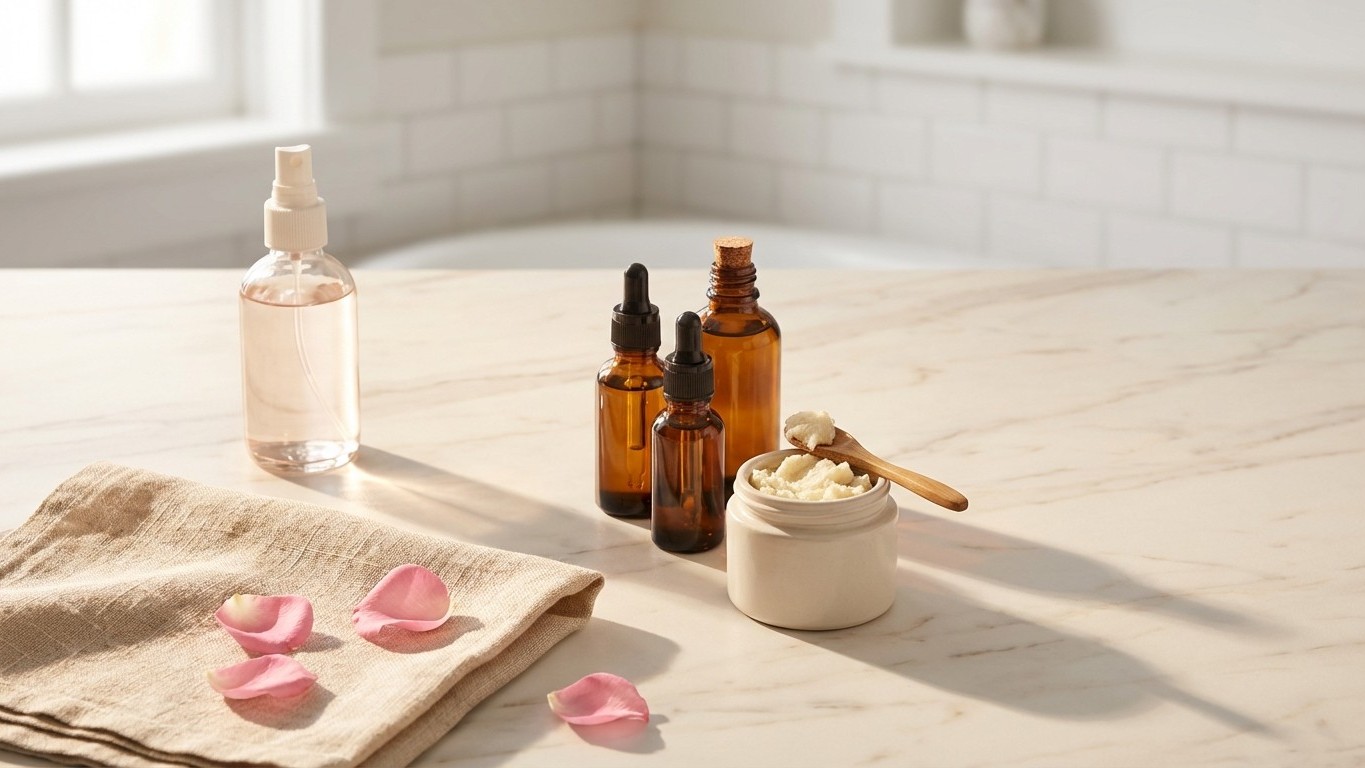
Picture this: a bathroom shelf cleared of a dozen half-empty tubes, replaced by a handful of amber bottles, a small jar of raw shea, and a glass atomizer filled with something that smells unmistakably of roses. That image alone tells you everything about what a natural skincare routine actually promises, not complexity, but intention. Not perfection, but a relationship with your skin.
The natural skincare industry is one of the fastest-growing markets in beauty
, and the momentum isn’t slowing. People are tired of formulas they can’t pronounce, routines that take forty-five minutes, and products that solve one problem while creating three others. The shift toward a natural skincare routine isn’t just a trend, it’s a recalibration of how we think about skin health altogether. And if you’re here, chances are you’re ready to build something that actually works for you, morning and night, across seasons and skin types.
This guide covers everything: why natural routines outperform their conventional counterparts in certain key areas, the non-negotiable steps, the ingredients worth knowing by heart, the mistakes that even well-meaning beginners make, and the skin care tips that genuinely move the needle. For a detailed breakdown of implementing these concepts, you can also explore our comprehensive guide on natural skincare routine steps. Consider this your definitive reference.
Why Adopt a Natural Skincare Routine?
The Benefits Compared to Conventional Routines
Natural (holistic) skincare products differ from conventional ones as they contain naturally occurring and gently processed ingredients, including plant oils and butters, essential oils, and powders — and these products avoid parabens, fragrances, dyes, and other irritating synthetic ingredients.
That’s not a small distinction. It’s the difference between products formulated to trigger an immediate cosmetic effect and products designed to work with the skin’s biology over time. Understanding which best natural ingredients for skincare routine are safest and most effective can help you build a regimen that truly supports skin health. For specific skin concerns like acne, natural skin care tips for acne can be particularly effective when targeting problem areas with gentle, plant-based solutions. If you’re dealing with excess oil production, a tailored natural skincare routine for oily skin can help balance sebum production without over-drying.
Frankly, the most compelling argument for going natural isn’t even philosophical — it’s practical.
The advantage of natural over conventional cleansers is that they don’t contain sulfates and detergents that often draw too much moisture out of the skin; natural cleansers are formulated to remove excess oil while hydrating the skin.
That one shift alone, from a stripping cleanser to a gentle one, can dramatically change how your skin behaves within weeks.
A natural skincare routine for sensitive skin may help rebuild a healthy skin barrier by avoiding products with irritating ingredients. Similarly, adapting your routine to seasonal changes, such as following a natural skincare routine for winter, ensures your skin gets the protection it needs when environmental conditions become harsher.
And here’s the counter-intuitive part: many people think “natural” means less effective. The reality is that
natural skincare focuses on healing from within rather than offering quick fixes; natural skincare routines are simple yet effective, and even though they take some extra time to deliver results, the results will be long-lasting instead of being temporary.
Environmental Impact and Long-Term Skin Health
An organic skincare routine focuses on using products made from natural ingredients that are grown without the use of synthetic fertilisers, pesticides or herbicides and are free from harsh chemicals and artificial fragrances.
Beyond your own skin, that matters for the planet, fewer microplastics, less runoff of synthetic preservatives into waterways, more sustainable sourcing.
Skinimalism, a contraction of “skin” and “minimalism,” is the major beauty trend of recent years. Far from complex routines, it advocates a simple, short and targeted routine, based on essential, well-chosen skincare products that let the skin breathe and regenerate.
This philosophy aligns perfectly with a natural approach:
the barrier function of your skin is key to maintaining healthy, glowing skin, and using too many products can disrupt this natural barrier, leading to irritation.
Less, thoughtfully chosen, is genuinely more.
Key Steps of an Effective Natural Skincare Routine
The architecture of any good routine follows the same logic, whether natural or conventional: start with the lightest, work toward the heaviest.
Your skincare routine should be ordered from lightest to heaviest — for example, you don’t want to put on a thick moisturizing cream before putting on a thin vitamin serum because the serum won’t penetrate your skin as well.
Simple rule, powerful results.
For a detailed, step-by-step breakdown of the right product order, see our guide on natural skincare routine steps.
1. Natural Cleansing: Choices and Techniques
Cleansing is the first step of the morning and night skincare routine. It ensures the skin is free of previously applied products, excess oil, sweat, dirt, and other impurities. It prepares the skin to absorb the beneficial ingredients from the cosmetic products that follow.
In natural cosmetics, the cleansing step often splits into two approaches depending on your skin type. Oil cleansing, using a gentle vegetable oil like jojoba or hazelnut, dissolves sebum and makeup without disrupting the skin’s hydrolipidic film.
A gentle cleanser removes dirt, sweat, oil, and makeup without making the skin dry or itchy; look for ingredients like aloe, green tea, and chamomile.
For those with oilier skin, a mild gel cleanser with plant-based surfactants works better.
One thing worth emphasizing:
make sure you don’t overdo it, because it might disrupt your skin’s barrier which leads to dryness and irritation.
Over-cleansing, twice-a-day, aggressive scrubbing, is one of the most common mistakes in natural routines. Morning cleansing can often be as simple as rinsing with lukewarm water.
2. Gentle Toning: Hydrosols and Floral Waters
This is where the natural routine truly diverges from the conventional. Instead of alcohol-based toners that strip and tighten, the natural world offers hydrosols, and they are something else entirely.
Hydrosols, known as floral waters when they come from the distillation of flowers, offer a gentle alternative to essential oils and adapt to all skin types, even the most sensitive. Their role in a beauty routine is essential: to hydrate and refresh the skin, rebalance the skin’s pH after cleansing, soothe, purify, or tone according to the plant chosen, and facilitate the absorption of plant oils applied afterward.
A hydrosol contains many active principles, aromatic molecules carried by water during distillation. Their presence confers properties to each water, but the concentration of active molecules is lower than in an essential oil. Hydrosols will therefore be very well tolerated and present a much lower risk of allergy than essential oils.
Rose water for anti-aging and calming, cornflower for congested eyes, lavender for reactive skin, witch hazel for oily types.
More than 120 plants are used to obtain hydrosols.
The choice of hydrosol should be as deliberate as any serum selection.
3. Hydration and Nourishment: Serums, Oils, and Natural Creams
Plant oils are the powerhouses of natural skincare — and they’re wildly misunderstood. The idea that oils belong only on dry skin, or that oily skin should avoid them entirely, is one of the most persistent myths in beauty.
A plant oil is suitable for all skin types, even oily skin; gentle and rich in essential fatty acids and vitamins, plant oils have an excellent affinity with the skin, protect it from dehydration, and enhance it.
Rich in essential fatty acids, vitamins, and antioxidants, they nourish deeply, strengthen the skin barrier, and bring comfort, radiance, and suppleness.
The selection, though, matters enormously:
- Jojoba oil:
regulating by excellence, it balances sebum production, ideal for combination to oily skin. - Rosehip oil:
rich in vitamins, including omega-3, it helps with skin regeneration to improve elasticity and promotes radiance. - Calendula macerate:
ideal for sensitive skin, it calms redness and irritations. - Argan oil:
rich and antioxidant, it smooths fine lines and firms the skin, a precious ally for mature complexions.
Plant oils don’t bring water directly to the skin, but they help retain hydration by forming a protective barrier. To maximize their effectiveness, apply them on slightly damp skin after a hydrosol or aqueous serum.
That sequencing is key. Hydrosol first, then the oil to lock everything in.
Rich in essential fatty acids (omega 3, 6, 9), vitamins A, D, and E, and antioxidants, they nourish, protect, and repair while respecting the natural balance of the epidermis.
For a full guide on choosing the right plant ingredients for your specific skin type, explore our dedicated resource on the best natural ingredients for skincare routine.
4. Protection and Prevention: Mineral Sunscreens and Antioxidants
Skin experts agree sunscreen is the most important step of a morning skincare routine, advising its use all year round. Sunscreen protects the skin from UV damage, which leads to cellular damage, premature skin aging, and potentially skin cancer.
In a natural routine, the go-to choice is the mineral filter.
Natural sunscreens contain physical (mineral) sun blockers such as zinc oxide and/or titanium dioxide, providing more protection than conventional sunscreens and reducing irritation in people with sensitive skin.
No endocrine-disrupting chemical filters, no controversial avobenzone, just a physical barrier that sits on top of the skin and reflects UV rays. The texture has improved considerably in recent years, with formulas that no longer leave a white cast.
The antioxidant layer matters too.
In the morning, the focus is on protection — shielding your skin from environmental stressors like UV rays, pollution, and dirt; this is why ingredients like antioxidants (vitamin C, E) and sunscreen are key parts of your AM routine.
And at night, the logic flips:
at night, your skin goes into repair mode, working to heal and regenerate, this is the time to use hydrating and treatment-focused products.
Infallible Skin Care Tips for Healthy, Radiant Skin
Optimizing Application of Natural Products
Knowing your products is only half the equation. How you apply them determines how much benefit you actually extract.
Apply products from thinnest to thickest consistency, this ensures lightweight serums absorb before heavier creams seal everything in.
Water before oil: hydrating serums (water-based) should always go on before facial oils or heavy creams. Oil creates a barrier that prevents water-based products from penetrating your skin.
This is perhaps the most violated rule in natural skincare. Apply your hydrosol first, then a water-based serum if you use one, then your plant oil.
Give each product 30–60 seconds to absorb before applying the next one, this prevents pilling and ensures each ingredient has time to work.
Application technique matters too.
Heat the oil between the palms of your hands and apply it on clean, slightly damp skin to improve penetration, hydration, and limit any greasy effect. The application can be carried out after a hydrosol, for example.
That warmth and dampness aren’t details, they change absorption rates meaningfully.
Incorporate facial massage techniques such as gua sha into your routine to promote circulation and a healthy glow.
This isn’t self-indulgence, it’s lymphatic drainage, increased blood flow, and better product penetration all at once.
Adapting to the Skin’s Evolving Needs
The idea that you find one routine and stick with it forever is a comforting fantasy. Skin changes, with seasons, with hormones, with age, with stress levels, with geography. A natural routine should be responsive, not rigid.
The first step is identifying your skin type — understanding whether you have oily skin, dry skin, combination skin, sensitive skin, or acne-prone skin is essential, as each type has unique needs and requires different products.
But that understanding should be revisited regularly, not established once at twenty and never questioned again.
For guidance tailored to your specific skin type, oily, dry, combination, or sensitive, our complete breakdown of natural skincare routine for oily skin (and all other types) covers exactly that. And if you’re navigating seasonal transitions, adapting your products is simpler than you think, our guide on natural skincare routine for winter walks you through it without requiring a full overhaul.
Integrating Holistic Gestures: Diet, Sleep, Relaxation
Here’s what no serum will ever tell you on its label: your skin is a reflection of your internal environment.
The skin is often a reflection of our inner health; stress, poor diet, and lack of sleep can all manifest as skin issues such as acne, dryness, or premature aging.
The effects of poor sleep are quick to show up in your skin. Melatonin and human growth hormone (HGH) are your skin’s greatest natural allies during sleep; both rise while we sleep and their elevation is crucial for optimal skin repair.
Seven to nine hours isn’t a luxury, it’s when your skin’s actual regenerative work happens.
Antioxidant-rich foods like berries, spinach, and nuts help combat free radicals that cause premature aging. Omega-3 fatty acids in fish and flaxseeds maintain skin elasticity and hydration.
Couple that with adequate hydration, enough water consumption ensures the skin remains hydrated from the inside out, contributing to a plump, elastic, and vibrant complexion, while water helps flush toxins from the body and can reduce congestion in the skin.
Movement matters too.
Regular exercise brings improved circulation, increased collagen production, reduced stress, and improved sleep — all of which directly impact skin appearance and health. When blood flow and circulation increase, oxygen and nutrients are delivered to the skin while simultaneously flushing out waste products.
The gua sha session is wonderful. But the morning walk might do more.
Common Mistakes to Avoid in a Natural Routine
Over-use or Wrong Choice of Ingredients
Natural doesn’t mean risk-free. This is the error that trips up even the most enthusiastic converts.
Natural ingredients like essential oils or plant extracts can be potent allergens.
Lavender, citrus, tea tree, these are powerful bioactive compounds. Used incorrectly or in excess, they irritate rather than heal.
Essential oils are natural but potent, and they can easily trigger allergies if overused. Synthetic ingredients like fragrances and preservatives can be just as problematic.
The goal is never to eliminate synthetic ingredients wholesale and replace them with botanicals in identical quantities, it’s to choose thoughtfully, introduce slowly, and observe what your skin is actually telling you.
Greenwashing is the other landmine here.
Greenwashing is when companies misleadingly market their products as natural or organic and use “green,” eco-friendly packaging. However, their products contain synthetic and potentially harmful ingredients. Always read the ingredient list and research the brand before purchasing a product.
The “natural” label isn’t regulated across the industry — this means each company can choose its definition of “natural.”
COSMOS Organic or ECOCERT certification are better signals than the word “natural” on the front of a box.
Neglecting the Patch Test and Skin Reactions
The patch test is the most skipped step in skincare, by far. And in natural routines, where you’re often dealing with more concentrated botanical actives — it’s more important, not less.
A patch test can help prevent irritation, breakouts, redness, allergic reactions, or long-term barrier damage.
The American Academy of Dermatology recommends
applying the product to a test spot twice daily for seven to ten days.
Less than that and you risk missing delayed reactions, which are common with plant-based actives.
Trying multiple new products at once is a major cause of barrier damage. A patch test skincare routine makes sure each formula suits your skin before you combine them.
Introduce one new product at a time, with several days between each. That patience feels tedious, and then it saves your barrier from a week of inflammation.
If a reaction does occur,
it can often be managed by reducing how often you use the product, being mindful of what other skincare products you’re combining it with, or simply using a smaller amount. Sensitivity can also be a sign of a compromised skin barrier, so be sure to use products that strengthen, not deplete your skin’s barrier.
Misunderstanding the Application Order
The order of application in a natural routine follows a logic that once understood, never needs to be memorized again: water-based before oil-based, lightest to heaviest, thinnest to thickest.
Think of oil as a very effective (and moisturizing) barrier, blocking products from penetrating it, any serums or moisturizers applied atop an oil won’t be able to penetrate the skin’s surface. This is why face oil should be applied as one of the last steps, after moisturizer and before sunscreen.
Morning routine logic: protection. Evening routine logic: repair and regeneration.
Your nighttime routine is super important, first, you want to remove all the makeup, dirt, oil, and pollutants that have accumulated on your skin throughout the day. Second, your skin is in repair mode at night, which makes it the best time to apply targeted treatments.
Routine Examples by Profile and Needs
Natural Morning and Evening Routines (Template Models)
The three-step framework is a solid foundation for anyone starting out.
A good skincare routine doesn’t have to be complicated, the basics consist of three essential steps: cleansing, hydration, and protection with SPF.
A simple morning natural routine might look like this: begin with a gentle plant-based cleanser or simply rinse with lukewarm water; follow with a few spritzes of hydrosol (rose for normal/mature, cornflower for puffy eyes, hamamelis for oily); apply 2–3 drops of a non-comedogenic plant oil while the skin is still slightly damp; finish with a mineral SPF. Five minutes. Done.
An evening natural routine: double-cleanse if you’ve worn makeup (oil to dissolve, then a gentle wash to clear); spritz your hydrosol to rebalance pH; apply a treatment serum if you use one (hydrating, brightening, repairing — depending on need); seal with a richer oil or natural night cream.
In the PM routine, add nourishing oils or sleeping masks for that extra dose of hydration.
The rule worth keeping:
a few well-chosen products can make a huge difference, more isn’t always better.
Adapting to Season, Climate, and Skin Specifics
A winter routine in Minnesota looks nothing like a summer routine in Miami, and shouldn’t. Cold, dry air depletes the skin’s natural lipid barrier faster, calling for richer oils and thicker occlusive layers. Heat and humidity push the skin to produce more sebum, making lighter textures and more frequent cleansing more appropriate.
Skinimalism isn’t a strict rule, it’s a flexible approach that starts with knowing your skin. Understanding whether your skin is dry, oily, sensitive, or mature helps you choose only what you truly need, avoiding unnecessary or irritating products.
The most common seasonal mistake? Keeping the same winter moisturizer through summer and wondering why you’re suddenly breaking out. Or stripping down to a toner and SPF in January and wondering why your skin feels tight by noon. Adaptation doesn’t mean a new routine, it means adjusting textures, layering, and frequency within your existing framework. For a season-by-season approach that doesn’t require throwing everything out and starting over, the guide on natural skincare routine for winter offers practical transitions without the overwhelm.
FAQ and Expert Advice on Natural Skincare
Common Questions About Building a Natural Routine
What are the essential steps of a natural skincare routine?
A typical organic skincare routine includes three core products: a cleanser, a toner, and a moisturiser. In addition to these core products, you can incorporate targeted treatments that address specific concerns such as acne scarring, hyperpigmentation or signs of ageing.
Morning adds SPF; evening adds a richer repair layer. That’s the skeleton, everything else builds from there.
Which natural ingredients should I use for my skin type? The short answer: it depends. Dry skin benefits from rich, fatty oils like rosehip, avocado, or marula.
Combination or oily skin responds well to jojoba (balancing, close to the skin’s natural sebum), hazelnut (regulating, non-comedogenic), or sesame (protective and purifying).
Sensitive skin thrives on calendula, chamomile hydrosol, and hemp oil. Mature skin responds to argan, rosehip, and squalane.
Why avoid certain gestures or products, even natural ones? Because natural doesn’t equal inert.
Remain cautious with certain skincare products that are labeled “unscented” or have plant-based botanical ingredients, as these products may still have fragrance-related ingredients.
Essential oils, particularly citrus and cinnamon, can be photosensitizing. Exfoliating too frequently, even with gentle enzymes, compromises the barrier.
Use exfoliants one to three times weekly to remove dead skin cells without causing irritation.
For targeted advice on specific concerns, acne, hyperpigmentation, enlarged pores, redness, the resource on natural skin care tips for acne and other common issues offers evidence-based approaches by problem type.
Practical Tips for Starting Gently
If you’re excited to try a full routine of new skincare, your skin needs time to adjust. Introducing too many new products at once can make it hard to pinpoint what’s causing a reaction should one occur. Start slowly, introduce one new product at a time, ideally with several days between each, so you can monitor your skin’s response.
A three-week entry plan works well for most people: week one, just the cleanser. Week two, add the hydrosol. Week three, add the oil or moisturizer. Only then introduce anything active, vitamin C, an AHA enzyme, a plant retinol like bakuchiol. This isn’t slow; it’s strategic. You’re building a relationship with your skin, not following a prescription.
Holistic skincare is focused on long-term health, so noticeable improvements often take 4–6 weeks, depending on factors like skin type, lifestyle, and consistency.
That timeline requires patience, and a different definition of success. Not the overnight transformation that a retinol ad promises, but a steadier, quieter improvement in texture, moisture retention, and resilience that compounds over months.
Complementary Resources and Useful Links
A natural skincare routine doesn’t exist in isolation, it’s a living system that connects your product choices to your lifestyle, your skin type, your environment, and your goals. This guide is your starting point, but the real precision comes from specialization.
Ready to go deeper on the order and structure of a routine? Our guide on natural skincare routine steps walks through every stage with specific product recommendations and beginner adaptations. If you’re navigating the particular challenges of combination or oily skin, the resource on natural skincare routine for oily skin offers type-specific protocols. Those dealing with persistent concerns, breakouts, dark spots, dilated pores, or chronic redness, will find targeted natural solutions in our problem-by-problem breakdown of natural skin care tips for acne and beyond. And for anyone ready to move beyond basics, the deep dive into the best natural ingredients for skincare routine covers what to choose, how to use it, and how to stay safe while experimenting with actives.
The question that matters most isn’t “which ten products should I buy?” It’s something simpler and harder: what does your skin actually need, right now, in this season of your life, and are you willing to listen closely enough to find out?