Five Minutes. That’s all it takes, not a 45-minute vinyasa flow, not a guided meditation requiring perfect silence and a cushion you keep forgetting to buy. Just five minutes of a breathing technique so simple it almost feels like a cheat code for your nervous system. Stanford neuroscientist Andrew Huberman and his colleagues published research confirming what Japanese wellness culture has quietly practiced for generations: cyclic sighing, a controlled breathwork method, outperforms both mindfulness meditation and other breathing protocols when it comes to reducing stress and improving mood in real time.
The study, which tracked participants over a month and measured physiological markers alongside self-reported mood, found that just five Minutes of cyclic sighing daily produced the most consistent improvements in positive affect and reductions in anxiety, beating mindfulness meditation on nearly every metric tested. That’s not a small footnote. That’s a reorientation of how we think about accessible stress relief.
Key takeaways
- A Stanford study compared four different stress-relief techniques over 28 days—and one ancient Japanese practice dominated every single metric
- The winning technique takes exactly 5 minutes, requires zero equipment, and produces measurable calm while you’re actively doing it
- The wellness industry has been overcomplicating stress relief for years—but the answer might have been hiding in plain sight
What Cyclic Sighing Actually Is (And Why It’s Not What You Think)
Here’s where the counterintuitive part comes in. Most of us have been trained to think that stress relief requires slowing everything down, long exhales, total stillness, the kind of quiet that’s nearly impossible to find in a Brooklyn apartment or a busy Tuesday afternoon. Cyclic sighing flips that assumption. The technique involves a double inhale through the nose (a short first breath, then a second sharp sniff to fully inflate the lungs), followed by a long, slow exhale through the mouth.
That second sniff is the key. It re-inflates the small air sacs in the lungs called alveoli, which tend to collapse under stress. The extended exhale then activates the parasympathetic nervous system, the biological “rest and digest” mode that counteracts cortisol spikes. Physiologically, you’re essentially hitting a manual reset button on your stress response. The whole cycle repeats for five minutes, and that’s it. No app subscription required.
The practice has roots in traditional Japanese breathing exercises, where breath control has long been considered a pillar of mental clarity and emotional regulation, woven into everything from the tea ceremony to martial arts training. Western science is only now catching up with the precision to explain why it works so well.
The Stanford Data, Unpacked
The Stanford study (published in Cell Reports Medicine in 2023) recruited over 100 participants and divided them into four groups: cyclic sighing, box breathing, cyclic hyperventilation, and mindfulness meditation. Each group practiced their assigned technique for five minutes daily over 28 days. Researchers measured resting heart rate variability, sleep quality, anxiety levels, and positive versus negative emotional states.
Cyclic sighing came out on top across the board. Participants reported better sleep, lower anxiety, and a more stable positive mood compared to the other groups. Mindfulness meditation did produce benefits, this isn’t an argument that meditation is useless, but cyclic sighing worked faster, required less cognitive effort, and showed stronger physiological effects during the actual practice session. For people who find sitting in silence activating rather than calming (more common than the wellness industry acknowledges), this is significant.
A surprising detail from the data: the benefits of cyclic sighing were strongest during the exhale phase itself, suggesting the technique works in real time, not just cumulatively. You feel better while you’re doing it, which makes consistency far easier to maintain than practices that require weeks before any payoff becomes noticeable.
How to Actually Build This Into Your Day
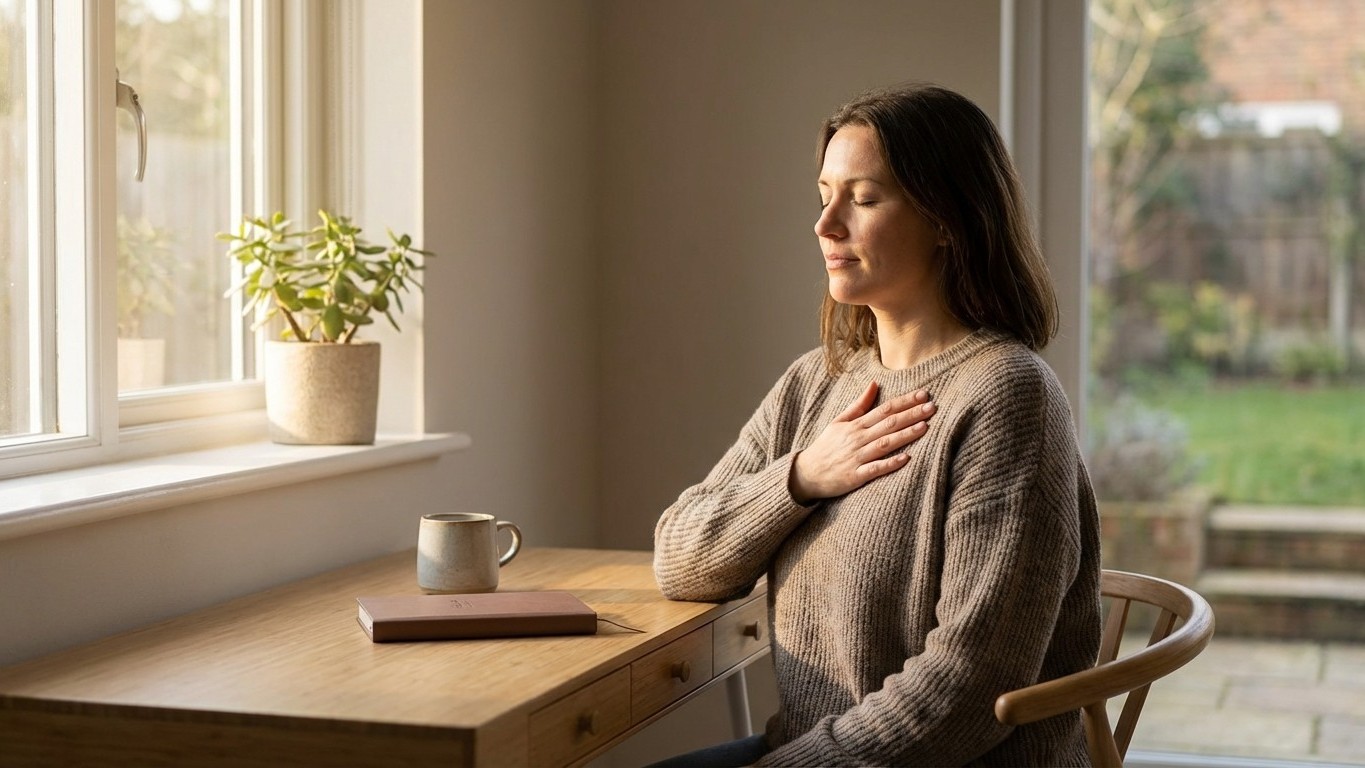
The beauty of this practice is its radical portability. You can do it sitting at your desk before a difficult meeting, in your car before walking into a school pickup, in a bathroom stall at a party when the social energy has hit its ceiling. No mat, no silence, no particular posture required.
A simple approach that works well: set a five-minute timer and start with a natural inhale through the nose, then add a second short sniff at the top to fully expand the chest. The exhale should be deliberate and slow, longer than feels instinctive, through slightly parted lips. Let the rhythm find itself. By the third or fourth cycle, most people notice a physical heaviness in the shoulders, the jaw unclenching, the space behind the eyes softening. These aren’t placebo effects; they’re the parasympathetic system coming online.
Timing matters less than consistency. Morning sessions seem to set a calmer baseline for the day. Evening sessions help the body transition out of work-mode. Midday, if you’re the kind of person whose 2 p.m. looks nothing like your 9 a.m., a five-minute reset can genuinely change the second half of your afternoon. The Stanford team didn’t prescribe a specific time, they just required daily practice, which itself says something about flexibility.
The Bigger Shift This Points To
There’s a quiet reckoning happening in wellness right now. The industry spent years selling complexity, layered supplement stacks, hour-long morning routines, expensive retreats as prerequisites for feeling okay. What the research keeps returning to is something more uncomfortable for brands to monetize: the most effective tools are often the simplest ones, the ones that require nothing but your own body and a few undistracted minutes.
Cyclic sighing doesn’t need a teacher certification, a studio membership, or a $40 candle to work. That’s almost threatening to an industry built on elaborate rituals. But for anyone who has ever felt vaguely guilty that meditation “doesn’t stick” for them, who has downloaded three apps and abandoned all three, this research offers something rarer than a wellness trend. It offers a genuine option.
The question worth sitting with isn’t whether five minutes is enough. The data suggests it is. The more interesting question is what else we’ve been overcomplicating in the name of self-care, and what other ancient, unglamorous practices are quietly waiting to be rediscovered.
Sources : radiantselftherapy.com | globalwellnessinstitute.org