
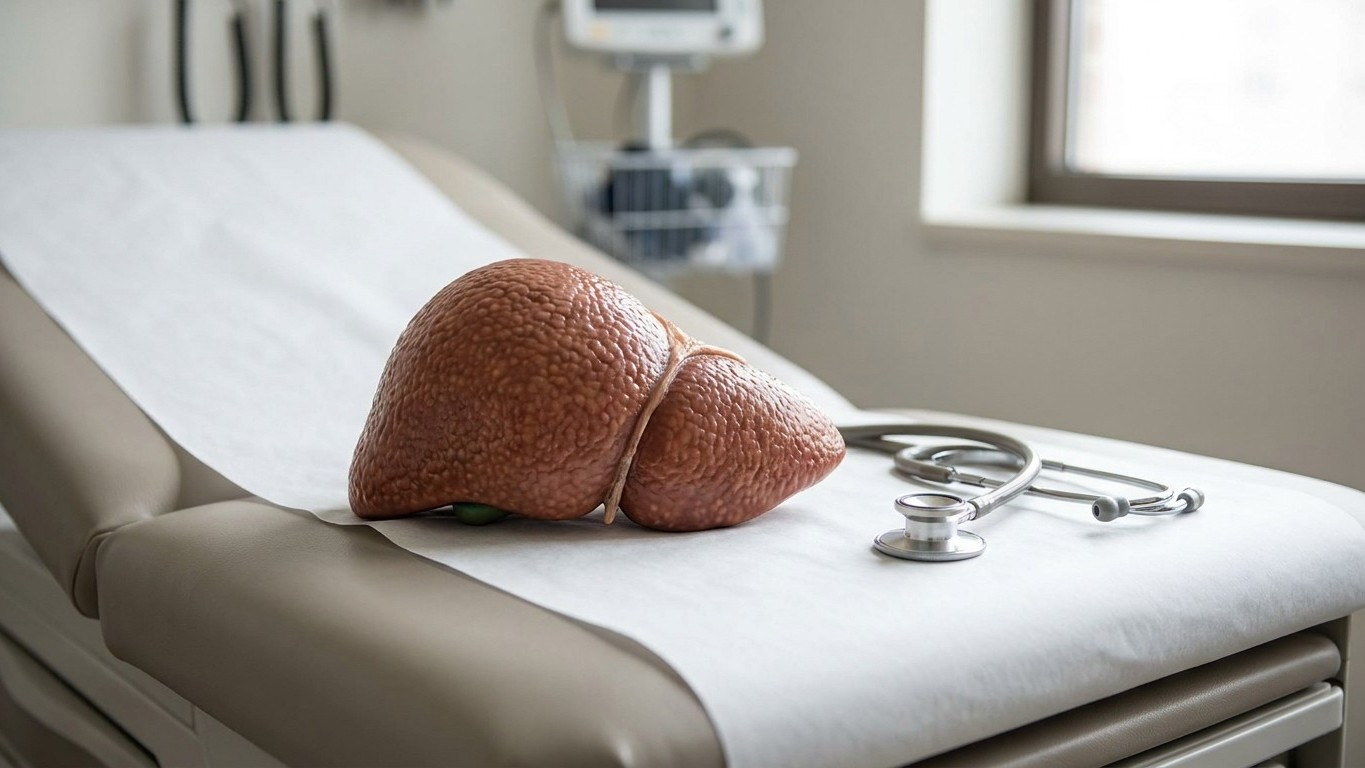
The blood test comes back. The numbers are off. And the first reflex, predictable as gravity, is to think: my heart. Cardiologist, statin, low-fat diet. The cardiovascular risk story around cholesterol is so well-rehearsed that it has become the only story. The problem is, it leaves out the organ that is most likely already struggling by the time elevated LDL shows up on a panel, silently, without symptoms, without fanfare. That organ is the liver.
Key takeaways
- One metabolic trigger is quietly damaging three organs at once — but medicine only warns about one
- Over 25% of adults worldwide have fatty liver disease and don’t know it, while projections show liver cancer cases doubling by 2050
- The same lifestyle changes that protect your heart also rescue your liver and kidneys — if you know to target them
The Organ You’re Not Watching
Here’s the part the standard cholesterol conversation skips: your liver creates cholesterol to help you digest food and make hormones. The liver is not a passive bystander in this story. The problem happens when LDL particles, instead of returning to the liver to be recycled, squeeze into blood vessel walls and get chemically modified, there, they incite or exacerbate an immune reaction called inflammation. But long before that wall damage becomes visible, the liver itself is already absorbing the shock.
Non-alcoholic fatty liver disease (NAFLD) encompasses a spectrum of hepatic changes ranging from simple fat deposition to steatohepatitis, which may progress into fibrosis, cirrhosis, or hepatocellular carcinoma. Its hallmark is the excessive accumulation of neutral lipids that result from an imbalance between lipid availability and removal. And cholesterol sits at the center of this imbalance. Research data suggest that disturbed hepatic cholesterol homeostasis and free cholesterol accumulation are directly relevant to the pathogenesis of NAFLD and NASH.
The counterintuitive reality: the heart-disease narrative around cholesterol is accurate but incomplete. Evidence from preclinical models strongly indicates that a high dose of cholesterol is an independent risk factor for liver damage. The accumulation of cholesterol in both the liver and arteries acts as a trigger for inflammation, with subsequent manifestations of both liver disease and cardiovascular disease. Two fires from one spark, most people only get warned about one.
A Silent Crisis Already Underway
The scale is staggering, and largely underappreciated. NAFLD is an increasingly common condition believed to affect more than 25% of adults worldwide. Unless specific testing is done to identify it, the condition is typically silent until advanced and potentially irreversible liver impairment occurs. As a result, the majority of patients with NAFLD are unaware of having it.
In the US, the trajectory is alarming. MASLD prevalence, the updated term for metabolic fatty liver disease, was predicted to increase from 86.3 million, or 33.7% of US adults, in 2020 to 121.9 million by 2050. New cases of hepatocellular carcinoma are projected to double from roughly 11,500 per year to over 22,400 annually by 2046–2050, while annual liver-related deaths are expected to triple from 30,500 to 95,300. These are not abstract projections. They describe a generation of people currently receiving cholesterol advice that focuses almost entirely on the wrong destination.
One detail that tends to reframe the conversation entirely: accumulating evidence suggests that lipotoxicity mediated by hepatic free cholesterol overload is a mechanistic driver for inflammation and fibrosis characteristic of NASH in many animal models and in some patients. The liver doesn’t just coexist with high cholesterol, in certain configurations, it bears the brunt of it before the arteries do.
MASLD, the new clinical terminology replacing NAFLD, is strongly associated with metabolic disorders such as obesity, type 2 diabetes, and dyslipidemia. MASLD and dyslipidemia are deeply interconnected, driven by shared pathophysiological mechanisms. Dyslipidemia and fatty liver are not two separate chapters. They are the same book.
The Kidneys Are Also Keeping Score
The liver is the most overlooked target organ in high cholesterol, but not the only one. The kidneys are quietly accumulating damage too, especially when the lipid picture includes elevated triglycerides and low HDL alongside LDL. High cholesterol can build up in arteries to increase the risk of a heart attack or stroke. But high cholesterol is not good for the kidneys either.
Research from Johns Hopkins showed that among the lipids investigated, triglycerides had the strongest association with future decline in renal function. Individuals with high triglycerides were 1.5 times more likely to experience a decline in kidney function compared to those with low triglycerides, and these associations persisted even after accounting for sex, race, age, blood pressure, and diabetes status. More recently, a 2024 study using NHANES data found that a 1 mmol/L elevation in remnant cholesterol increased the risk of chronic kidney disease by 38%, and those in the highest quartile of remnant cholesterol had a 43.6% higher risk of concomitant renal damage than those in the lowest quartile.
The kidney-cholesterol relationship runs in both directions. Chronic kidney disease is associated with dyslipidemia comprising high triglycerides, low HDL, and altered lipoprotein composition, and cardiovascular diseases are the leading cause of mortality in CKD, especially in end-stage renal disease patients. Organ damage doesn’t proceed in tidy, isolated lanes. The liver, kidneys, and arteries are all responding to the same biochemical environment.
What Actually Changes When You Treat It That Way
The practical shift this demands is not dramatic, but it is real. Managing cholesterol purely for cardiovascular risk means optimizing one parameter while ignoring two organs that may already be compromised. Emerging evidence suggests that statins may have beneficial effects on MASLD beyond their primary role in reducing cholesterol, through several mechanisms including anti-inflammatory, antioxidant, anti-fibrosis, and immunomodulatory effects.
In patients with NAFLD, a total body weight loss of at least 5% is required to substantially improve hepatic steatosis, at least 7% to improve hepatic inflammation or achieve NASH resolution, and at least 10% to improve hepatic fibrosis. These are concrete, achievable thresholds, the kind a doctor could put on a prescription pad. The irony: the same lifestyle interventions that protect the heart also protect the liver and kidneys. The difference is in the framing. Tell someone their cholesterol threatens their heart, and they picture a future event. Tell them their liver is already accumulating fat right now, and the urgency shifts.
Hepatic complications from NAFLD include nonalcoholic steatohepatitis, hepatic cirrhosis, and hepatocellular carcinoma. In addition, NAFLD is itself a risk factor for atherosclerotic cardiovascular disease, which is the principal cause of death in patients with NAFLD. The liver and the heart are not competing concerns. They are the same concern, viewed from different angles. And right now, medicine is very good at watching one angle and almost blind to the other.
The next step in cholesterol management, for anyone serious about it, may be a liver ultrasound, not just a repeat lipid panel.
Sources : pmc.ncbi.nlm.nih.gov | frontiersin.org