
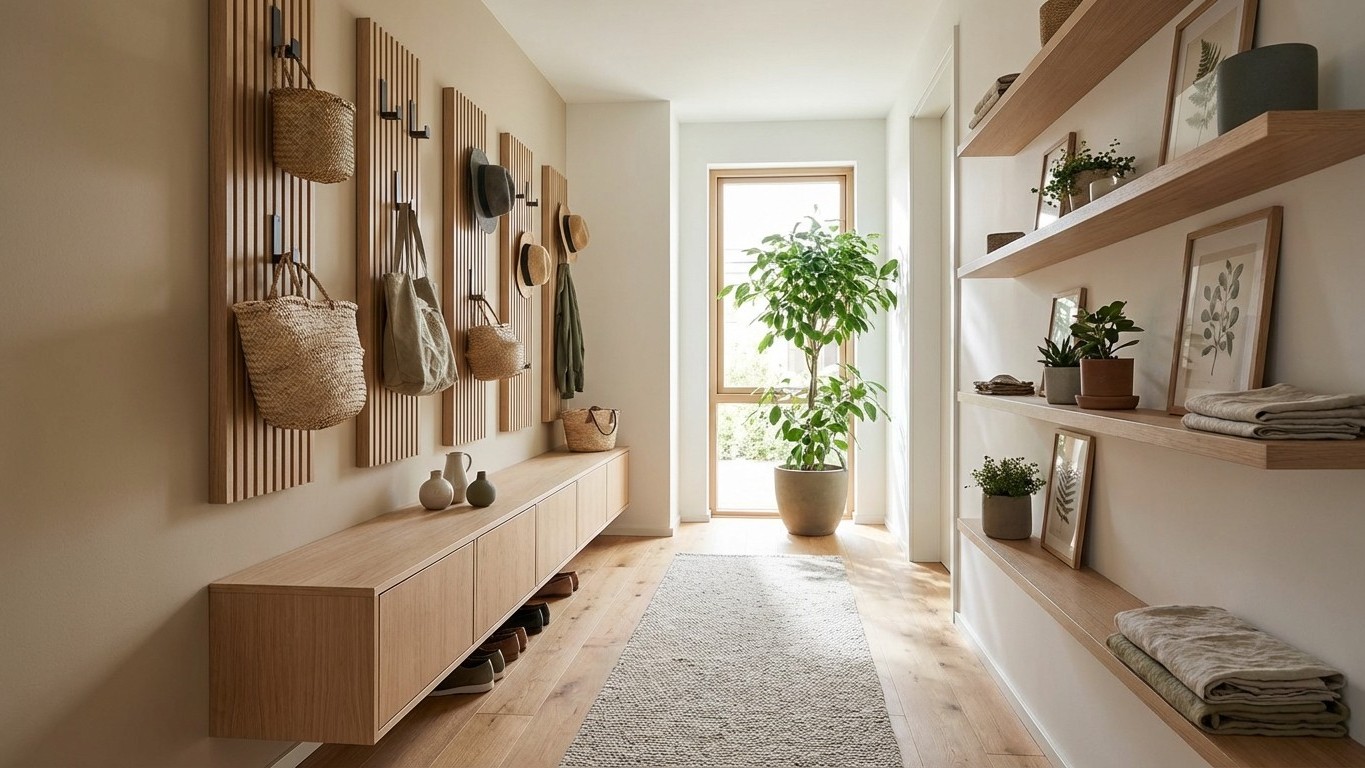
When space is at a premium and your narrow hallway resembles a chaotic obstacle course of scattered shoes, the last thing you need is another bulky piece of furniture. Enter a centuries-old Japanese approach that revolutionizes small-space storage without adding a single rack, cabinet, or organizer to your floor plan.
This method, rooted in the Japanese philosophy of seiton (systematic arrangement), transforms vertical wall space into a highly functional Storage system that can easily double your hallway’s capacity. The secret lies in understanding how Japanese homes, traditionally compact and efficiently designed, have mastered the art of invisible storage that keeps essential items accessible yet completely out of the way.
The Vertical Revolution: Wall-Mounted Zones
The core principle involves creating designated vertical zones using a combination of wall-mounted hooks, narrow shelving systems, and strategic placement techniques. Instead of thinking horizontally about floor space, this method encourages you to reimagine your hallway walls as a three-dimensional storage canvas.
The beauty begins with installing a series of sleek hooks at varying heights along your hallway walls. These aren’t random placements, but carefully calculated positions that correspond to different family members and seasonal needs. Lower hooks accommodate children’s backpacks and light jackets, while higher positions handle adult coats and bags. This creates natural separation without physical barriers, maintaining the hallway’s open feel while organizing belongings by user and frequency of use.
Complementing the hook system, narrow floating shelves positioned strategically above eye level provide homes for items like gloves, scarves, and seasonal accessories. These shelves, typically no deeper than four to six inches, maintain the hallway’s flow while offering substantial storage capacity. The key is selecting shelves that blend seamlessly with your wall color, creating the illusion that storage simply materializes when needed.
The Shoe Transformation: Vertical and Concealed
Rather than traditional shoe racks that consume precious floor space, this Japanese approach employs wall-mounted shoe storage that keeps footwear organized and easily accessible. Slim shoe cabinets that mount directly to the wall create storage capacity equivalent to large floor units while maintaining clear pathways.
Another ingenious element involves utilizing the space behind your hallway door. A carefully positioned over-door organizer or a series of narrow shelves mounted on the door’s interior surface can house dozens of pairs of shoes without impacting the hallway’s functionality. This hidden storage approach means guests never see the organizational system, yet family members have instant access to their footwear.
For households with varying shoe sizes and styles, the method incorporates adjustable elements that adapt to seasonal changes. Boot storage differs significantly from sandal organization, and this system accommodates both through modular components that can be repositioned as wardrobes shift throughout the year.
Creating Flow Through Strategic Spacing
What makes this approach distinctly Japanese is the emphasis on maintaining visual harmony and physical flow. Every storage element is positioned to complement the hallway’s natural traffic patterns rather than competing with them. This means avoiding the common Mistake-everyone-makes-when-choosing-a-sofa-bed”>Mistake of cramming storage solutions into every available inch, instead focusing on creating breathing room that makes the space feel larger than its actual dimensions.
The method also incorporates the concept of seasonal rotation, where items used frequently remain at eye level and within easy reach, while seasonal pieces migrate to higher or less accessible positions. This dynamic approach ensures that your storage system evolves with your needs rather than becoming a static arrangement that quickly becomes impractical.
Implementation Without Renovation
The most compelling aspect of this Japanese method is its adaptability to existing spaces without requiring major renovation or permanent changes. Most components can be installed using Command strips, small screws, or tension-based systems that won’t damage walls or void rental agreements.
Start by measuring your hallway’s dimensions and identifying the natural zones where family members typically drop bags, shoes, and outerwear. Map out a vertical storage plan that utilizes wall space from floor to ceiling while maintaining clear sight lines and unobstructed movement through the space.
The transformation typically begins with installing the highest elements first, working downward to ensure proper spacing and visual balance. This top-down approach prevents the common mistake of running out of wall space for essential items, ensuring that every family member has designated storage that meets their specific needs.
Within weeks of implementation, most households discover that their narrow hallway not only accommodates more belongings but Actually-look”>Actually feels more spacious and welcoming. The elimination of floor-based clutter creates visual continuity that makes the entire entry area appear larger and more organized, proving that sometimes the most effective storage solutions are the ones you barely notice.