
If you’ve been attacking your beloved cast iron skillet with steel wool and harsh detergents, you’re unknowingly Destroying the very thing that makes it extraordinary. That glossy, naturally non-stick surface your grandmother’s pan developed over decades? You can achieve it too, but only if you abandon modern cleaning habits and embrace a time-tested approach that turns cooking oil into culinary magic.
The secret lies in understanding what makes cast iron truly special. Unlike modern non-stick cookware with synthetic coatings that eventually chip and wear away, cast iron develops its slick surface through a process called polymerization. When oil heats up on the iron’s surface, it undergoes a chemical transformation, bonding with the metal to create a thin, durable layer that becomes smoother and more effective with each use. This natural coating, known as seasoning, is what transforms a rough, sticky piece of iron into a cooking surface that rivals any expensive non-stick pan.
The Traditional Seasoning Method that changes everything
Our Ancestors understood something we’ve forgotten in our rush toward convenience: cast iron isn’t meant to be cleaned like regular cookware. The traditional method focuses on building and maintaining seasoning layers rather than stripping them away. After cooking, you simply wipe the pan clean with a paper towel or cloth while it’s still warm. For stuck-on food, a small amount of coarse salt acts as a gentle abrasive, scrubbing away residue without damaging the seasoning.
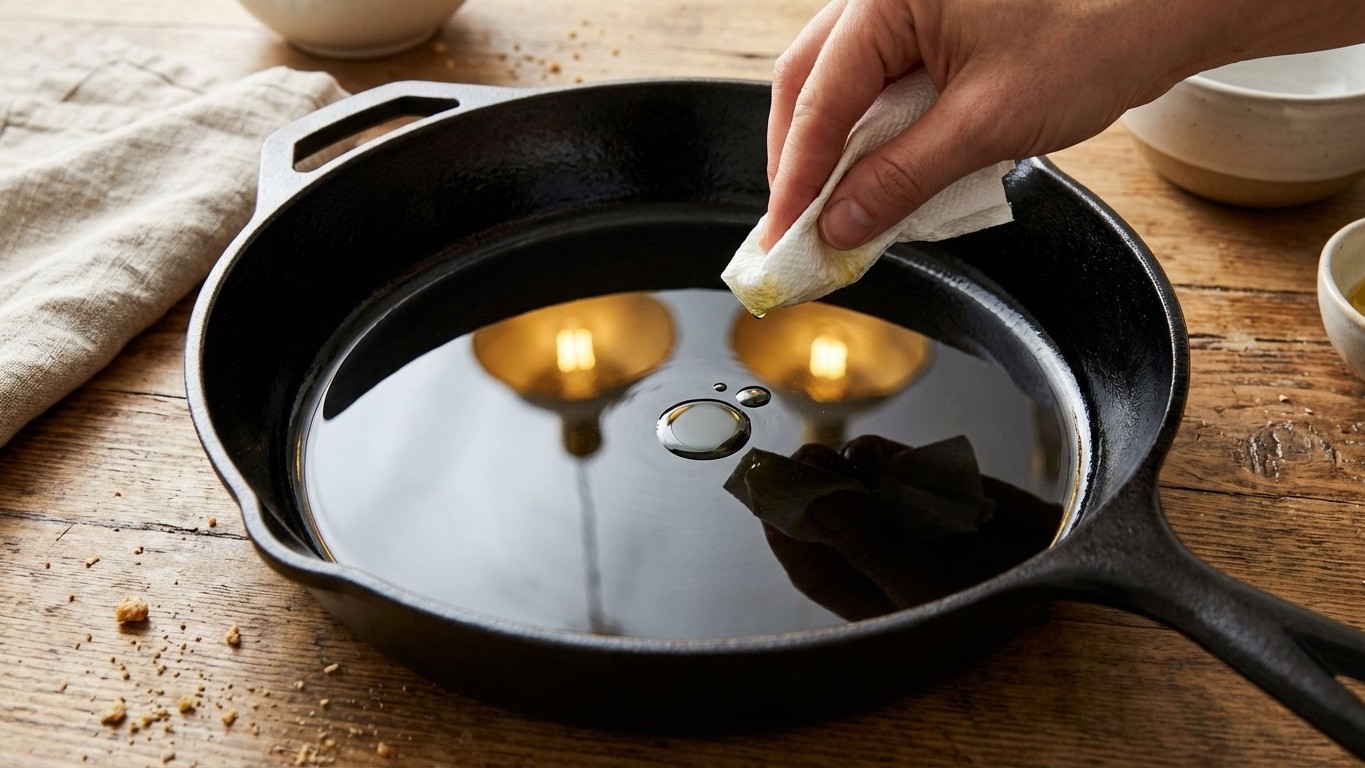
The real magic happens next. Once clean, the pan goes back on the stove over medium heat until any remaining moisture evaporates completely. Then comes the crucial step: while the pan is still hot, add a few drops of oil with a high smoke point like grapeseed, canola, or flaxseed oil. Using a paper towel, spread this oil in an impossibly thin layer across the entire surface, including the sides and bottom. The pan should look almost dry when you’re finished – excess oil will create a sticky, gummy coating Instead of the smooth finish you want.
Continue heating the oiled pan until it just begins to smoke, then remove it from heat and let it cool completely. This process polymerizes the oil, adding another microscopic layer to your seasoning. Repeat this simple routine after every use, and you’ll watch your pan transform from a utilitarian cooking tool into a perfectly seasoned, naturally non-stick surface that improves with age.
Why Modern Cleaning Methods Fail Cast Iron
The urge to scrub cast iron with soap and steel wool comes from our modern understanding of cleanliness, but it’s entirely counterproductive. Soap breaks down oils and fats – Actually-look”>Exactly what you’re trying to preserve in your seasoning layers. Steel wool and abrasive sponges physically scrape away the polymerized coating you’ve worked so hard to build. Even putting cast iron in the dishwasher, with its harsh detergents and prolonged exposure to water, strips away seasoning and can cause rust.
Many home cooks fall into the trap of thinking their cast iron needs to look pristine and shiny like stainless steel. In reality, a well-seasoned cast iron pan develops a dark, almost black patina that might look “dirty” to untrained eyes but Actually represents layers of protective, non-stick coating. This patina is your goal, not something to scrub away.
Building Seasoning That Lasts Generations
The beauty of this traditional approach lies in its cumulative effect. Each cooking session and subsequent seasoning ritual adds another molecular-thin layer to your pan’s surface. Over months and years, these layers build upon each other, creating a finish so smooth and durable that eggs slide across it like they’re on ice, and even the stickiest foods release effortlessly.
Professional chefs and serious home cooks often speak of cast iron pans that have been in continuous use for decades, passed down through families like treasured heirlooms. These legendary pans didn’t achieve their reputation through aggressive cleaning – they earned it through consistent, gentle care that respected the natural properties of seasoned iron.
The key is patience and consistency. Unlike synthetic non-stick coatings that work immediately but degrade over time, cast iron seasoning starts modestly but improves continuously. Your first few cooking sessions might require a bit more oil to prevent sticking, but as the seasoning builds, you’ll find yourself using less fat while achieving better results.
By abandoning the scrub brush and embracing this gentle, traditional approach, you’re not just maintaining a cooking tool – you’re participating in a culinary tradition that spans centuries. Your cast iron pan will reward your patience with a cooking surface that not only lasts a lifetime but actually gets better with age, proving that sometimes the old ways truly are the best ways.