
When a glass of red wine tips over onto your beloved fabric sofa, the immediate instinct is to grab the nearest cloth and start Scrubbing frantically. But what if I told you that this natural reaction is Actually Making the stain worse? Professional upholstery cleaners have been keeping a Secret that’s about to revolutionize how you handle fabric furniture mishaps forever.
the Truth is, scrubbing pushes stains deeper into fabric fibers, spreads the spill over a larger area, and can permanently damage the texture of your sofa. Instead of this aggressive approach, there’s a gentler method That Works with the fabric’s natural properties rather than against them, delivering results that seem Almost magical.
The Blotting Revolution: Why Gentle Pressure Wins Every Time
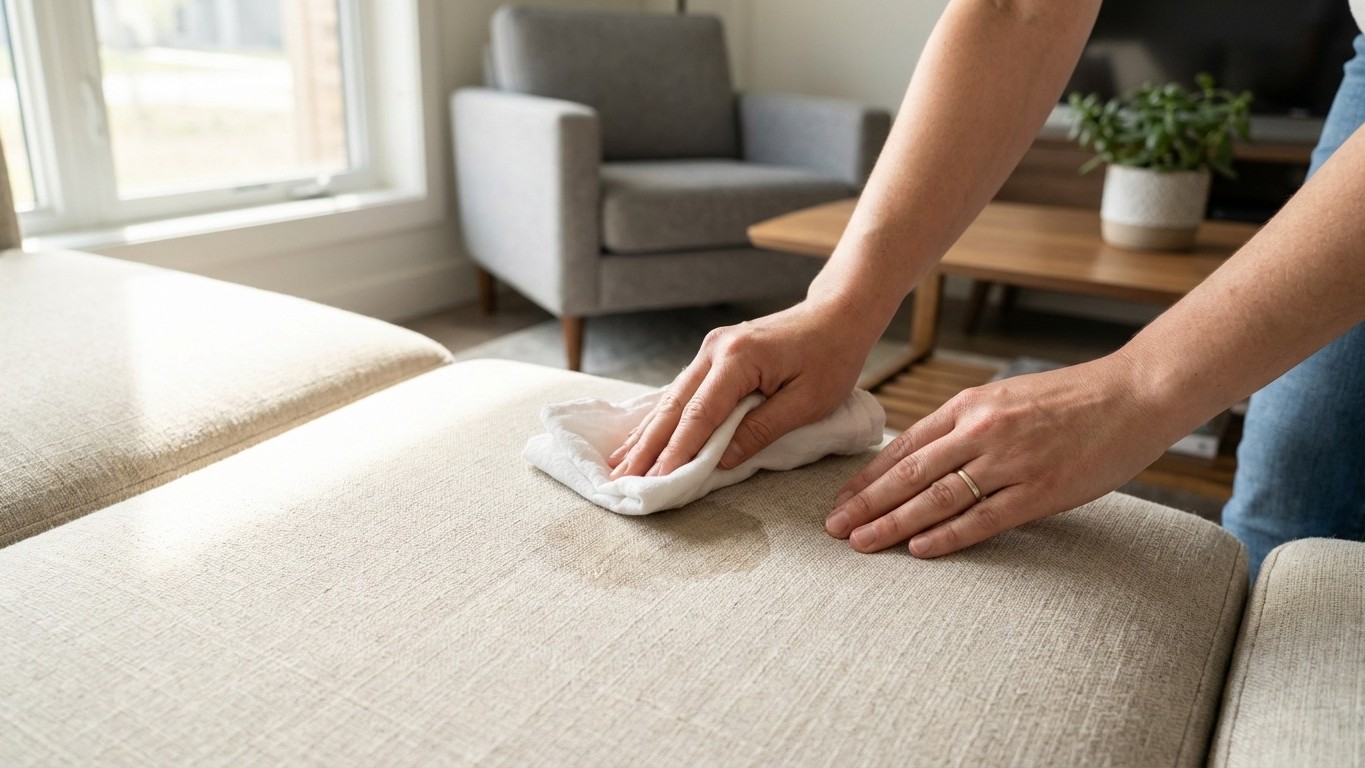
The game-changing technique revolves around a Simple principle: absorption over agitation. When you encounter a fresh spill, resist every urge to rub or scrub. Instead, grab a clean, absorbent cloth or paper towel and apply gentle, downward pressure directly onto the stain. This blotting motion allows the fabric to naturally wick the liquid upward into your cloth, preventing it from spreading horizontally through the weave.
Start from the outside edges of the stain and work your way toward the center. This prevents the spill from expanding its territory on your sofa. Each blot Should be firm but patient – think of it as giving your fabric time to release what it has absorbed. Professional cleaners often describe this as “letting the fabric do the work” rather than forcing it through mechanical action.
For older, set-in stains, the blotting technique becomes even more crucial. Create a cleaning solution using one part white vinegar to two parts warm water, or use a specialized upholstery cleaner. Apply the solution sparingly to the stain, allow it to sit for a few Minutes-since-i-do-this-simple-trick-under-the-covers-the-life-changing”>Minutes-since-i-do-this-simple-trick-under-the-covers-the-life-changing”>Minutes-since-i-do-this-simple-trick-under-the-covers-the-life-changing”>Minutes”>Minutes-since-i-started-this-nightly-habit”>Minutes-daily-since-age-50-what-her-cardiologist-discovered-after-one-year”>Minutes to break down the particles, then blot with a clean cloth. The key is patience – multiple gentle blotting sessions will lift more stain material than one aggressive scrubbing session ever could.
Understanding Your Fabric: The Science Behind Gentle Cleaning
Different fabric compositions respond uniquely to cleaning Methods, which is why the no-scrub approach is so universally effective. Cotton blends, microfiber, linen, and synthetic fabrics all have distinct weaving patterns and fiber structures. When you scrub, you’re essentially forcing stain particles to migrate through these intricate pathways, often pushing them so deep that they become nearly impossible to extract.
Blotting works because it respects the fabric’s architecture. Natural fibers like cotton have a cellular structure that can trap liquids temporarily before they penetrate completely. By blotting immediately, you’re intercepting the stain during this crucial window. Synthetic fabrics, while less absorbent initially, respond beautifully to the gentle pressure of blotting combined with appropriate cleaning solutions.
Temperature also plays a vital role in this process. Room temperature or slightly warm cleaning solutions are ideal because they help dissolve stain particles without setting them deeper into the fabric. Hot water, contrary to popular belief, can actually cook proteins in food stains, making them permanent residents in Your sofa fibers.
Advanced Techniques: When Simple Blotting Needs Backup
Sometimes, even the gentlest blotting requires strategic enhancement. For particularly stubborn stains like oil-based spills or deeply pigmented substances, create a layered approach. After your initial blotting, sprinkle a small amount of cornstarch or baking soda over the affected area. These powders act as additional absorbing agents, drawing out residual stain particles that standard blotting might miss.
Allow the powder to sit for fifteen to twenty minutes, giving it time to work its absorption magic. Then, using a soft brush or even a clean, dry cloth, gently lift the powder away. You’ll often find that it has changed color, indicating it has successfully pulled additional stain material from deep within the fabric fibers.
For persistent odors that sometimes accompany stains, the blotting method extends beautifully into odor elimination. After treating the visible stain, lightly mist the area with a solution of water and white vinegar, then blot again with a fresh cloth. The vinegar neutralizes odor-causing bacteria without the harsh agitation that can spread both stains and smells.
The transformation from frantic scrubber to patient blotter represents more than just a cleaning technique – it’s a mindset shift that preserves your furniture’s beauty and extends its lifespan. Professional upholsterers consistently report that sofas maintained with gentle blotting techniques retain their original texture and appearance years Longer than those subjected to regular scrubbing. Your fabric sofa isn’t just furniture; it’s an investment in comfort and style that deserves treatment as gentle as it is effective.