
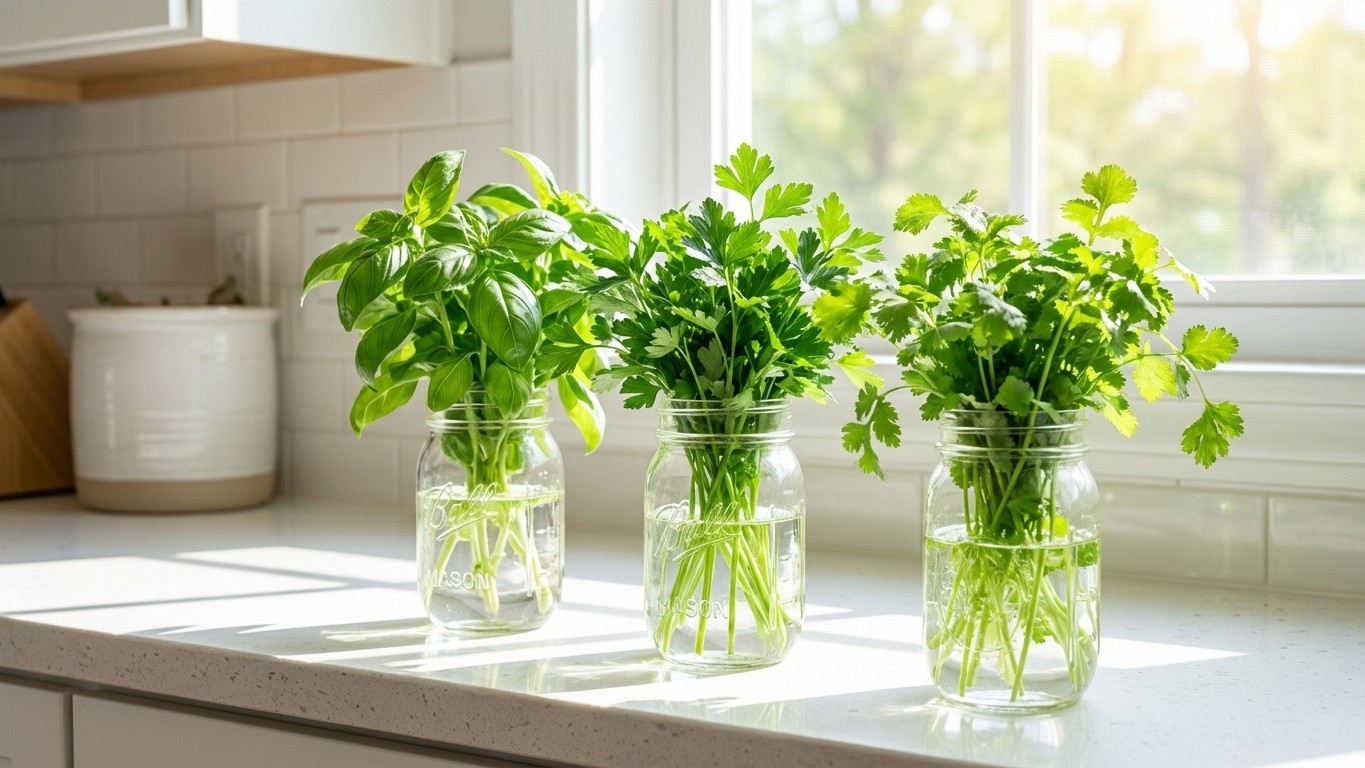
The moment I Learned This Simple jar technique, my relationship with fresh herbs completely transformed. No more wilted basil turning black in the refrigerator, no more expensive weekly trips to buy fresh parsley, and definitely no more guilt about throwing away unused cilantro. Failed-at-crepes-for-years-this-one-whisk-technique-changes-everything”>This One discovery has revolutionized how I store, preserve, and enjoy fresh herbs in my kitchen-gold”>Kitchen-gold”>Kitchen.
Like many home cooks, I used to face the same frustrating cycle: buy beautiful, aromatic herbs From the grocery store, use a few sprigs for dinner, then watch helplessly as the rest deteriorated within days. The plastic containers and bags seemed designed to trap Moisture and accelerate decay, while the refrigerator’s cold, dry environment sucked the life out of even the heartiest herbs. I was spending nearly thirty dollars a month on fresh herbs, only to use a fraction of What I purchased.
The Water Glass method That changes everything
The revelation Came From observing how flower shops keep their blooms fresh. Fresh herbs are essentially leafy plants, and like flowers, they thrive when their stems can drink water. The technique is beautifully simple: treat your herbs like a bouquet. Remove any rubber bands or ties, trim about half an inch off the bottom of the stems with sharp kitchen shears, then place them in a clean glass jar with about an inch of fresh water.
The key lies in understanding that different herbs have different needs. Soft herbs like basil, cilantro, parsley, and mint should be stored at room temperature with their leaves uncovered, allowing them to breathe naturally. These Mediterranean and warm-climate herbs Actually-makes-you-look-younger”>Actually-makes-you-look-younger”>Actually-explains”>Actually suffer in cold environments, which Explains Why they turn black so quickly in the refrigerator. Hardier herbs like rosemary, thyme, and sage can handle cooler temperatures and should be loosely covered with a plastic bag Before going into the refrigerator.
Within hours of implementing this method, I noticed a dramatic difference. The herbs stood tall and proud, their leaves perking up as they drank the water. Basil that would normally wilt overnight remained vibrant and fragrant for over a week. The transformation was so remarkable that visitors to my kitchen often commented on the beautiful “herb bouquets” adorning my counters.
Beyond Storage: Creating an Herb Garden Ecosystem
This jar method opened my eyes to a larger possibility: treating my kitchen like a mini herb garden. I began purchasing larger quantities of herbs when they were on sale or particularly fresh, knowing I could preserve them effectively. The water in the jars needed changing every few days, which became a pleasant ritual that connected me more deeply to my ingredients.
Something magical happened as I maintained these herb gardens. Many of the herbs began developing roots in their water baths, essentially turning my kitchen into a propagation station. Basil is particularly enthusiastic about this process, often sprouting healthy white roots within a week. These rooted Cuttings can be planted in small pots, creating a renewable herb supply that costs virtually nothing to maintain.
The aromatherapy benefits became an unexpected bonus. Walking into my kitchen now means being greeted by the fresh, vibrant scents of living herbs rather than the musty odor of decomposing greens. The visual appeal Transformed My kitchen aesthetic, adding natural beauty and life to the space. Friends began asking about my “herb display,” not realizing It Was actually a highly functional storage system.
The Economics and Environmental Impact
The financial transformation has been remarkable. By extending the life of my herbs from days to weeks, I’ve reduced my herb purchases by roughly seventy percent. a Single bunch of basil that once lasted three days now provides fresh leaves for nearly two weeks. When multiplied across all the herbs I regularly use, the savings add up to several hundred dollars annually.
The environmental benefits align perfectly with my values around reducing food waste. According to recent studies, Americans Throw Away approximately forty percent of their food purchases, with fresh herbs being among the most frequently discarded items. By dramatically extending their useful life, this simple technique contributes to a more sustainable kitchen practice.
The method has also encouraged me to experiment with herbs I previously avoided due to their high cost and short lifespan. Expensive varieties like fresh dill, tarragon, and chervil become viable options when I know they’ll remain fresh for extended periods. This has expanded my culinary repertoire and brought new flavors into regular rotation.
Mastering the Technique for Long-Term Success
Success with this method requires attention to a few crucial details. The water must be Changed every two to three days, or whenever it begins to look cloudy. Clean jars prevent bacterial growth that could harm the herbs. Trimming the stems every few days keeps the water uptake efficient, much like refreshing flower arrangements.
Temperature awareness makes the difference between thriving herbs and failed experiments. Basil is particularly sensitive to cold and should never be refrigerated using this method. Conversely, hardy herbs like rosemary actually benefit from the cooler environment and should be stored in the refrigerator with loose plastic covering to maintain humidity while preventing condensation buildup.
This simple jar technique has fundamentally changed how I approach fresh herbs in my cooking. What began as a storage solution evolved into a sustainable, cost-effective system that brings life and beauty into my kitchen while dramatically improving my culinary experiences. The technique works so reliably that I now confidently buy herbs in larger quantities, knowing they’ll remain fresh and usable for weeks rather than days.