
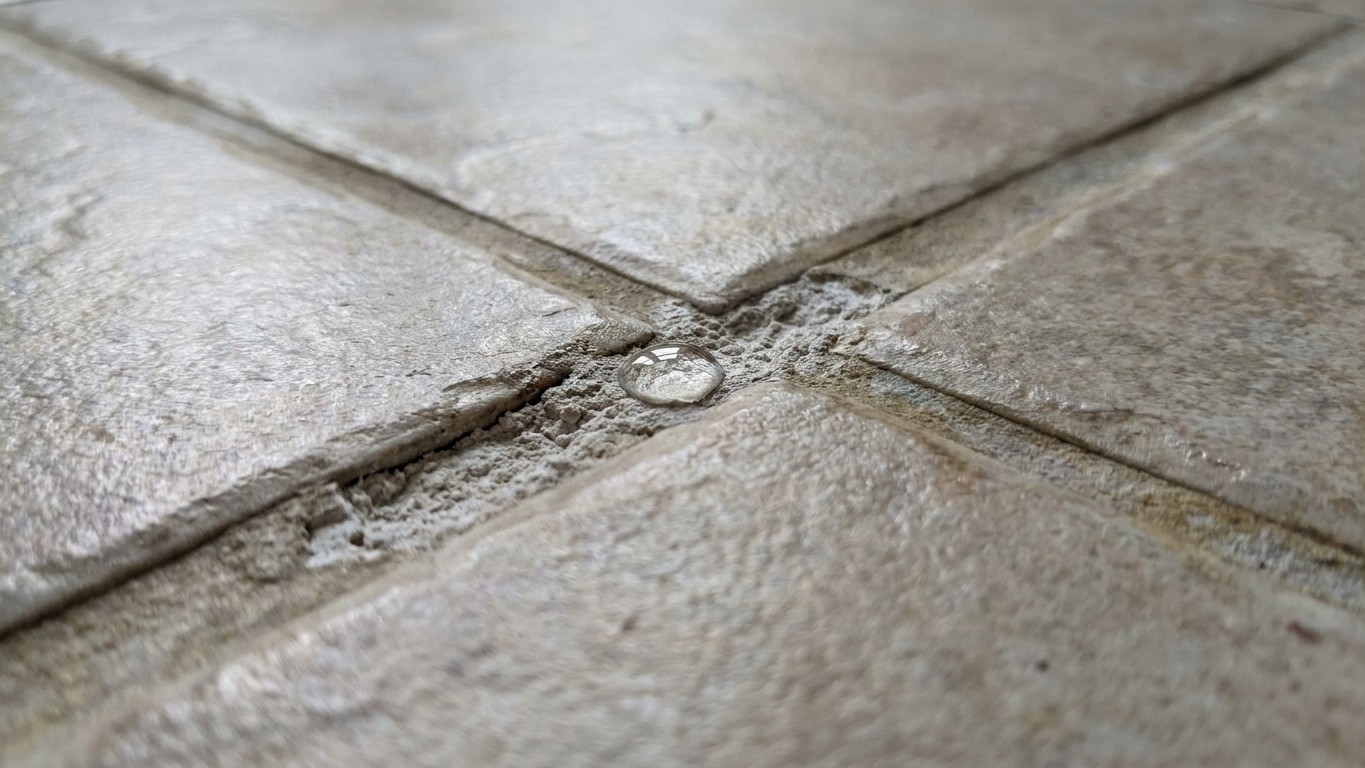
Every week, same ritual: a splash of neat white vinegar straight onto the grout lines, a quick scrub, and that satisfying flash of brighter, whiter joints. It felt like a win. Cheap, natural, effective, no chemical smell lingering in the air for hours. Two years of this routine later, the grout wasn’t just failing to stay clean, it was getting dirty faster than ever, almost as if it were begging for the vinegar bottle. Turns out that’s exactly what was happening.
Key takeaways
- That satisfying whitening effect isn’t actually cleaning—it’s acid bleaching the grout’s color pigments away
- Vinegar dissolves the protective sealant first, then attacks the cement itself, making grout increasingly porous over time
- The faster the dirt returned, the more damage was already happening beneath the surface
The chemistry nobody mentions on cleaning hacks
Vinegar owes its cleaning power to acetic acid, and that acidity is precisely what makes it a poor long-term match for grout. Grout is a cement-based material, and cement doesn’t get along with acids. At all. As one flooring resource puts it plainly: tile and grout are not the same. Tile is typically dense and acid-resistant, while grout is porous and more susceptible to acid. While vinegar may clean the tile, it can slowly damage the grout that holds everything together.
The tile industry itself doesn’t sugarcoat it either. According to tile industry guidelines, acidic cleaners can etch and weaken cement-based grout, accelerating deterioration over time. Tile can usually handle vinegar. Grout cannot. That’s the whole story in three sentences, and it’s the one detail missing from every viral cleaning video that shows the “before/after” whitening effect without ever mentioning what happens at month eighteen.
Even manufacturers who make grout products agree, though in more measured language. Mapei, one of the biggest names in tile-setting materials, states that occasional use of vinegar on porcelain or ceramic tile with cement-based grout should not cause damage. However, frequent or regular use can discolor and weaken grout and should not be used for routine maintenance. Weekly, for two years, definitely falls under “frequent.”
Why the dirt kept coming back faster
Here’s the part that actually explains the disappointing pattern: the grout wasn’t just wearing down, it was becoming a magnet for grime. Grout that starts out sealed and relatively non-porous slowly turns into a sponge. Cleaning professionals describe this shift in almost identical terms. One tile-care company notes that repeated use of vinegar on bathroom grout can slowly weaken the grout lines. Over time, this may cause the grout to feel rough, look chalky, erode faster, and absorb more moisture than it should. Damage usually occurs gradually, which is why many homeowners do not notice a problem until months later, when grout darkens quickly or begins to wear away.
What was actually happening under the surface, quite literally, is that the acid was dissolving the protective seal first, then attacking the grout itself. A cleaning specialist site sums up the mechanism bluntly: using vinegar to clean grout and tile might make it look clean. But, vinegar has a pH level of 2. Vinegar is too acidic to safely use on tile, grout, grout sealer, and grout paint. And once that sealer is gone, the consequences compound fast. Vinegar will slowly dissolve the sealer on the grout and tile, allowing dirt, oils, and stains to penetrate deeper into the grout. Using vinegar on grout can also cause the grout to breakdown overtime.
So each week of “cleaning” was quietly opening up more microscopic pores for grease, soap scum, and shower residue to lodge into. Cleaning harder, ironically, was making the grout progressively worse at resisting dirt. A porosity issue, not a hygiene one.
The whitening illusion was never really whitening
This is the twist that stings a little: that dramatic brightening effect people chase with vinegar isn’t actually a deep clean. Industry sources describe it as a kind of optical trick caused by pigment loss. According to one professional cleaning company, many dyes used to color the grout can be leeched out of the grout using an acid, like vinegar. As such, the lightening that is perceived to be the acid cleaning is actually the removal of the dye and the grout’s color. Overtime continuous use can turn a colored grout back to its cementitous gray root color.
Another cleaning-products company frames it almost identically, calling the brightness a byproduct of a bleaching-like reaction rather than genuine cleanliness: the fact that a floor looks lighter and whiter after its use is a major reason people have gravitated to it. However, the real reason this occurs is not cleaning but rather more closely associated with bleaching. The grout is being robbed of its color. Overtime your grout will trend towards a light cement grey color. So the “whiter” grout wasn’t cleaner, it was simply losing its pigment, month after month, splash after splash.
What actually protects grout long-term
None of this means vinegar deserves a total ban from the cleaning cupboard, just a demotion from weekly habit to occasional, diluted spot-treatment. Several sources recommend cutting it heavily with water rather than applying it neat, and reserving it for isolated mineral buildup rather than routine wipe-downs. For everyday maintenance, pH-neutral formulas or a baking soda paste do the job without the slow-motion damage. Sealing matters just as much: unsealed grout absorbs whatever touches it, acidic or not, so checking the seal periodically (a simple water-drop test reveals whether water beads up or soaks in) is worth the two minutes it takes.
The real lesson from two years of weekly vinegar isn’t that the product is useless, it’s that grout care runs on patience, not intensity. A gentler, less frequent routine, paired with proper resealing every year or so, keeps grout lines actually clean instead of merely bleached into looking that way for a season before the grime creeps back with reinforcements.
Sources : abbottsathome.com | groutbrothers.com