
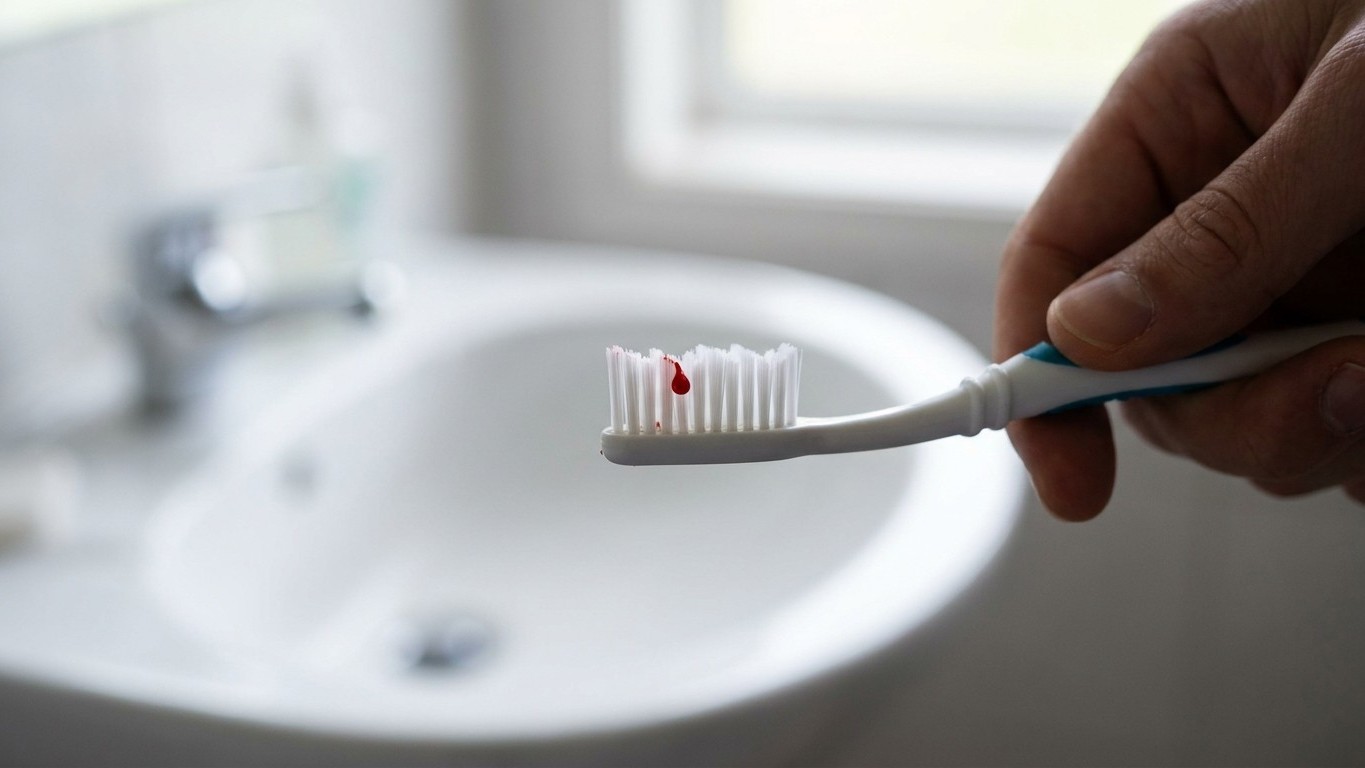
A drop of pink in the sink used to mean nothing more than brushing too hard. Not anymore. Dentists across the country are now flagging bleeding gums as an early warning sign tied to something far more serious than gum irritation: cognitive decline. The shift didn’t come from a hunch. It came from lab benches, where researchers digging through post-mortem brain tissue kept finding the same uninvited guest sitting right next to amyloid plaques, the sticky protein clumps that define Alzheimer’s disease.
Key takeaways
- Scientists keep finding the same oral bacterium inside the brains of deceased Alzheimer’s patients—in over 90% of samples examined
- This bacterium can travel from bleeding gums into the bloodstream and cross into the brain, where it releases toxins that destroy nerve cells
- The emerging evidence is compelling enough that major universities are now planning clinical trials to see if treating gum disease can prevent cognitive decline
The Bacterium That Shouldn’t Be There
The name is a mouthful: Porphyromonas gingivalis. Dentists know it as the primary driver of periodontitis, the advanced form of gum disease that causes bleeding, swelling, and eventually tooth loss. What nobody expected was to find it inside the skull.
In a widely cited 2019 study, researchers confirmed that P. gingivalis can be found in the brains of deceased people with Alzheimer’s, and detected the microbe’s DNA in living patients’ spinal fluid, with toxic enzymes called gingipains showing up in more than 90% of over 50 Alzheimer’s brain samples examined. A separate analysis put the number even higher: gingipains were found in 96 percent of the 53 brain tissue samples examined, with higher levels detected in those with the pathology and symptoms of Alzheimer’s disease.
That’s not a fringe detail buried in a footnote. That’s a near-universal presence in diseased brain tissue. And the correlation didn’t stop at simple presence. Brains with more gingipains had higher quantities of the Alzheimer’s-linked proteins tau and ubiquitin. The more bacterial toxin, the more disease markers. Franchement, that’s the kind of dose-response pattern that makes scientists sit up.
The mouse experiments filled in the mechanism. Animal testing confirmed that P. gingivalis can travel from the mouth to the brain and that the related gingipains can destroy brain neurons. Not just correlate with damage. Actively destroy neurons. Harvard’s own health publication summarized the pathway plainly: once in the brain, the bacteria release enzymes called gingipains that can destroy nerve cells, which in turn can lead to memory loss and eventually Alzheimer’s.
How a Mouth Infection Becomes a Brain Problem
The mechanism sounds almost too simple to be true, which is exactly what made it hard to accept at first. Bacteria and the inflammatory molecules they make can travel from infections in the mouth through the bloodstream to the brain. Every time gums bleed during brushing, flossing, or even chewing, there’s a microscopic breach, a doorway for oral bacteria to slip into circulation.
Researchers at NYU went further, looking not just at one bacterium but at the balance of the entire oral microbiome. Their finding: having evidence for brain amyloid was associated with increased harmful and decreased beneficial bacteria under the gumline. it’s not just about one villain. It’s about an ecosystem tipping out of balance, harmful species crowding out the protective ones.
A team at the Forsyth Institute, working with Boston University, added another layer by looking at the brain’s own defense cells. Their study demonstrated that gum disease can lead to changes in brain cells called microglial cells, which are responsible for defending the brain from amyloid plaque. Exposing those cells to oral bacteria stimulated the microglial cells, activated neuroinflammation and changed how microglial cells dealt with amyloid plaques. So the bacteria don’t just show up near the plaques. They may be sabotaging the very cells meant to clean them up.
The National Institute on Aging ran the numbers on a national scale, pulling from NHANES data and testing blood for antibodies against 19 different oral bacteria. A recent analysis led by NIA scientists suggests that bacteria that cause gum disease are also associated with the development of Alzheimer’s disease and related dementias, especially vascular dementia. Of the pathogens tested, Porphyromonas gingivalis is the most common culprit of gum disease.
The Nuance Nobody Should Skip
Here’s where the story gets more honest, and less sensational. Not every expert is ready to call gum disease a cause of Alzheimer’s. A 2024 Lancet Commission review looked at the same body of evidence and did not find consistent and high-quality evidence to list oral health status as a risk factor for dementia. Alzheimer’s Research UK’s chief scientific officer offered a similarly measured take back when the original brain-bacteria study made headlines, noting that strong genetic evidence indicates that factors other than bacterial infections are central to the development of Alzheimer’s, so these new findings need to be taken in the context of this existing research.
Science.org’s coverage of the same research captured the tension well. As the article put it, what’s not clear is whether gum disease causes the disorder or is merely a result, since many patients with dementia can’t take care of their teeth. Chicken or egg. A person developing early cognitive decline might simply brush less carefully, letting gum disease take hold as a consequence rather than a cause.
Still, a narrative review published in early 2025 found something harder to wave away: the risk of developing Alzheimer’s disease is reported to double within a decade following a diagnosis of periodontitis. And a UK Biobank study tracking more than 364,000 people found that oral health problems, particularly painful gums and dentures, were associated with increased risk of all-cause dementia, Alzheimer’s disease, and vascular dementia. That’s a large, long-running cohort, not a small pilot study.
What This Actually Means at the Bathroom Sink
Roughly seven in ten Americans over 65 have some level of gum disease, since it’s especially prevalent among people that age. That’s a staggering share of the population walking around with an active inflammatory infection in their mouth, most of them unaware or dismissive of it.
The practical takeaway isn’t panic. It’s precision. Brushing and flossing twice daily, and seeing a dentist for checkups and cleanings at least every six months, remain the two most boring, most effective interventions available. No supplement, no mouthwash trend, no charcoal toothpaste replaces that basic rhythm.
NYU’s research team is now pushing the question further, planning what could be the most telling experiment yet. They intend to run a longitudinal study and a clinical trial to test if improving gum health, through deep cleanings to remove deposits of plaque and tartar from under the gumline, can modify brain amyloid and prevent Alzheimer’s disease. If that trial pans out, a routine deep cleaning could end up carrying weight far beyond fresher breath. Until then, that little smear of blood on the brush deserves a phone call to the dentist, not a shrug.
Sources : nia.nih.gov | cdc.gov