
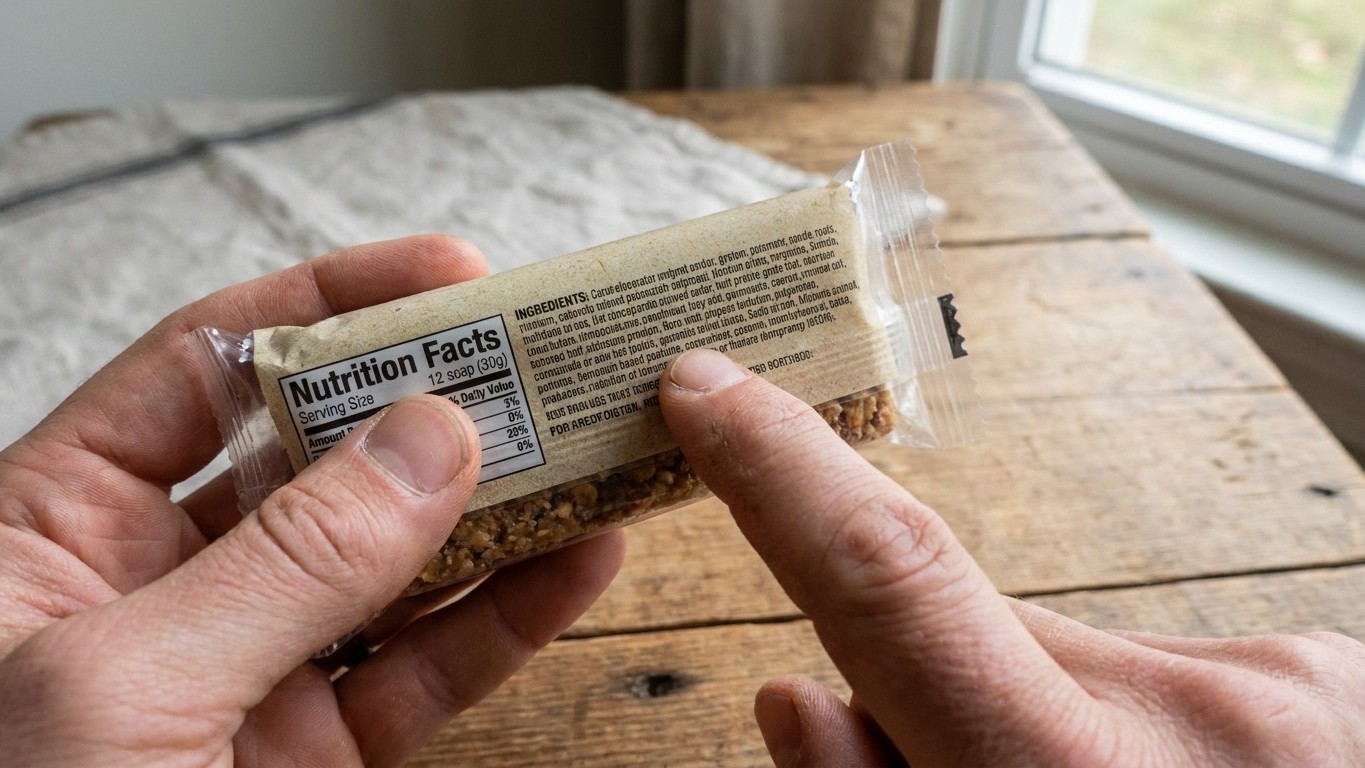
The label reads “high protein,” “gut-friendly,” or “clean ingredients,” and yet two syllables keep sneaking into the fine print: carboxymethylcellulose and polysorbate 80. Neither sounds appetizing. Neither is hiding from you, exactly, it’s printed right there in 8-point font, but neither is exactly advertised either. And a growing pile of research suggests that’s not a coincidence.
These two compounds are emulsifiers, the industrial glue that keeps oil and water from separating in everything from ice cream to salad dressing to the granola bar you grabbed because it promised “gut health support.” Polysorbate 80 (P80, E-433) is a low molecular weight surfactant, while sodium carboxymethylcellulose (CMC, E-466) is used as a thickener and emulsion stabilizer. Franchement, that’s exactly why they show up in products marketed as healthy: a plant-based yogurt or a protein bar needs the same textural cheating that a candy bar does, it just can’t say so out loud.
Key takeaways
- Two specific emulsifiers show up in ‘clean eating’ products but research links them to gut inflammation and microbiome disruption
- The same molecule used in pharmaceutical treatments for Crohn’s disease may be driving the intestinal inflammation it’s meant to treat
- These additives were FDA-approved decades ago—before scientists understood the gut microbiome’s role in health
What the gut microbiome research actually shows
The science didn’t start with a viral headline. A landmark 2015 study by researcher Benoit Chassaing and colleagues, followed by a wave of replications, found something specific. Carboxymethylcellulose and polysorbate-80 induced gut microbiota alteration and gut barrier dysfunction in mice, resulting in weight gain, low-grade inflammation, and metabolic disorders. Not a vague “additives are bad” conclusion, a mechanistic one.
Since then, researchers have moved from mice toward human-relevant models. One study using an ex vivo human microbiota system tested 20 different commonly used emulsifiers side by side. Two synthetic emulsifiers in particular, carboxymethylcellulose and polysorbate 80, profoundly impact intestinal microbiota in a manner that promotes gut inflammation and associated disease states. Interestingly, not every emulsifier behaved the same way, while many of the other 18 additives tested had impacts of similar extent, some, such as lecithin, did not significantly impact microbiota in this model. That’s the contrarian detail worth sitting with: “emulsifier” is not one villain, it’s a category, and lumping them together misses the point entirely.
More recent work has gotten granular about mechanism. A 2025 study using a dynamic gut simulator found that these emulsifiers increased microbial groups with proinflammatory capacities while decreasing microbial taxa known to enhance barrier function. The two compounds don’t even hit the same targets. Increasing doses of P80 significantly decreased Bacteroides dorei and Akkermansia, taxa associated with anti-inflammatory potential, while increasing doses of CMC were linked to a higher abundance of Ruminococcus torques and Hungatella, which negatively impact barrier function. Akkermansia, incidentally, is the same bacterium wellness circles have been obsessing over as a longevity marker. The irony writes itself.
Separate research comparing the two directly in mice colonized with human IBD-patient microbiota found CMC hit harder. CMC treatment significantly increased fecal Lcn-2 levels compared to P80 and water treatment by one week and throughout the experiment, a marker researchers use to track intestinal inflammation. And a broader literature review summarizing multiple studies noted that carboxymethyl cellulose and polysorbate 80 could significantly alter the microbiome diversity, increase the levels of Proteus and E. coli, and reduce Bacteroides and Clostridium spp. Over time, the same review found the two additives were associated with a thinning of the gut’s protective mucus layer, leaving it more sensitive to exogenous compounds.
Why they hide in plain sight in “healthy” products
Here’s the uncomfortable part: these ingredients aren’t confined to junk food. A 2025 nutrition analysis of top-selling protein bars, the exact category marketed on gyms and wellness apps, found that some top-selling protein bars contain emulsifiers and synthetic preservatives, such as polysorbate, carboxymethyl cellulose, butylated hydroxyanisole (BHA), and sodium benzoate — that have been linked to gut inflammation and various health problems. No shampoo bottle irony required, this is the snack marketed specifically as a nutritional upgrade.
Tracking exposure is harder than it should be. Reporting from KFF Health News, working with an Environmental Working Group database built on NielsenIQ data, found polysorbate 80 was listed as an ingredient on the labels of 2,311 products as of May 12, with related stabilizers appearing far more broadly, carrageenan was listed on 8,100 product labels; maltodextrin, 12,769; and xanthan gum, 17,153. Reading labels gets messier still because naming isn’t standardized. Some emulsifiers have multiple names, making them harder to recognize, and some chemical names that appear on product labels don’t appear in the FDA’s “Substances Added to Food” inventory. Carboxymethylcellulose is one of them, it also is also known as carboxymethylcellulose and cellulose gum.
The regulatory gap nobody’s advertising
Both compounds carry official approval, sitting comfortably on the FDA’s generally-recognized-as-safe list, and pharmaceutical use adds another layer of normalization: p80 alone is utilized in over 6000 pharmaceutical formulations, including treatments for Crohn’s disease. That’s the paradox nutrition science hasn’t resolved. The same molecule shows up as a drug delivery vehicle and as a suspected driver of the intestinal inflammation those drugs are meant to treat.
Reviewers acknowledge the science remains a work in progress. While the limited testing of food additives indicates that these compounds generally lack overt toxicity and are not mutagenic, there is, nonetheless, considerable basis to question their safety, particularly in the context of chronic inflammatory diseases. That’s not fearmongering, it’s an honest acknowledgment that “approved decades ago” and “understood today” aren’t the same thing. The gut microbiome wasn’t even a research priority when most of these additives cleared regulatory review.
None of this means torching every processed product in your pantry. But the next time a label leans hard on “clean,” “gut-healthy,” or “simple ingredients,” it’s worth flipping it over anyway, because the marketing copy and the ingredient panel are frequently having two completely different conversations.
Sources : ncbi.nlm.nih.gov | mdpi.com