
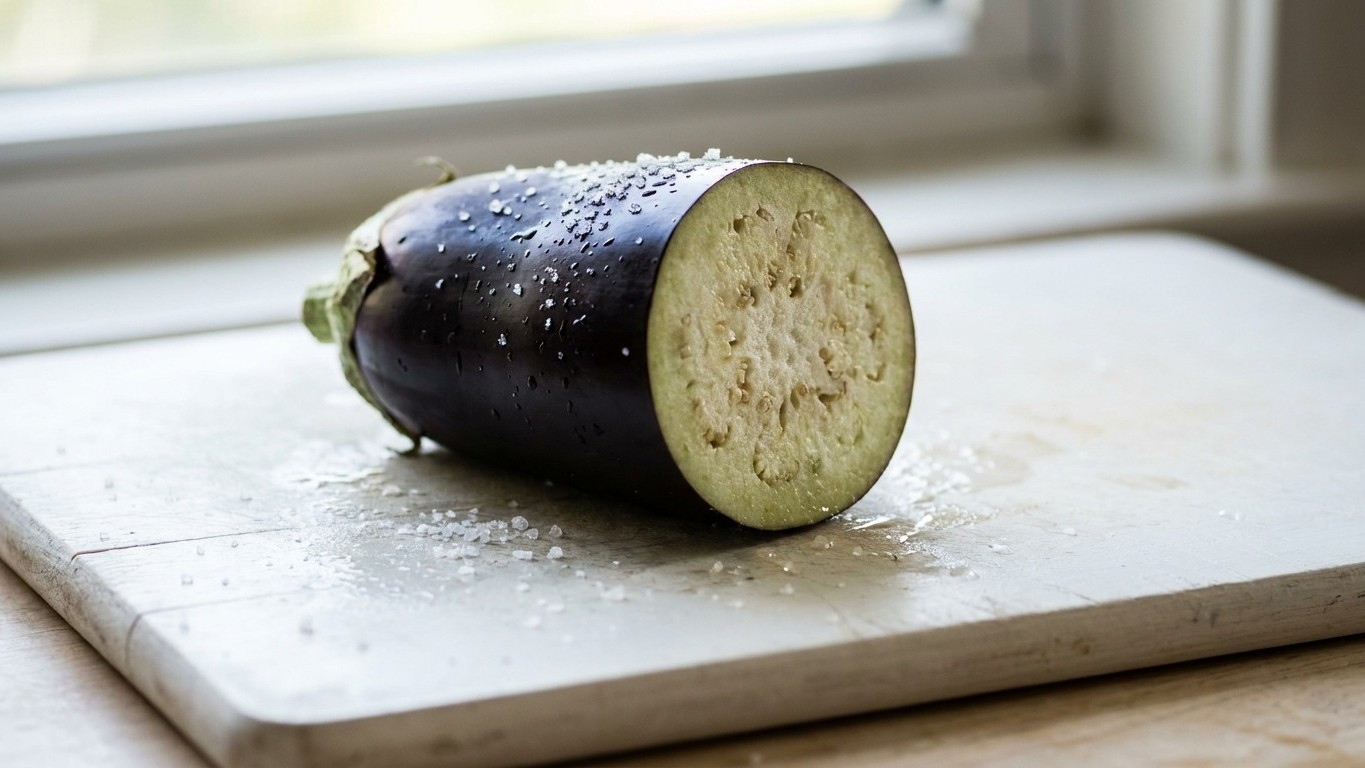
Eggplant has a reputation problem: drop it in a hot pan, and within seconds it swallows every last drop of oil like it’s been waiting its whole life for that exact meal. For years, I skipped the salting step entirely, too fussy, too old-fashioned, a relic from my grandmother’s kitchen notes. Then I finally tried it. The difference wasn’t subtle. It was almost embarrassing how much better the results were.
The pan stayed slick instead of turning into a dry, smoking mess after thirty seconds. The slices browned instead of steaming in their own grease. And the eggplant itself tasted lighter, cleaner, less like a vehicle for fat and more like an actual vegetable. Franchement, it’s the kind of fix that makes you wonder how many other kitchen shortcuts you’ve been skipping out of pure stubbornness.
Key takeaways
- Eggplant’s spongy cellular structure creates an oil-absorption problem most home cooks ignore
- Salt triggers an osmotic process that removes water from the vegetable before cooking even begins
- One controlled study shows proper salting reduces oil uptake by 15-20% and dramatically improves results
Why eggplant behaves like a sponge in the first place
The science here is genuinely interesting, not just old wives’ tale territory. Eggplant’s tendency to soak up oil stems from its spongy, cellular structure, since unlike other vegetables with tightly packed cells, eggplant contains large, loosely packed cells filled with air. Those air pockets are the culprit. They act like tiny sponges, readily absorbing any liquid they come into contact with, including oil.
Add heat to the equation and things get worse. When you cook eggplant, especially when frying, the heat causes the water in the vegetable to evaporate, and the small air pockets create a vacuum effect that draws in oil. It’s basically physics working against you, every bit of moisture that escapes leaves behind a void, and oil rushes in to fill it. If you were to look at a slice of eggplant under a microscope, you’d see thousands of tiny air-filled cells, and as soon as the vegetable hits the heat, those air pockets collapse — if there is oil present, it rushes into those spaces. No wonder a pan can go bone-dry in under a minute.
The numbers back up the frustration too. Eggplant is composed of approximately 92% water, making it a very moist vegetable. That’s a lot of liquid ready to evaporate and create empty real estate for fat to occupy. Once you understand that, salting stops feeling like an old-fashioned ritual and starts looking like basic damage control.
What salt actually does to the flesh
Here’s where it gets genuinely useful. Salt isn’t just seasoning in this case, it’s a dehydration tool. When salt contacts the cut surface, it creates an osmotic gradient that pulls water, along with small amounts of soluble compounds, from the plant cells into the surrounding environment. You watch it happen in real time: the result is visibly weeping eggplant, often described as “sweating.”
That moisture loss Matters More Than people assume. With less water inside, there are fewer empty pockets for oil to fill, which noticeably reduces absorption. Some sources go further and describe an actual structural change on the surface. Salt acts as a dehydrator, drawing out excess moisture from the eggplant’s cells, and this process helps to shrink the cells and decrease their capacity to absorb oil.
The results aren’t just anecdotal, either. One breakdown of the technique found that traditional salting reduces oil uptake by roughly 15–20% in controlled tests, and improves crisp exterior. That’s not a marginal improvement, that’s the difference between a dish you feel good about and one that leaves a greasy film on your plate.
Worth noting: not everyone agrees on the mechanism, and food science writers still argue about it. Kenji López-Alt, in his well-known cooking research, takes a slightly different angle, focusing less on oil and more on trapped air. His approach centers on removing air by breaking down the cell structure and pressing out the air in between, which can be achieved by microwaving eggplant slices between paper towels and plates before frying. Both camps agree on the outcome though, less air, less empty space, less oil soaked up.
How to actually do it (and what not to skip)
The method itself is almost insultingly simple. Slice your eggplant to the thickness you want, sprinkle both sides generously with salt, then let it rest.
- Rest time: spread the slices on a cutting board, sprinkle salt on both sides, and let them sit for 20 to 30 minutes to draw out moisture.
- Rinse and dry: rinse the eggplant slices under cold water to remove the excess salt, then pat them dry with paper towels.
- Heat matters too: keeping oil at 350 to 375°F creates a quick seal on the outside and limits how much oil penetrates.
Skip the drying step and you undo half the work, a wet slice still has surface moisture ready to evaporate and create those oil-hungry gaps. I learned that one the hard way, rushing straight from rinse to pan and wondering why the results were only mildly better instead of dramatically so.
There’s a sodium trade-off worth mentioning before you salt everything in sight. The technique adds sodium, roughly 120–180 mg per half cup of raw eggplant, and requires extra steps and timing. For most home cooking that’s a negligible amount, easily rinsed away, but if you’re watching sodium closely for medical reasons, it’s a detail your doctor might want you to track.
One more thing nobody tells you: the eggplant variety you buy changes the equation before you even pick up the salt. Smaller varieties such as Japanese or Thai eggplants tend to have fewer seeds and a thinner skin, both of which contribute to a lower tendency to absorb oil. So if you’re still fighting a greasy pan after salting properly, the eggplant itself might be part of the problem, not just your technique.
Sources : annatastes.com | lotustryo.com