
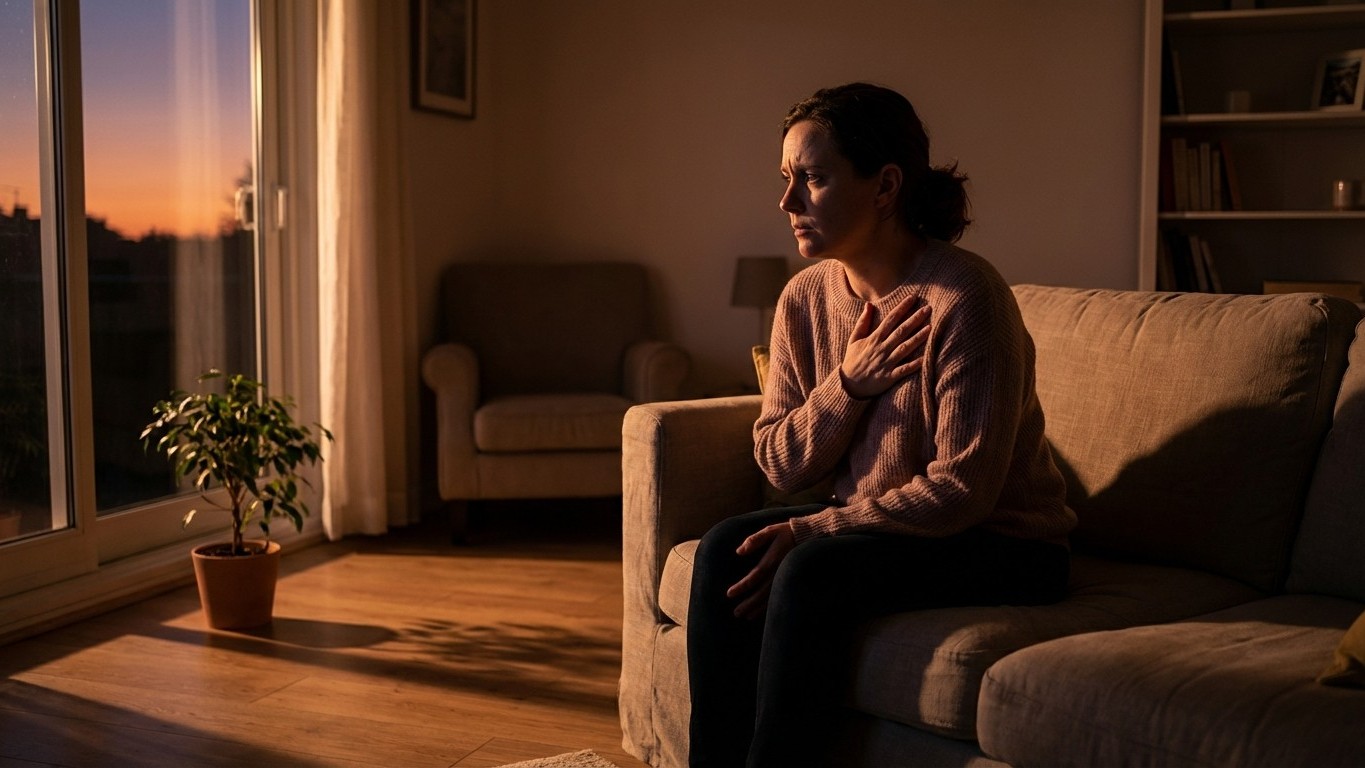
You know that feeling. Sunday, around 5 PM, the light shifts slightly, and something in your chest tightens. A low-grade dread, a physical heaviness that has nothing to do with how physically tired you actually are. You slept in. You had a decent weekend. And yet your body feels like it’s already bracing for impact. That sensation has a name in clinical circles: Sunday Evening Fatigue, and physicians who specialize in occupational health and burnout prevention have started flagging it as one of the earliest, most reliable Warning Signals that your nervous system is heading toward collapse.
Not dramatic. Not a crisis. Just a quiet, persistent alarm that most of us have learned to dismiss with a glass of wine and a Netflix queue.
Key takeaways
- Your Sunday evening dread is a measurable anticipatory stress response—not laziness or disliking work
- A completely unstructured weekend can actually worsen Sunday fatigue, contrary to popular wellness advice
- When this pattern becomes consistent, it signals entry into the ‘yellow zone’ between normal stress and clinical burnout
What’s Actually Happening in Your Body
Sunday Evening Fatigue isn’t garden-variety tiredness. The distinction matters. Regular physical fatigue resolves with rest, but this particular exhaustion arrives before the week has even started, which is precisely what makes it clinically interesting. Researchers in occupational psychology describe it as an anticipatory stress response: your nervous system, drawing on accumulated data from weeks or months of overload, begins mounting a cortisol response in anticipation of Monday morning. Your body is essentially pre-exhausted, borrowing stress hormones from a well that hasn’t had time to refill.
The mechanism runs deeper than “not liking Mondays.” Chronic work stress trains your autonomic nervous system to associate specific environmental cues, Sunday afternoon light, the end of weekend sounds, even certain TV shows, with incoming threat. Over time, that association becomes so ingrained that your body launches a mild fight-or-flight response on autopilot. Heart rate upticks. Digestion slows. Sleep, even when it comes, turns shallow.
Dr. Christina Maslach, the psychologist whose research framework on burnout has shaped the field for decades, has consistently argued that burnout is not a sudden event but a slow erosion. Sunday Evening Fatigue fits precisely into that erosion narrative, a repeating symptom that most people experience for months before they reach what anyone would clinically label as burnout.
The Counter-Intuitive Truth About Weekends
Here’s where things get genuinely interesting, and where most wellness advice gets it wrong. The conventional wisdom says: rest more on weekends, and you’ll feel better. But for people experiencing Sunday Evening Fatigue, a completely unstructured weekend can Actually-look”>Actually worsen the symptom. The reason is neurological. When there’s no meaningful transition ritual between weekend mode and work mode, the Sunday evening dread fills that vacuum entirely. Your brain has nothing to attach to except the incoming week.
Studies on recovery from occupational stress suggest that “psychological detachment” from work (fully disconnecting, mentally and physically) is more protective than simply not working. There’s a difference between lying on the couch scrolling your phone while your work emails load in the background and genuinely being somewhere else in your head. One is rest. The other is suspended anxiety.
The counter-intuitive move, and the one increasingly recommended by occupational therapists, is to end Sunday with something intentional and mildly stimulating rather than trying to maximize relaxation. A short walk. Cooking an actual meal. A defined, pleasurable ritual that signals “this is the boundary.” Not because you need to be productive, but because your nervous system craves a clear transition point instead of a blurred slide into dread.
How to Read Your Own Warning Signal
Sunday Evening Fatigue presents differently in different people, which is part of why it gets dismissed so often. Some people feel it as irritability, snapping at their partner over nothing around 6 PM. Others experience it as a sudden loss of appetite, or the opposite, a compulsive need to snack. Many describe a specific kind of mental fog that descends like a curtain: you can’t remember what you actually did all weekend, even if it was perfectly pleasant.
Sleep disruption is one of the most consistent markers. People reporting Sunday Evening Fatigue often describe either struggling to fall asleep Sunday night despite exhaustion, or waking up at 3 or 4 AM with their mind already running through Monday’s to-do list. That disrupted sleep then compounds into Monday fatigue, which feeds the cycle.
The critical diagnostic question is this: does it happen every Sunday, or only occasionally? Occasional pre-week anxiety is normal, woven into the fabric of modern working life. When it becomes consistent, predictable, when you start noticing it before 5 PM, when it bleeds into Saturday, that’s the nervous system sending a signal that deserves serious attention rather than another guided meditation that you’ll forget by Tuesday.
Where the Line Between Warning and Crisis Actually Falls
The medical conversation around burnout has shifted considerably over the past few years. The World Health Organization formally classified burnout as an occupational phenomenon in 2019, and since then, clinicians have been working to map its earlier stages with more precision. Sunday Evening Fatigue sits at what some researchers call the “yellow zone,” past normal stress, not yet at clinical burnout, but traveling in that direction with momentum.
What separates it from something that resolves on its own is trajectory. If you’ve been feeling this way for more than a month or two, consistently, and if it’s accompanied by other markers (reduced enthusiasm for things you normally enjoy, physical symptoms like recurring headaches or digestive issues, a sense that no amount of sleep actually restores you), those pieces together form a picture worth discussing with a physician or therapist, not just a wellness influencer.
The nervous system, to its credit, is extraordinarily good at communicating. It sends these low-grade signals precisely because they’re easier to address early. A tightening in the chest at 5 PM on a Sunday is infinitely more manageable than a full collapse six months later.
The real question isn’t whether you feel Sunday Evening Fatigue. A lot of us do. The question is whether you’ve started treating it as background noise, something to tolerate rather than something to actually read. Your body usually knows before you do. The only variable is whether you’re listening.