
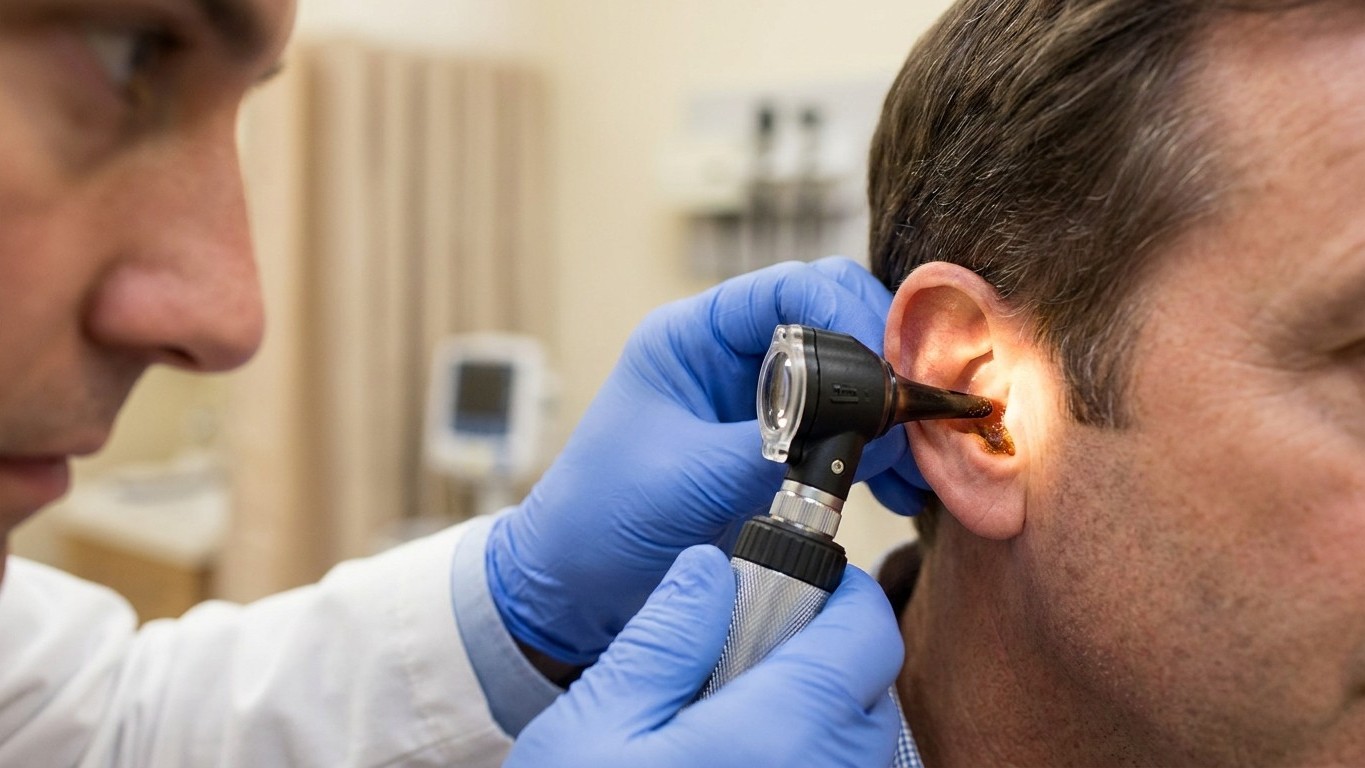
Every morning, same ritual: shower, face wash, cotton swab in each ear. It felt satisfying, it felt hygienic, it felt responsible. Until an ENT doctor peered into the canal with an otoscope and said, almost casually, “You see all that wax packed against your eardrum? That’s years of pushing.” The moment lands like a quiet gut punch. Not because it hurts, but because the thing you thought was helping was the very thing causing the problem.
Most of us have been doing this since childhood, taught by a parent who learned from their parent. A generational loop of well-meaning self-care that, medically speaking, is backwards. Cotton swabs are practically a household staple, but the box they come in actually says, in small print: do not insert into ear canal. We’ve been ignoring that label for decades.
Key takeaways
- A routine ear cleaning exposes a medical secret that changes everything about how you care for your body
- Your ears are designed to clean themselves—and cotton swabs are actively working against this natural system
- The damage accumulates silently until a doctor shows you what’s really happening inside
Your Ears Were Never Dirty in the First Place
Earwax, known medically as cerumen, is a natural substance your body produces, it’s slightly acidic, which helps fight bacteria and fungus, and slightly oily, which provides a waterproof barrier for the ear canal skin. This is not a byproduct to be removed. It’s a feature.
Earwax has a mission: to keep your ears healthy by trapping dust and dirt so they don’t travel deeper, and the waxy coating on your delicate ear canal skin also helps to protect it. Think of it as a slow-moving, self-refreshing filter, one that runs continuously without any input from you.
Self-cleaning means there is a slow and orderly movement of earwax and dead skin cells from the eardrum to the ear opening. Old earwax is constantly being transported, assisted by chewing and jaw motion, from the ear canal to the ear opening where, most of the time, it dries, flakes, and falls out. The result. A perfect biological conveyor belt, running every time you eat lunch or have a conversation. No swab required.
Here’s the counter-intuitive part that derails every cotton-swab devotee: you usually don’t need to ever clean wax out of your ears, and even if there is a lot of wax, you can have up to 90% of your ear canal blocked and still hear clearly, since you only need a small pinhole for sound to travel through. Ninety percent. That number reframes Everything.
The Plunger Effect: What the Swab Is Actually Doing
Using a cotton swab like a plunger in the ear canal pushes earwax deeper and deeper in, and once it’s pushed deeper, there’s no way for the wax to get swept out of the ear. The ear’s natural conveyor belt only moves outward. Push wax past a certain point and you’ve effectively removed it from the self-cleaning zone permanently.
Inserting cotton swabs into the ear can pack earwax tightly against the eardrum, leading to blockages that can cause discomfort and even temporary hearing loss. This is what the doctor sees when she looks inside the ear of a committed daily swab user: a dense, compacted plug sitting directly against the most sensitive membrane in the canal. When a patient has wax blockage against the eardrum, it is often because they have been probing the ear with cotton-tipped swabs, bobby pins, or twisted napkin corners, objects that only push the wax in deeper.
The risks don’t stop at impaction. The skin in your ear canal is very thin and fragile, and digging into it with a cotton swab can disrupt that layer, leading to bleeding, pain, or infection. Though rare, you can also poke a hole in your eardrum if you push too deep, which can cause dizziness or hearing loss and require surgery to repair. And then there are the accidents, one patient was referred after she accidentally bumped a cotton swab she was using, pushing it deep into the ear canal, causing immediate pain and bleeding; her eardrum was almost completely destroyed, with only a tiny sliver remaining.
In some rare cases, excessive use of cotton swabs has been linked to the development of ear cancer, because overuse can cause chronic irritation and infection of the ear canal, and over time, this may lead to ear cancer. Most people will never get there. But the escalation from “daily hygiene ritual” to “chronic irritation” to something worse is a spectrum, not a cliff. Worth knowing.
When Wax Genuinely Becomes a Problem
To be fair, not every ear runs smoothly on autopilot. Each year, there are eight million ear irrigations performed in medical offices in the U.S., and individuals whose body produces a lot of earwax have a higher chance of having an earwax blockage and impaction. Genetics plays a role. So does age, as we age, the consistency of earwax can change, often becoming harder and drier, which makes it more challenging for the ear to naturally push the wax out.
Contact your healthcare provider if you experience ear pain or pressure, hearing problems, tinnitus (ringing or buzzing sounds in the ear), dizziness, or itching in the ear canal. These are signals. Not a vague sense of “I feel like my ears need cleaning”, actual symptoms. The distinction matters enormously, because it is estimated that 80% of adults and 90% of children will naturally avoid excessive wax buildup without any intervention at all.
Earplugs and hearing aids keep wax from naturally falling out of your ear, leading to buildup inside your ear canal, so regular earplug users or hearing aid wearers fall into a genuinely higher-risk category and may benefit from periodic professional checkups. If you’re prone to repeated wax impaction or use hearing aids, consider seeing your doctor every six to twelve months for a checkup and routine preventive cleaning.
What Actually Works (and What Doesn’t)
The good news: safe alternatives exist and they’re straightforward. If earwax becomes visible at the opening of the ear canal, simply wipe it away with a damp cloth. Over-the-counter ear drops can help soften earwax, allowing it to exit the ear more easily. For more significant buildup, gently irrigating the ear canal with warm water using a bulb syringe can help flush out excess earwax. Body-temperature water only, using cold water can affect the nerves involved in motion and position and make you feel dizzy.
As for ear candles, those hollow tapered candles sold in wellness shops, promised to “draw out” impurities through suction — studies show they’re not effective and can cause injury. The FDA has found they can cause burns and even pierce the inside of the ear. A hard pass.
When professional removal is needed, ENT offices use a magnifying scope and tiny micro-instruments to gently peel the earwax away from the eardrum without damaging the underlying structures. The difference between that and a cotton swab is the difference between a surgeon’s scalpel and a kitchen knife. Both are sharp. Only one belongs inside you.
The cotton swab ritual feels clean because it produces visible wax on the tip, proof, seemingly, that something dirty was removed. But that wax was already on its way out. You didn’t clean your ear. You just intercepted a process that was working fine and redirected it in the wrong direction. The satisfaction was real. The hygiene was not. And somewhere between those two facts lives a question worth sitting with: how many of our most automatic daily habits are solving problems that don’t actually exist?
Sources : washingtonpost.com | cedars-sinai.org