
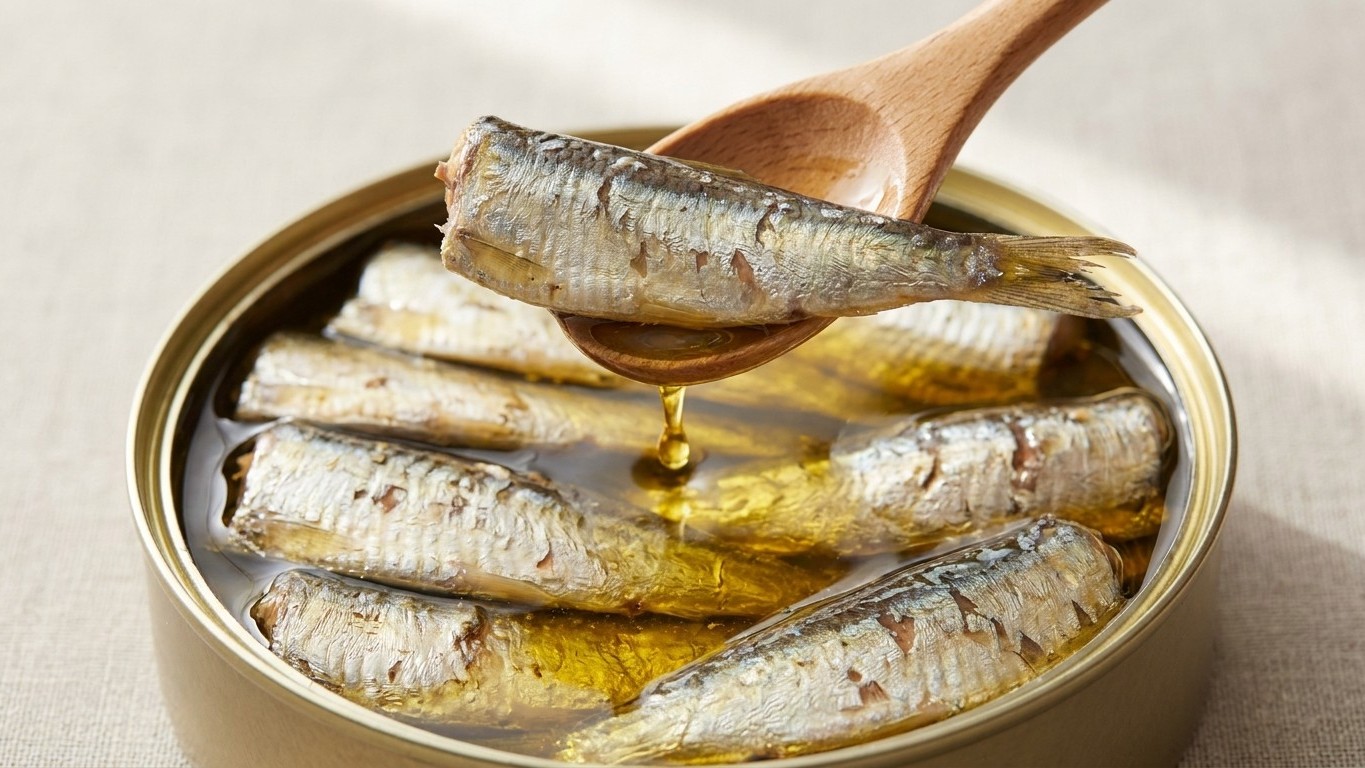
Pop the lid on a tin of oil-packed sardines and there’s always that little pool of golden liquid clinging to the fish, glossy, almost too pretty to pour down the sink. Most people do it anyway. What they’re actually rinsing away is a meaningful chunk of the very omega-3s they bought the sardines for in the first place.
Here’s the part that surprises people: canning fish in oil isn’t just a packaging choice. It’s a slow chemical exchange. During the sterilization process, heat causes fat-soluble compounds inside the fish, including the long-chain omega-3 fatty acids EPA and DHA, to migrate out of the flesh and into the surrounding oil. Omega-3s aren’t destroyed in the canning process, but if fish are canned in oil, some of the omega-3 fats can migrate into the surrounding oil, to be lost when the fish are drained. The same mechanism shows up with other canned fatty fish: heat can also reduce some of a fish’s nutritional value, as the omega-3-rich oils will break down and leach into the liquid as they heat up.
Key takeaways
- Heat during canning pulls omega-3s OUT of the fish and INTO the oil—but most people throw it away
- Oil-packed sardines lose three-quarters of their omega-3s compared to water-packed varieties
- Whole sardines with bones and skin deliver calcium you won’t find in boneless fillets
The Numbers Behind What Goes Down the Drain
This isn’t a minor rounding error. The comparison that stunned nutritionists came from tuna, and it applies to the same logic with sardines: albacore tuna canned in oil loses three-fourths of its omega-3s compared to water-packed, while gaining half again as many calories. Franchement, that’s a brutal trade for a flavor bump you could get another way.
With sardines specifically, research into their packing liquid confirms the same pattern. Draining the liquid will remove some of the omega-3s that have seeped into it, which means the “healthy fish, healthy fat” logic quietly falls apart the moment you tip the can over the sink. And it gets worse depending on which oil is used. Cheaper brands often pack sardines in soybean, sunflower, or cottonseed oil rather than olive oil, and when you drain a seed-oil can, some of the sardine’s own omega-3s leach into the oil you’re discarding, and what remains in the oil you do consume is mostly omega-6. So not only do you lose fat you wanted, you’re left with fat you didn’t.
Oil, Water, or Bones: What Actually Changes the Nutrition
The packing liquid matters, but so does what’s still attached to the fish. Sardines canned whole, with skin and tiny bones intact, carry a nutritional bonus that boneless fillets simply don’t. Whole cooked sardines with bones and skin intact provide about 382 milligrams of calcium per 100 grams, roughly a third of an adult’s daily calcium needs in a single serving. Skip the bones, and that number collapses. They also deliver phosphorus, iron, and vitamin B12 well above daily recommended amounts, but skinless, boneless sardines lose most of that calcium because the bones are the source.
As for the liquid itself, water-packed cans genuinely do preserve the fish’s own fat without dilution. Sardines in water deliver the fish’s natural nutrients without extra calories or fat. Sodium tells a similar story: a no-salt-added water pack contains about 70 milligrams of sodium per serving, roughly a quarter of what you’ll find in a standard salted can. If weight management or blood pressure is the priority, water wins outright.
But olive oil isn’t the villain here, it’s actually the smart middle ground. The healthiest canned sardines are whole, bone-in and skin-on, packed in water or extra virgin olive oil with no salt added, a combination that maximizes omega-3s, calcium, and vitamin D while keeping sodium and additives low. The catch is that this advantage only holds if you actually eat the oil rather than treating it like packaging waste. Health guidance generally points people toward sardines packed in water or pure olive oil as the most healthful choice. Draining does have one legitimate upside though: if you’re watching your calorie intake, draining sardines packed in oil can help. It’s a real trade-off, not a myth to dismiss.
What To Actually Do With That Golden Liquid
The fix isn’t complicated, and it doesn’t require buying a different brand. Once you know the oil is carrying dissolved omega-3s and fish-derived flavor compounds, the obvious move is to stop treating it as runoff. For maximum intake, it’s best to use the sardines and their packing liquid together in a recipe, such as on toast or in a sauce. A few ways this plays out in practice:
- Whisk the oil straight into a vinaigrette instead of measuring out fresh olive oil
- Mash the sardines with their oil directly into softened butter or a spread
- Use it as the starting fat for sautéing garlic and chili flakes before tossing in pasta
- Drizzle it over roasted vegetables in place of a finishing oil
The bones-in question deserves the same reconsideration. It feels counterintuitive to crunch through tiny fish bones, but that texture is exactly where the calcium lives, and it dissolves into whatever you’re eating far more easily than most people expect. You can eat sardines right out of the can, topped with onions or peppers, and even though the heads are usually removed, you’ll still be eating the skin and bones. Nobody notices them in a sandwich.
One detail worth remembering next time you’re standing in the canned fish aisle debating brands: the ingredient label rarely tells you which oil actually ends up richer in omega-3s after canning, since that depends on processing Temperature and time as much as on the oil itself. The only way to know you’re getting the full nutritional value is to skip the drain entirely and let the whole can, liquid included, go straight into the meal.
Sources : nutritionletter.tufts.edu | lifetips.alibaba.com