
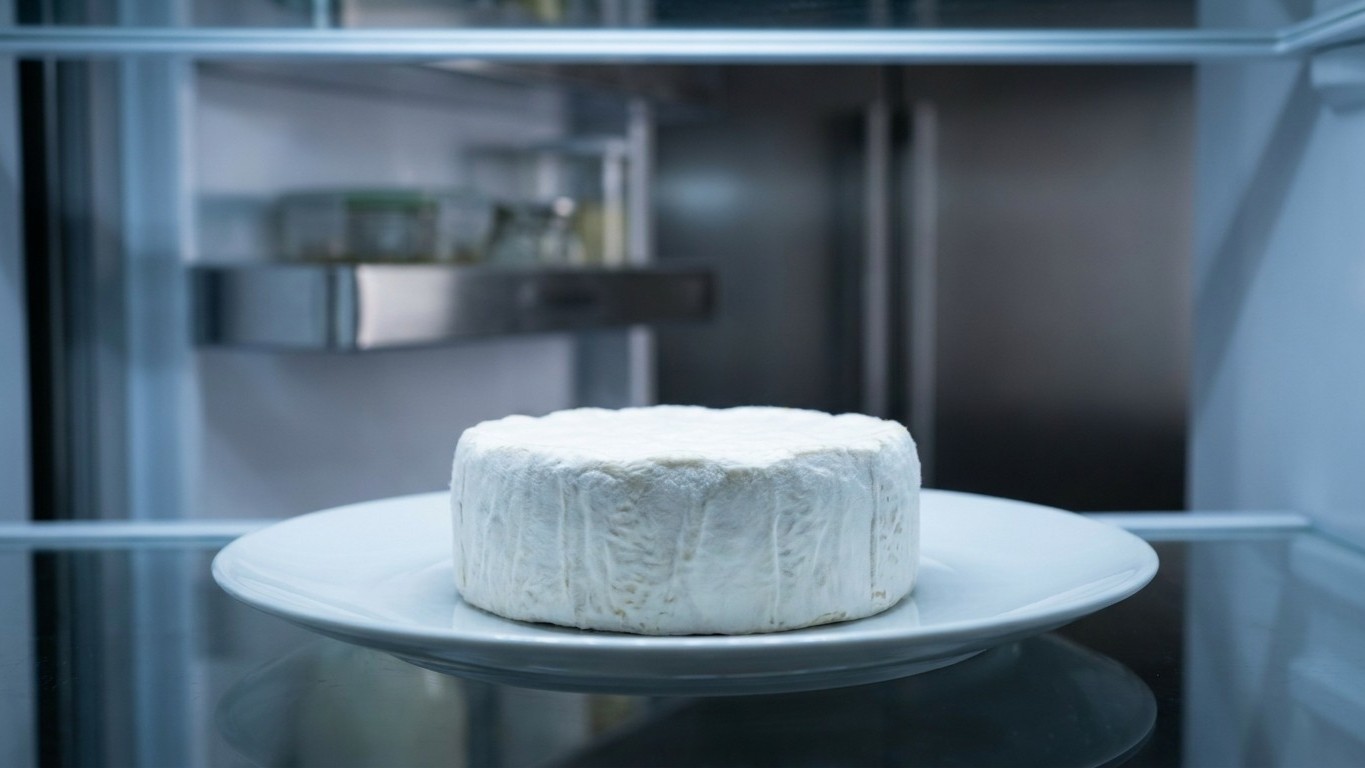
That soft, downy white rind on your Brie or Camembert isn’t just aesthetic; it’s a live microbial ecosystem. And tucked inside that creamy paste, at the exact temperature you trust to keep your food safe, one particular bacterium can be quietly doubling in number every few days. Listeria monocytogenes doesn’t care about your fridge setting. It thrives at 0–45°C, making refrigeration ineffective in stopping its growth. Franchise-standard 40°F storage, the kind recommended on every appliance manual, does nothing to stop it.
Here’s the uncomfortable physics of it: most foodborne bacteria need warmth to multiply, which is exactly why refrigeration works as a safety net for almost everything else in your kitchen. Most foodborne pathogens are, at least in principle, manageable. Refrigerate your food, cook it to the right temperature, and the risk drops dramatically. Listeria monocytogenes does not play by those rules. It’s what microbiologists call psychrotrophic, a fancy word for cold-loving, and it can survive and multiply at refrigeration temperatures, including the 35–40°F range of a standard home refrigerator. A 2022 study on soft and cured cheeses found the bacteria’s staying power almost perverse: the pathogen showed greater survival capacity in both soft and cured cheeses during storage at 4 °C compared to the storage at 22 °C, where more than 2.5 log reductions were computed. In plain terms, the cold actually protected the bacteria better than room temperature did.
Key takeaways
- A sneaky bacterium in soft cheeses multiplies faster in the cold than at room temperature
- Pasteurized milk doesn’t guarantee cheese safety—contamination can happen after pasteurization
- You can’t see, smell, or taste this pathogen, making visual inspection completely useless
Why bloomy rinds are the perfect hiding spot
Not every cheese carries equal risk, and this is where the “trust the fridge” instinct really falls apart. Bloomy-rind soft cheeses, think Camembert, Brie, triple-creams, and their cousins, have a chemistry that practically invites the bacteria in: high moisture, low acidity near the rind, and a surface environment that becomes less acidic as the mold ripens the cheese from the outside in. That’s precisely the kind of substrate researchers flag as problematic. Whey and fresh soft cheeses in particular have been singled out because fresh whey cheeses are the riskiest soft RTE cheese products with regard to L. monocytogenes outgrowth because of their high pH and moisture content that corresponds with water activity values much above the threshold.
And here’s the part that upends the other comforting myth people cling to: pasteurization. Plenty of shoppers assume that if the milk was pasteurized, the finished cheese is automatically safe. It isn’t, and a French outbreak last summer proved it in the worst possible way. Investigators at Santé Publique France and the National Listeria Reference Centre at the Pasteur Institute identified epidemiological and microbiological evidence linking an outbreak to soft cheeses with a bloomy rind, such as Camembert, Crémeux, and bûches, produced by the company Chavegrand. The products were far from raw-milk artisanal risks; the products were made from pasteurized cow’s and goat’s milk, underscoring a critical point that is often misunderstood: pasteurization of milk does not eliminate the risk of listeria in the finished cheese. The outbreak strain entered during post-pasteurization processing. That outbreak, which reached shelves internationally under multiple brand names, ultimately proved fatal. The outbreak killed two people. In its wake, in August 2025, Wegmans Food Markets issued a voluntary recall of its Medium Camembert Soft Ripened Cheese and several related products due to potential listeria contamination.
The strain nobody can taste, see, or smell
This is the most unsettling detail in the whole story. You cannot inspect your way out of this risk. Listeria cannot be detected by the consumer, as there are no changes in appearance, scent, or taste of the contaminated foods. No off smell, no discoloration, no bitter tang to warn you off. The wheel looks perfect, smells earthy and mushroomy exactly as it should, and could still be carrying a dangerous load.
The current American outbreak illustrates just how sprawling and slow-moving these events can be. As of late June 2026, the CDC reported that a total of 12 people infected with the outbreak strain of Listeria have been reported from 4 states, with sick people’s samples collected on dates ranging from March 6, 2023, to June 2, 2026. That’s three years of scattered cases before investigators connected the dots. Of 12 people with information available, 10 have been hospitalized and 1 death has been reported from Maryland. The source traced back to a Maryland producer, and once regulators started pulling samples, the contamination showed up everywhere: Listeria was detected in six product samples of requesón cheese and in one environmental sample, and whole genome sequencing showed that the Listeria in the cheese is the same Listeria in the sick people. The recall eventually expanded well beyond the original product line, with Clover Hill Dairy expanding their recall to include all of its cheese products. Products had been repackaged under a half-dozen different brand names sold through farmers markets and small retailers, which is exactly the kind of distribution chaos that makes tracing contamination such a nightmare.
Who actually needs to worry, and what changes anything
For a healthy adult in their thirties, a brush with Listeria might pass as a mild stomach bug, if it registers at all. That’s not the case for everyone, and this is where the stakes shift dramatically. Health authorities are consistent on this point: CDC and public health officials in several states are investigating a multistate outbreak of Listeria infections linked to soft cheese. The people who need to take it seriously are specific and well-documented. It can pose serious health risks for the susceptible population including pregnant women, elderly and immunocompromised individuals such as patients with AIDS and diabetes mellitus. Pregnant women face the sharpest consequences, since the bacterium has an unusual ability among foodborne pathogens: it can cross the intestinal, blood-brain, and placental barriers, leading to severe infections.
Practically, this doesn’t mean swearing off bloomy-rind cheese forever, but it does mean adjusting the mental model. Buy from producers with traceable, consistent food safety records rather than assuming a pretty rind equals safety. Check recall lists periodically, especially if you’re pregnant or caring for someone elderly or immunocompromised, since Listeria is especially harmful if you are pregnant, 65 or older, or have a weakened immune system due to certain medical conditions or treatments. And when in doubt about a product tied to any active recall, the guidance is blunt and non-negotiable: the CDC recommends all recalled soft cheese should be thrown out or returned to the store where purchased. No amount of extra chilling fixes that particular problem, and that’s the one habit worth actually breaking.
Sources : fda.gov | ncbi.nlm.nih.gov