
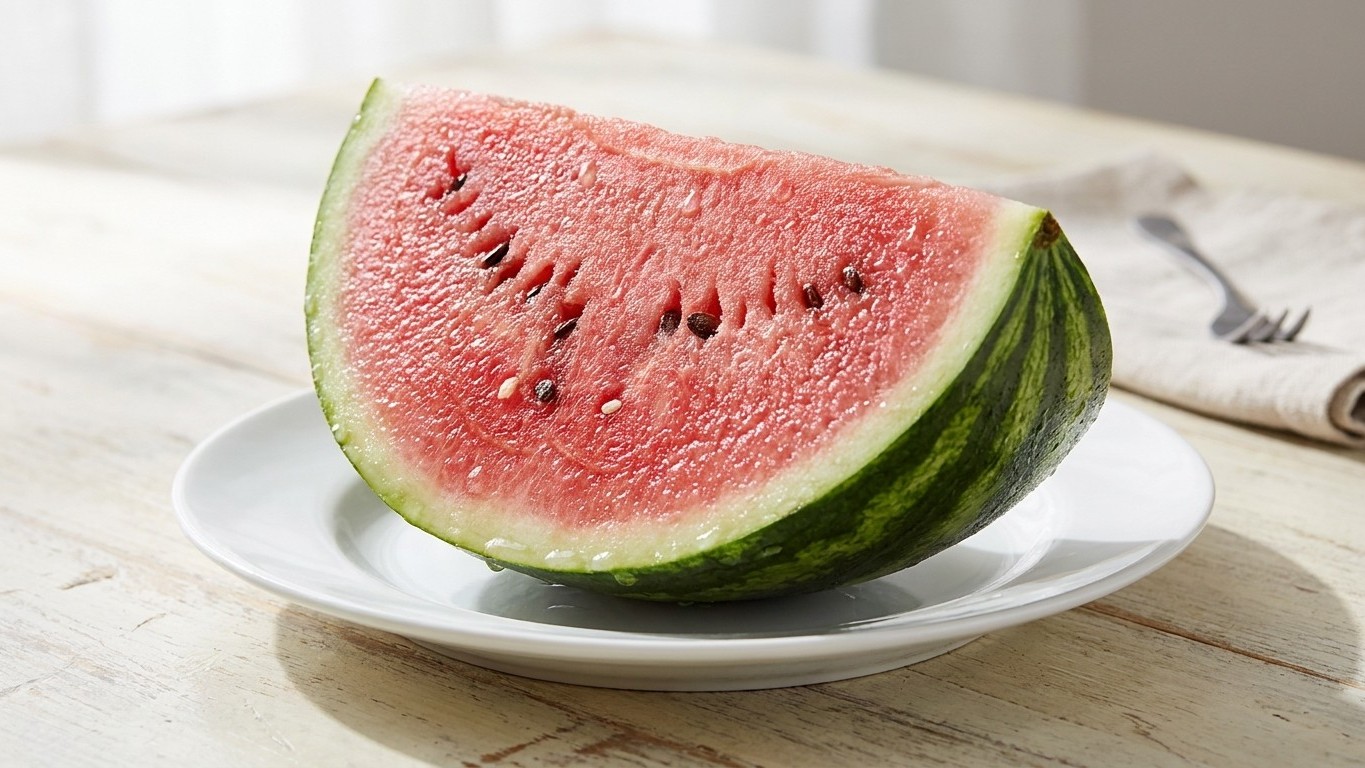
Watermelon is 92% water by weight, and that single number explains why one juicy slice During a Heatwave can do something a glass of tap water simply can’t: keep the fluid where your body actually needs it. A doctor’s explanation of this mechanism reframed how I think about hydration entirely, and honestly, it made the whole “drink eight glasses a day” mantra feel a little outdated.
For years I treated hydration like a chore. Glass after glass, forced down between meetings, sitting heavy in my stomach before disappearing into the bathroom twenty minutes later. During the last heatwave, I doubled down on the habit, convinced that more water equaled less risk. Turns out the science tells a more nuanced story, and it starts with what’s actually inside that fruit.
Key takeaways
- Plain water passes through your body fast, but watermelon carries something your cells actually need
- The minerals and natural sugars in fruit trigger absorption mechanisms that plain water can’t match
- Research shows watermelon rehydrates as effectively as commercial sports drinks
Why 92% Water Isn’t the Same as 92% Hydration
Watermelon is 92% water, making it a delicious way to rehydrate, but the real magic isn’t the water content itself. It’s what travels alongside it. Dr Susan Shirreffs, exercise physiologist and hydration expert at Loughborough University, explains that to be properly hydrated, you need to replace fluid lost from the body with one that’s similar to the body’s natural composition, and watery fruit and vegetables often contain levels of minerals and sugar that mirror this, so they can hydrate you more effectively than water alone.
That’s the piece that changed everything for me. Plain water passes through fast, no traffic, no baggage. Watermelon comes packed with a cocktail your cells recognize and put to work immediately. Watermelon is a hydration superstar composed of 92 percent water, eight percent sugar and contains essential rehydration salts calcium, magnesium, potassium and sodium. Those aren’t decorative minerals. They’re the exact electrolytes your body dumps out through sweat during a heatwave, and getting them back matters just as much as the water itself.
There’s also a sugar mechanism at play that sounds counterintuitive at first. The modest amount of natural sugar actually helps your intestines absorb water more efficiently, similar to how oral rehydration solutions work, without spiking your blood sugar in any meaningful way. Oral rehydration solutions, the kind hospitals use for severe dehydration, rely on a precise sugar-to-electrolyte ratio to pull water into the bloodstream faster than water alone could manage. Watermelon isn’t a medical solution, obviously, but it borrows the same basic physics.
What the Research Actually Shows
A study out of the Journal of Kerman University of Medical Sciences put this to the test directly, comparing watermelon juice against a commercial sports drink and plain water after exercise-induced dehydration. Both watermelon juice and the sports drink led to significantly greater weight regain than water alone, and watermelon juice rehydrated just as effectively as a commercial sports drink, with all three options restoring hydration markers to similar levels. For anyone skeptical of sugary sports drinks but still wanting that rehydration edge, that’s a genuinely useful data point.
There’s a slower-absorption theory too, one that a UCLA-affiliated dermatologist has pushed for years. “Healthy hydration is about the water you hold in the body, not the water you drink that passes straight through,” says Dr Howard Murad, associate clinic professor of medicine at the University of California, Los Angeles. His argument: “When we eat water-rich foods, we absorb water more slowly because it is trapped in the structure of these foods. That slow absorption means the water in food stays in our bodies longer, and brings a multitude of additional benefits.”
Cellular water, essentially, versus water that’s just passing through on its way to the toilet. Not every researcher frames it that dramatically, but the underlying idea (that structure and composition affect retention) lines up with what dietitians at major hospital systems now recommend.
Watermelon Isn’t the Only Player, and It’s Not a Water Replacement
Here’s the contrarian part, though: watermelon isn’t uniquely magical. Bell peppers are typically more than 92% water no matter the color, an asparagus spear is about 92% water, and even a bell pepper packs plenty of vitamins and minerals alongside that hydration value. Cauliflower, of all things, matches watermelon almost exactly. The reality is that 92% of cauliflower’s weight comes from water, despite nobody ever describing it as juicy.
Cucumbers, celery, and lettuce actually edge out watermelon on pure percentage. The proportion of water weight in watermelon is 92%, meaning it’s more hydrating than most other produce, though cucumbers and lettuce are 95% and 96% water respectively. Watermelon’s real advantage is behavioral, not chemical. People tend to eat watermelon in larger quantities than most other fruits, especially in warm weather, so the total fluid you take in from a sitting of watermelon often exceeds what you’d get from a handful of berries. Nobody eats a whole plate of lettuce in one sitting on a 95-degree afternoon. A quarter of a watermelon? Absolutely.
None of this means the glass of water is obsolete, and I’d push back hard on anyone claiming otherwise. Even assuming a diet rich in water-rich fruits and vegetables, it’s unlikely these foods could ever account for more than 40% of our necessary daily intake, according to Hydration for Health, meaning our bodies still need water in liquid form. According to the Academy of Nutrition and Dietetics, about 20% of our water consumption comes from food, which puts the fruit-versus-glass debate in perspective. It’s not either-or. It’s addition.
What changed for me wasn’t ditching the water glass. It was stopping the forced chugging and instead building meals around watermelon slices, cucumber salads, and the occasional bell pepper snack, letting the liquid intake happen more naturally alongside food. The doctor’s point, in the end, wasn’t that fruit beats water. It’s that water locked inside living plant cells behaves differently in your body than water poured from a tap, and during a heatwave, that difference is worth eating your way into.
Sources : thehealthy.com | watermelon.org