
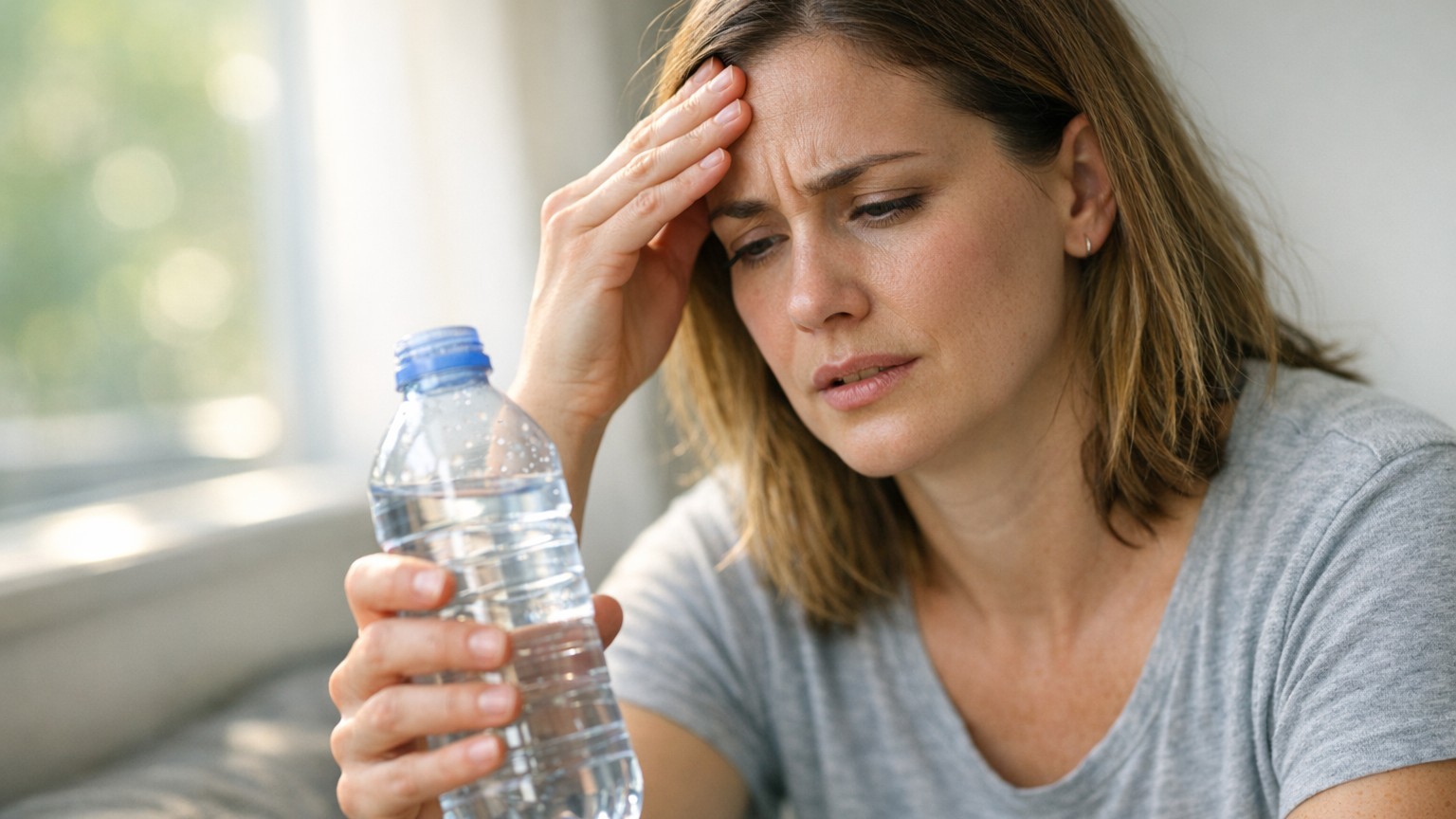
The bottle was always full. Refilled constantly, carried from room to room, sipped between every errand and episode of TV. A genuine effort, the kind of dutiful, hydration-obsessed behavior that every wellness account on the internet seemed to endorse. And then, on the third morning of a record-breaking heatwave, the room tilted. Not dehydration. Something else entirely.
The dizziness was the clue. Because the problem wasn’t too little water. It was too much, without anything in it.
Key takeaways
- A wellness habit endorsed by every health account online can secretly trigger a life-threatening condition
- Women face five times higher risk than men at peak temperatures, but most people don’t know the warning signs
- Your colorless urine isn’t a victory—it’s a red flag that nobody mentions
The Hydration Paradox No One Warned You About
Here’s the counter-intuitive part: during extreme heat, plain water consumed in large quantities can actively work against you. As you sweat to cool down, you lose sodium (between 500 and 2,000 mg per liter of sweat), potassium, magnesium, and calcium. Drinking plain water dilutes these minerals further, which can trigger muscle cramps, headaches, dizziness, and in severe cases, hyponatremia, dangerous sodium depletion. The more you drink without replenishing those minerals, the worse the dilution becomes.
When you consume too much water too quickly, it dilutes the sodium in your blood, creating a condition called hyponatremia, meaning low blood sodium levels. Sodium is essential for nerve signals, muscle function, and fluid balance in your cells. When sodium levels drop too low, water moves into your cells and causes them to swell, swelling that is especially dangerous in the brain, where space is limited.
Whenever there’s a heatwave, the number of people suffering from hyponatremia increases. It is a disorder involving a reduction in the level of sodium in the blood, which causes an imbalance in cell hydration. The symptoms, nausea, confusion, lethargy, dizziness, are easily mistaken for heat exhaustion or heat stroke. Which is exactly why so many people keep reaching for more water, spiraling deeper into the very problem they’re trying to solve.
Who’s Actually at Risk (The Numbers Are Striking)
A large-scale study published in the Journal of Clinical Endocrinology & Metabolism found that women and elderly people carry the greatest risk, with individuals 80 years or older being 15 times more likely to be hospitalized for hyponatremia during heat waves. But the gender gap at all ages is worth noting: the risk of severe hyponatremia is approximately twice as high for women as for men on cool days, and at the highest temperatures, women experience a five times higher risk than men.
A 2025 study published in the Journal of the American Society of Nephrology confirmed that high temperature is associated with severe hyponatremia, with the association most pronounced among women and elderly individuals. Given predictions of further global warming and demographic changes by 2050, the estimated prevalence of severe hyponatremia may increase by 66%.
One proposed reason for the sex disparity: women are thought to drink more water than men, with higher sensitivity to the antidiuretic hormone AVP secondary to estradiol. Biology, amplifies the risk of the very behavior we’re all encouraged to adopt.
Overhydration occurs when you consume more water than your kidneys can eliminate. Healthy adult kidneys can handle about 0.8 to 1 liter of water per hour, roughly 27 to 34 ounces. Gulp down more than that, particularly across an entire day of anxious heat-related sipping, and the math stops working in your favor.
The Real Warning Signs You’re Missing
The clinical spectrum of hyponatremia ranges from mild, nonspecific symptoms such as lethargy, gait instability, and confusion, to headache, nausea, and seizures due to cerebral edema. The early signs, feeling foggy, vaguely nauseated, weirdly off-balance, are so easy to dismiss, especially when you’ve been drinking water all day and feel certain that’s the responsible thing to do.
The color of your urine can tell you a lot. If you’re properly hydrated, it will be light yellow, like the color of light straw or lemonade. You may be drinking too much water if your urine is colorless or clear. That particular detail, colorless urine as a red flag rather than a badge of virtue, is one most hydration advice conveniently forgets to mention.
Overhydration can lead to headaches and confusion. You may feel nauseous or sleepy, and you may develop vision problems, muscle cramps, or elevated blood pressure levels. A heatwave already produces fatigue and headaches, which is exactly why the overlap makes hyponatremia so easy to miss at home.
Drinking Smarter, Not Just More
As we sweat, we lose small amounts of important minerals such as sodium, potassium, and magnesium. Such electrolytes help our muscles and nerve cells function. Most people’s diet contains enough electrolytes to make up for what they lose by perspiring, but those who sweat a lot, either from prolonged heat exposure or intense physical activity lasting more than an hour, should consider consuming electrolyte products.
The pacing matters as much as the quantity. For people active outdoors during heat waves, the CDC recommends drinking 1 cup (8 ounces) of water every 15 to 20 minutes, translating to about 24 to 32 ounces per hour, and drinking at shorter intervals is more effective than drinking large amounts infrequently. Slow and steady, not a full liter in one anxious gulp.
For those who want to skip the packaged sports drinks, a homemade electrolyte drink works well: water with a pinch of salt, a splash of citrus juice, and a touch of honey for a natural, balanced drink. Fruits like bananas, oranges, and coconut water are also natural sources of electrolytes, and the fact that eating a banana alongside your water bottle counts as hydration strategy is, frankly, the most appealing piece of advice in this entire field.
The broader recalibration is this: during a heatwave, hydration is not a volume target. Don’t rely solely on plain water, while important, it can dilute electrolyte levels if consumed excessively without adequate mineral intake. The goal is mineral balance, not a full bladder. And the morning dizziness that sends you reaching for yet another glass of water may, counterintuitively, be the moment to put the bottle down and eat something salty instead.
Sources : academic.oup.com | pubmed.ncbi.nlm.nih.gov