
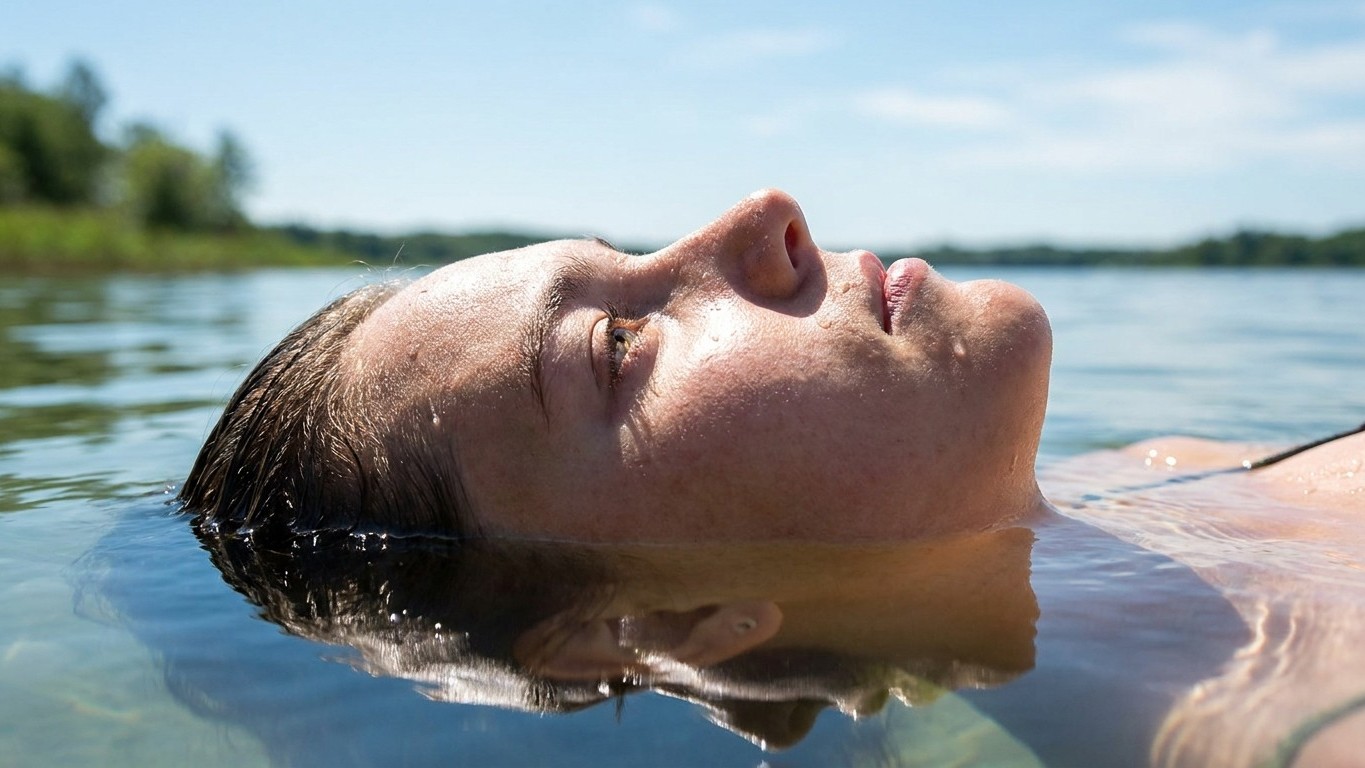
The water felt perfect that afternoon, the kind of flat, glassy lake surface that makes you forget the clock entirely. Sunglasses seemed unnecessary, even silly, bobbing somewhere in a beach bag while I floated for hours. By dinnertime, my eyes were burning, swollen, and streaming tears I couldn’t explain. That delayed reaction wasn’t a coincidence. It was photokeratitis, and the water I’d been swimming in all day was the culprit.
Key takeaways
- Water reflects UV rays that cause photokeratitis—a sunburn of the cornea with delayed pain
- The danger is invisible: your eyes absorb damage silently while you float, with symptoms arriving hours later
- Most sunglasses and swim goggles don’t block UV unless the label explicitly says 99-100% protection
What the water actually did to my eyes
Photokeratitis is a painful eye condition caused by exposure to ultraviolet rays, most commonly from the sun, and can be compared to sunburn, but it’s a burn that affects parts of your eye instead of your skin. The mechanism is almost embarrassingly simple once you understand it: sunlight reflected into your eyes from snow, ice, water, sand or cement is one of the most common triggers of this condition, right alongside direct sun exposure.
What makes lake and ocean swimming particularly risky is the double exposure. Water acts like a mirror, reflecting and intensifying ultraviolet radiation from the sun, which means your eyes receive UV exposure not just from above but also from light bouncing off the water surface. Add in the fact that most of us squint, tilt our faces toward the water to cool off, or float on our backs staring straight up, and you’ve created the perfect conditions for overexposure without a single moment of obvious discomfort while it’s happening.
Why the pain shows up hours later
This delayed timeline is the part that trips people up, and it’s exactly what happened to me. Short-term UV overexposure can cause photokeratitis, which feels like a sunburn on your cornea and causes pain, redness, tearing, and temporary vision problems that typically appear several hours after exposure. There’s no warning system on the cornea the way there is on skin turning pink in real time. You simply don’t feel it until the damage has already been done.
Like a “sunburn of the eye,” photokeratitis can be painful, with symptoms including red eyes, a foreign body sensation or gritty feeling in the eyes, extreme sensitivity to light and excessive tearing. Some people also describe eyelid twitching or a feeling like sand is trapped under the lid, even though nothing is actually there. It’s genuinely alarming the first time it happens, especially since it’s generally bilateral, affecting both eyes at once.
The reassuring part, and I clung to this that night, is that the condition is rarely permanent. Fortunately, these symptoms are usually temporary and rarely cause permanent damage to the eyes. The good news about photokeratitis is that it’s almost always a temporary condition, and your symptoms usually go away within a few hours to a couple of days.
The 80% myth, and what water actually reflects
Here’s where most articles on this topic get it wrong, and where I want to slow down. You’ll see the claim everywhere that water reflects up to 80% of UV rays. That figure is almost certainly borrowed from snow, not water. According to the source Dermatologists and the EPA actually cite, the EPA says snow might reflect up to 80% of UV, sand may reflect 15%, and water 10%. Another summary of the same data confirms it plainly: sand reflects about 15 percent, and water reflects around 10 percent.
So no, a calm lake isn’t turning into a UV mirror the way a snowfield does. But 10% is still meaningful when you’re already sitting under hours of direct midday sun, and the angle of that sun changes Everything. Bright surfaces like sand, water and snow reflect UV and increase exposure, and reflection intensifies as the sun sits lower in the sky, which is exactly why golden-hour swims near sunset can sting your eyes even when the light looks gentle and forgiving.
What actually protects you (and what doesn’t)
The fix isn’t complicated, but it does require ditching a few assumptions. Researchers recommend sunglasses or goggles that block or absorb 99% to 100% of UV rays if you spend time outdoors, and the best choice may be wrap-around sunglasses or those with side panels to block all harmful UV rays. A dark tint alone tells you nothing about UV filtration. Polarized lenses don’t always include UV protection since polarized lenses simply include a filter to reduce glare. Check the label, or have an optician verify it, because darkly tinted lenses don’t always include UV protection either.
For actual swimming, tinted swim goggles with UV filtering do double duty against glare and radiation, which matters since for outdoor swimming, goggles with UV protection and tinted lenses help reduce glare while sealing out the water itself. If you do end up in my situation, cold compresses, artificial tears, and staying indoors out of bright light for a day are the standard remedies, and most cases resolve within 48 hours.
What stuck with me most, oddly, wasn’t the discomfort itself but how invisible the whole process had been. No stinging, no squinting fits, nothing that would have told me to reach for my sunglasses at hour two instead of hour six. The cornea, it turns out, absorbs damage silently and sends the bill later that evening, framed as a burning, gritty, tear-streaked reminder that “just cooling off” and “unprotected UV exposure” were, that whole afternoon, exactly the same activity.
Sources : arenaeyewear.com | ergsy.com