
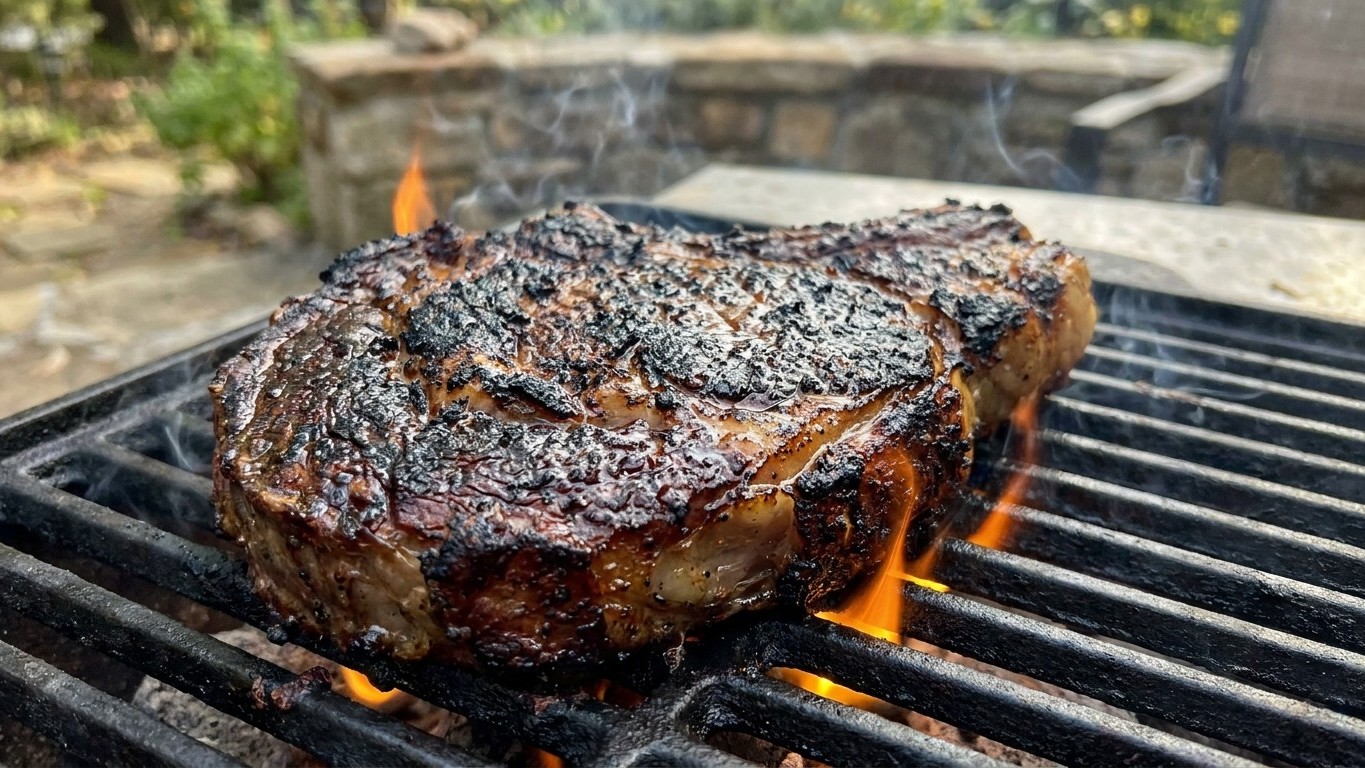
Charred bits on grilled meat aren’t just carbon and bad luck. According to the National Cancer Institute, heterocyclic amines (HCAs) and polycyclic aromatic hydrocarbons (PAHs) are chemicals formed when muscle meat, including beef, pork, fish, or poultry, is cooked using high-temperature methods, such as pan frying or grilling directly over an open flame. In lab studies, HCAs and PAHs have been found to be mutagenic, meaning they cause changes in DNA that may increase the risk of cancer. Scraping off those blackened edges was never just a matter of taste. It was, without most home cooks realizing it, a rough form of harm reduction.
Key takeaways
- The char on your meat contains two distinct families of potentially mutagenic compounds formed through completely different chemical reactions
- Your grilling habits matter far more than any single blackened burger—it’s about decades of exposure, not one Fourth of July mistake
- One simple 30-minute step before grilling can reduce harmful compound formation by up to 90% without sacrificing taste
What’s actually happening on that grill grate
The chemistry behind the char is more specific than “burnt equals bad.” HCAs are formed when amino acids, sugars, and creatine or creatinine react at high temperatures, essentially a reaction between the proteins in muscle meat and the sugars already present in the flesh once things get hot enough. PAHs form through a different mechanism entirely: they’re formed when fat and juices from meat grilled directly over a heated surface or open fire drip onto the surface or fire, causing flames and smoke, and that smoke carries the compounds right back onto the food. So you’re dealing with two separate chemical pathways producing two separate families of potentially harmful compounds, both concentrated in the same blackened crust that makes a steak or a burger look irresistibly caramelized.
Fattier cuts make the problem worse, not because fat itself is dangerous, but because the more fat that drips onto the flame, the more smoke, and the more potential for PAHs. That’s the counterintuitive part: the juiciest, most marbled cut on the grill, the one that seems like the indulgent choice, is often generating more of these compounds than a leaner one would. A dry chicken breast might taste like punishment, but it’s quietly the safer bet.
Why the toxicologist isn’t panicking, and neither should you
Here’s where the story gets more nuanced than a scary headline would suggest. The International Agency for Research on Cancer has classified red meat as a probable human carcinogen, but researchers are careful about overstating individual risk. As one cancer researcher who studies these compounds put it, “clearly, the risk of eating charred meat is far lower than for someone who smokes a pack of cigarettes a day or heavily imbibes alcohol.” A physician at UCLA Health framed it even more plainly, noting it’s not so much a one-time experience, such as an occasion where you kept your meat on the grill too long and it turned black. It’s more of a message about one’s lifestyle, describing decades of weekly barbecues with routine blackening as the real exposure pattern worth worrying about, one linked over time to prostate, colon and pancreatic cancers.
Frequency and portion size matter enormously here. Researchers at Roswell Park Comprehensive Cancer Center note that increased risks have been observed with frequent consumption and larger portion sizes of well-done or charred meat cooked at high temperatures. One blackened hot dog at a Fourth of July cookout isn’t rewriting your cellular destiny. A lifetime of char-forward grilling every single weekend is a different calculation. The exposure is also not limited to what you eat. Standing over the grill matters too, since with PAHs in particular, the exposure potential is twofold: from contact due to ingestion of the food and through smoke inhalation.
The fixes that actually work, and the ones that don’t
Trimming the char before serving is a reasonable instinct, and toxicologists back it up. One direct recommendation from health researchers: if the meat has charcoal parts, trim them off before serving. But scraping after the fact is really damage control. The more effective interventions happen before the meat ever touches the grate.
Marinating turns out to matter more than most people assume, more even than adjusting your grill’s temperature. According to the American Institute for Cancer Research, marinating meat, poultry and fish for at least 30 minutes can reduce the formation of HCAs, and marinating the meat has a bigger impact on reducing HCA formation than reducing cooking temperature. A simple mixture works: use a mixture that includes vinegar, lemon juice or wine along with oil, herbs and spices. Rosemary in particular punches above its weight. Research cited by Roswell Park found rosemary has been found to lower HCA formation by up to 90%, while garlic used in marinades can decrease HCA formation by up to 70%.
Beyond the marinade, a few habits reduce exposure without ruining the cookout. Flip meat frequently rather than letting one side blacken; cook over indirect heat when possible, keeping coals or flame off to the side rather than directly beneath the food; and consider partially cooking meat in the oven or microwave before it hits the grill, which shortens the high-heat exposure window while still delivering that smoky finish. Vegetables and fruit, meanwhile, are essentially off the hook: grilled vegetables and fruit do not produce HCAs, since they lack the muscle proteins and creatine that drive the reaction, though heavily charring them can still generate other carcinogens like benzopyrene.
None of this means retiring the grill. It means treating a deeply blackened crust the way you’d treat an extra glass of wine on a Tuesday: fine occasionally, worth noticing if it becomes the default. The toxicologist’s real point wasn’t that char is poison. It’s that the habit of routinely pushing meat past golden-brown into black, weekend after weekend, adds up in a way that a single charred hot dog never will.
Sources : roswellpark.org | uclahealth.org