
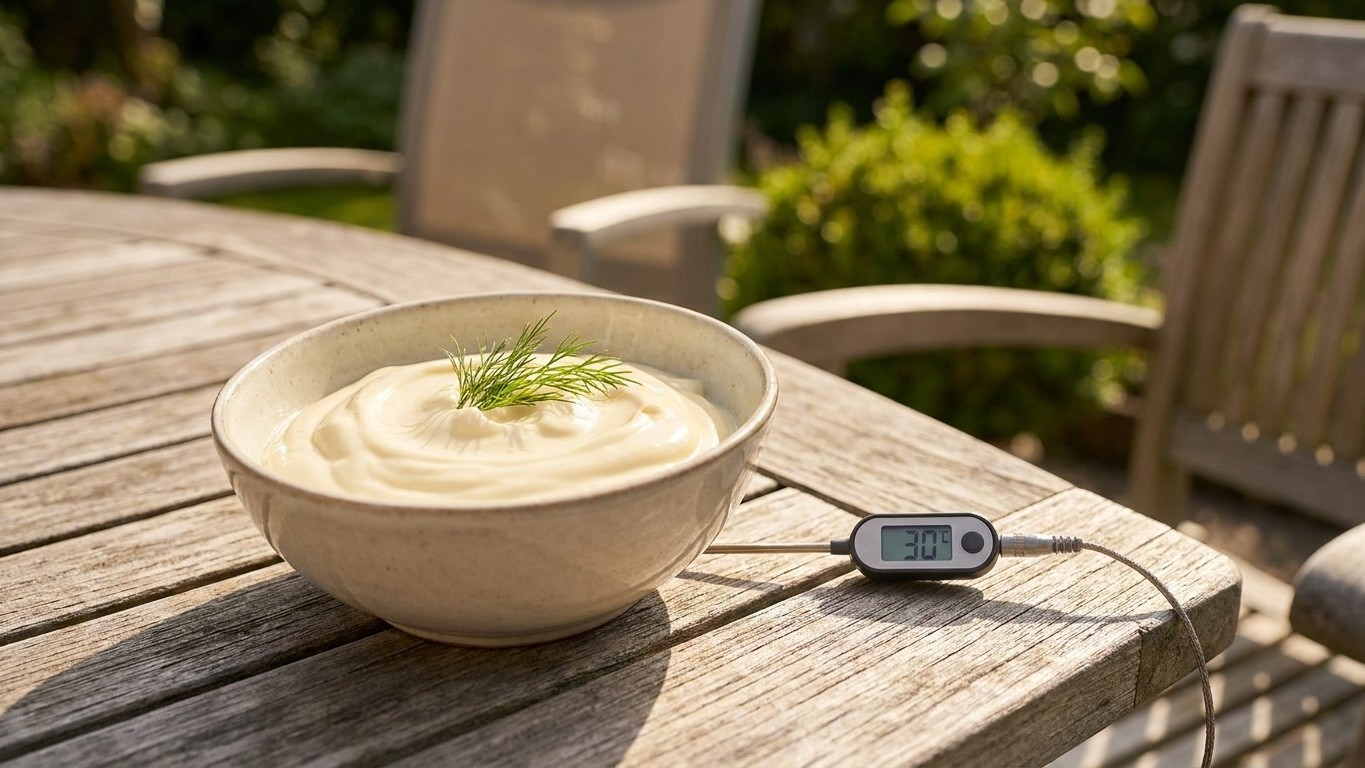
I’ve kept homemade mayo bowls out on the terrace through countless aperitif hours, nestled next to the rosé, convinced that a little olive oil and lemon juice were protection enough. A food safety consultant I interviewed for a separate story set me straight in about thirty seconds: bacteria in the temperature danger zone can double every 20 minutes, and homemade mayo sits squarely in that zone the moment it leaves the fridge on a hot day.
That number isn’t marketing language from a wellness account. Bacteria grow most rapidly between 40°F and 140°F, doubling in number in as little as 20 minutes. The USDA calls this range the “Danger Zone,” and it applies to pretty much everything sitting on a summer aperitif spread, not just the obviously risky stuff.
Key takeaways
- Bacteria in homemade mayo can double every 20 minutes above 40°F, reaching dangerous levels in just 3 hours
- Raw egg emulsion offers zero visual or taste warnings before it makes you sick with salmonella
- The safe window collapses to just one hour once temperatures exceed 90°F—and direct sun easily beats that
Why homemade mayo is the riskiest thing on the table
Here’s what makes mayo different from, say, a bowl of olives or a wedge of cheese: it’s built on raw egg yolk, oil, and often lemon juice or vinegar, whipped into an emulsion that never gets cooked. Unlike commercial mayonnaise that’s made with pasteurized eggs, homemade versions are typically prepared with unpasteurized raw eggs, which limits their food safety and means they don’t last long in the fridge. The acid helps, but not as much as we’d like to believe. A Danish research team from the University of Copenhagen tested this directly: acidification with freshly squeezed lemon juice cannot ensure the safety of the product on its own, since citric acid content in lemons varies widely by origin and season.
The temperature math is where things get genuinely alarming. Most bacteria multiply and double every 20 minutes at temperatures between 40–140°F (4–60°C). That means 100 bacteria can grow to 6,000 in just 2 hours and 100,000 in 3 hours. Now picture a Sunday aperitif that starts at noon and stretches, as they always do, into a lazy four-hour affair on the patio. A little egg contamination that was harmless at 12:15pm becomes a real problem by 4pm, and it happens invisibly.
That’s the part that got me. Dangerous bacterial growth can occur without any visible signs of food spoilage. Foods may appear, smell, and taste normal while harboring unsafe levels of bacteria. Salmonella in particular gives you zero warning signs before it makes you sick.
The 90°F rule nobody talks about at rooftop parties
Most of us have absorbed the vague idea that food shouldn’t sit out “too long.” What almost nobody realizes is that the safe window shrinks dramatically once the thermometer climbs. The Meat and Poultry Hotline advises never leaving food out of refrigeration over 2 hours, and if the temperature is above 90°F, food should not be left out more than 1 hour. A rooftop aperitif in July, with direct sun on the table and the mayo bowl sitting next to the grill, easily clears 90°F even if the official weather app says 82°F in the shade.
There’s also a detail that trips up even careful hosts: the danger-zone clock doesn’t reset just because you put the bowl back in the fridge for twenty minutes between rounds of guests. Exposure adds up across the whole afternoon, which is exactly why professional kitchens treat “cumulative time” as the real metric, not just the length of any single lapse.
What actually protects a batch of homemade mayo
The fix isn’t complicated, but it does mean breaking a habit that feels almost ceremonial: leaving the good stuff out on display all afternoon like it’s part of the tablescape.
- Keep the bowl in a smaller container nested in a larger bowl of ice, refreshing the ice as it melts
- Bring out only what will be eaten in the next 30-45 minutes, refilling from a chilled reserve in the fridge
- If the afternoon is genuinely hot (above 90°F), treat one hour as the hard limit before discarding what’s left, not two
Pasteurized eggs change the equation considerably if you’re determined to keep a bowl out longer. Some cooks now heat egg yolks to a controlled temperature before whipping them into the emulsion, a technique that kills common pathogens, with abundant lemon juice keeping the mayo food-safe for up to one month when refrigerated properly afterward. It’s a genuine workaround, and honestly one I’ve started using for anything I know will linger on a table for hours.
For the people most vulnerable to foodborne illness, sitting-out mayo isn’t a matter of taste preference at all. Extension food safety specialists are blunt about it: homemade mayo with pasteurized eggs still warrants hesitation for young children, older adults, pregnant people, and the immunocompromised, due to weakened immune systems. If your aperitif crowd includes a pregnant friend or an elderly parent, the ice-bath trick stops being optional.
What surprised me most wasn’t the science, it was how casually most of us disregard it. We’ll obsessively check expiration dates on yogurt in the fridge, then leave a bowl of raw-egg emulsion baking in direct sunlight for three hours without a second thought. The lemon juice in your recipe is doing less protective work than the label on your mental to-do list suggests, and the clock, once that bowl leaves the fridge, starts ticking in twenty-minute increments whether you’re watching it or not.
Sources : cpdonline.co.uk | askmicrobiology.com