
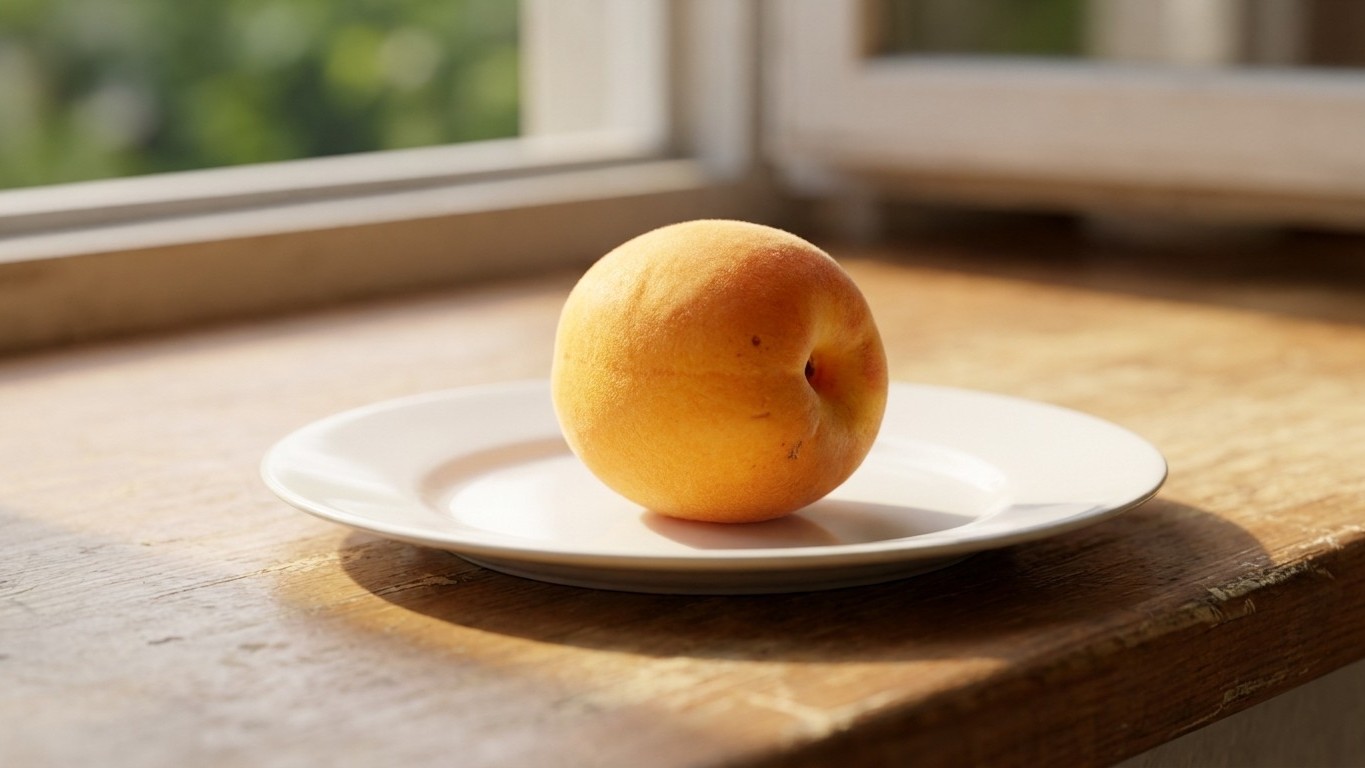
Firm apricots left on a kitchen counter for two weeks will soften, turn a deeper gold, and smell more fragrant. What they won’t do, in most cases, is get noticeably sweeter. That’s not bad luck or bad technique. It’s basic fruit physiology, and it explains why so many home cooks end up with a bowl of pretty, fragrant apricots that still taste flat.
Apricots belong to a category called climacteric fruit, which sounds technical but just means they keep changing after they’re picked. Apricots are considered climacteric fruits, meaning they continue to ripen after being harvested, exhibiting a burst in ethylene production, a plant hormone that triggers ripening. Bananas, avocados, peaches and tomatoes work the same way. So the instinct to pick apricots a touch firm and let them finish at home isn’t wrong, exactly. The problem is what “finishing” actually means for this particular fruit.
Key takeaways
- Apricots stop receiving sugar the moment they’re picked, unlike bananas which ripen from internal reserves
- Softening, color change, and aroma develop quickly after picking—but sweetness doesn’t follow the same timeline
- Most of an apricot’s sugar accumulates while attached to the tree, fed by active photosynthesis from the leaves
Softening, yes. Sweetening, barely.
Here’s the part that trips up most home ripeners: ethylene triggers several processes at once, and they don’t all move at the same speed or with the same intensity. As apricots ripen, starches stored in the flesh convert to natural sugars, making the fruit sweeter off the tree. Ripening causes enzymes to break down pectin in the cell walls, softening the apricot’s texture. The green chlorophyll pigment fades as carotenoids increase, changing the apricot’s skin color from greenish-yellow to warm orange or golden. Ripening increases the production of volatile aromatic compounds that give apricots their delicious fragrance. That’s four separate transformations, and softening plus color change plus aroma tend to happen fast and dramatically. Sugar conversion is the slow, timid cousin in that group.
The blunt version, according to horticultural sources tracking apricot ripening: apricots ripen best left on the tree, where they convert starches into sugar; picked fruit will soften and turn juicier in a paper bag at room temperature, but it will not gain any meaningful sweetness it hadn’t already built before harvest. Franchement, that’s the sentence that should be printed on every farmers market crate. You’re not wrong to think ripening continues. You’re wrong to assume “riper” automatically means “sweeter.”
Why sugar behaves differently than everything else
The biochemistry here is more specific than the generic “starch turns into sugar” explanation you’ve probably heard for bananas. Research tracking sugar and acid accumulation in apricot flesh found that sucrose and glucose were the major sugars in apricot fruit, and the contents of all sugars increased rapidly during fruit development and ripening, with the accumulation pattern shifting from glucose-predominated to sucrose-predominated. Key word: development. Most of that sugar buildup happens while the fruit is still attached to the branch, fed by a steady stream of photosynthate the tree is actively producing and shuttling into the flesh.
Apricot trees don’t rely purely on starch reserves stockpiled inside the fruit the way bananas or some apple varieties do. A lot of the sugar arriving in a ripening apricot travels in as sorbitol, produced through ongoing photosynthesis in the leaves and pumped directly into the developing fruit. Cut that supply line by picking the fruit, and you’ve essentially capped how much sugar it can ever accumulate, no matter how long it sits on your counter afterward. The tree was still actively feeding it sugar right up until harvest, a mechanism far more direct than a slow internal starch conversion that continues independently after picking.
Compare that to something like a green banana, which carries an enormous internal starch reserve built up over its entire growing period. Once picked, enzymes keep breaking that reserve down into sugar for days, and the fruit genuinely tastes sweeter a week later than it did on day one. Apricots simply don’t carry that kind of reserve tank. What sugar is in the flesh at harvest is close to what’s going to be there at the end.
What’s actually happening in that paper bag
None of this means picking apricots slightly firm is pointless. It’s useful for handling and transport, and the fruit genuinely does improve in some respects. Properly harvested mature apricots can successfully soften, sweeten, and develop aroma after picking, but the operative word is “mature”, an apricot picked too green, while technically still climacteric, simply never had enough sugar loaded in before harvest to reach a satisfying result. The apricots may have been picked too early, and while they have softened, they didn’t have enough time to develop their full sugar content. That’s precisely the trap: the texture says “ripe,” the color says “ripe,” and the flavor quietly disagrees.
There’s also a practical, slightly counterintuitive twist. Although apricots are best when fully ripe on the tree, they do have the ability to continue ripening once picked, but tree-ripened apricots generally have superior flavor because natural environmental factors on the tree, like sunlight, temperature, and nutrient flow, help produce subtle flavor compounds that don’t always develop fully off the tree. Sun exposure isn’t just cosmetic. It’s fueling the exact sugar-transport process that stalls the moment the stem snaps.
Getting it right next season
None of this makes home ripening useless. It just changes what you should expect from it, and what you should look for at the point of picking. A few things matter more than patience once the fruit is off the branch:
- Color should already be shifting toward that warm orange-gold before harvest, not just at the stem.
- A gentle squeeze should reveal slight give, not hardness, firm-but-yielding, not rock solid.
- Store picked apricots at room temperature, ideally in a paper bag with some airflow, and avoid refrigeration until they’re ripe, which helps texture and aroma finish properly even if sugar won’t budge much.
The genuinely sweet apricot, the one that tastes like it was grown for the purpose, almost always spent its final week or two of sugar-loading attached to the tree, in full sun, doing the one thing a kitchen counter simply can’t replicate.
Sources : pmc.ncbi.nlm.nih.gov | ncbi.nlm.nih.gov