
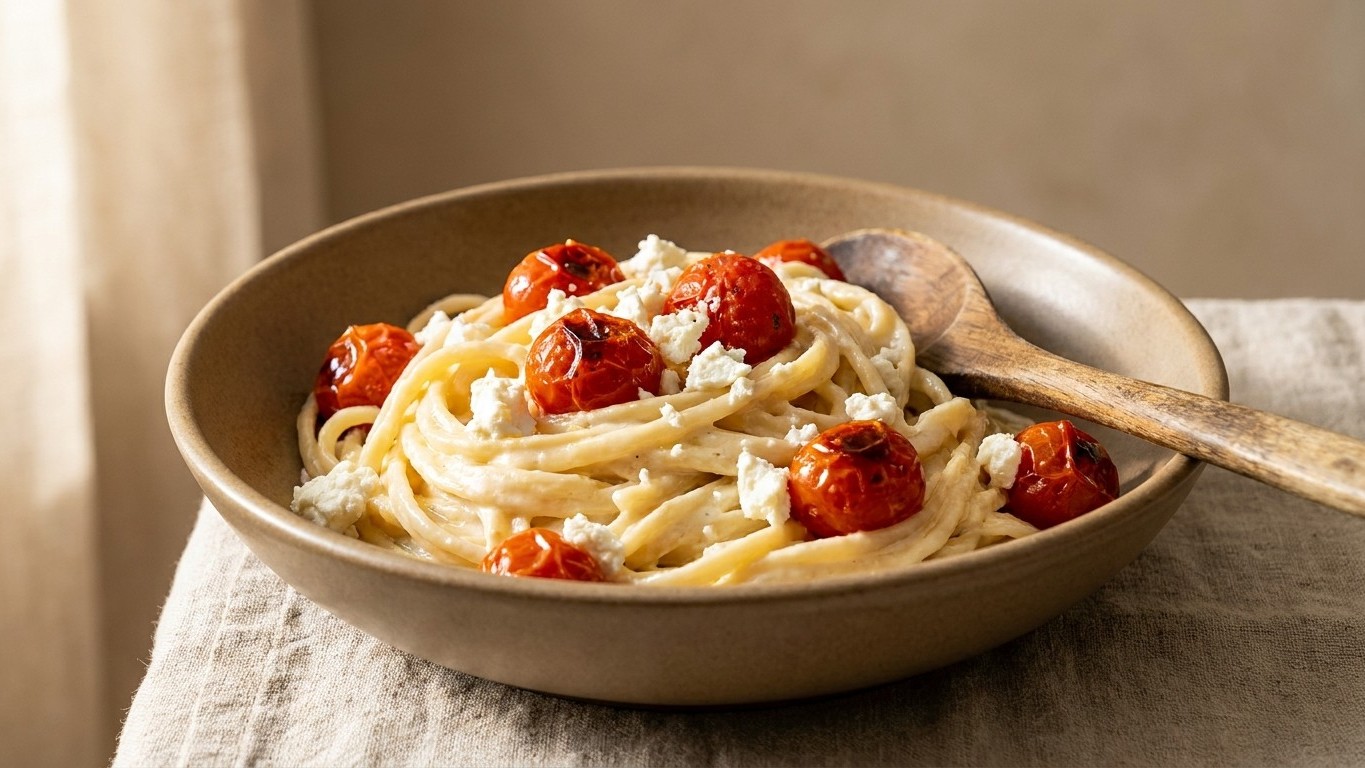
The pot was still steaming when I made the swap. Instead of ladling out that cloudy, starchy pasta water, I tipped it straight down the drain, grabbed a splash of heavy cream, and thought I was upgrading the recipe. Thirty seconds later, stirring the roasted feta into the pasta, the sauce seized into little curdled beads instead of turning silky. That’s when it clicked: the problem was never the feta. It was what I’d just poured away.
Key takeaways
- Why feta’s natural acidity and moisture content make it resistant to melting—and how to choose the right variety
- What pasta water actually does that cream cannot replicate (hint: it’s about emulsion, not just starch)
- The exact timing and temperature trick that prevents proteins from seizing and turning grainy
Why feta resists melting in the first place
Feta has a reputation for turning viral pasta sauces creamy, but the cheese itself is working against you from the start. Unlike fresh goat cheese or Parmesan mixed with a splash of pasta water, feta doesn’t really become creamy when subjected to high heat, staying crumbly and grainy because it’s too acidic and watery to fully melt. That acidity and moisture content aren’t flaws, they’re what make feta taste like feta. But they also mean the proteins never relax into a smooth network the way mozzarella or cheddar do.
The cheese you buy matters more than most recipes admit. Brined feta stays softer, creamier, and more flavorful because it retains moisture better during baking, and authentic Greek feta made from sheep’s milk or a sheep-and-goat blend has a richer taste and smoother texture than cow’s milk feta. Skip the pre-crumbled bags entirely. Reduced-fat or dry packaged feta doesn’t melt as well and can turn grainy, so a block of full-fat feta packed in brine is the safer bet. Even within Greek feta there’s variation worth knowing: Greek feta tends to be saltier, more crumbly, and tangy, which can lead to a grainy sauce, so if you’re a Greek feta fan, look for versions with more sheep’s milk than goat. French and Bulgarian varieties, made almost entirely from sheep’s milk and aged less, land on the creamier end of the spectrum.
The real culprit: what pasta water does that cream can’t replace
Here’s the part that took me an embarrassingly long time to understand. Cream adds richness, sure, but it doesn’t do the one job pasta water was built for: bridging fat and water so they stop fighting each other. An emulsion happens when fat and water, substances that naturally resist mixing, are forced into a stable combination, because under normal circumstances fat molecules prefer to stick together while water molecules do the same, which is why oil and water separate when left to rest.
Pasta water solves that problem chemically, not just texturally. It contains dissolved starch leached from the pasta surface during cooking, and that starch thickens sauces and helps emulsify fat and water-based components so the sauce clings to pasta instead of pooling on the plate. More specifically, starch acts as an emulsifier by bridging the gap between oil and water phases, with starch granule remnants and dissolved amylose helping suspend fat droplets so they coat the pasta uniformly instead of separating. Cream can add moisture and fat, but it can’t perform that bridging function, which is exactly why swapping it in for reserved pasta water backfires with a cheese as temperamental as feta.
Timing makes the graininess worse, too. High temperatures cause cheese proteins to contract and separate from their fat content, so adding cheese after reducing or removing the heat allows it to melt gradually into the sauce without destabilizing the emulsion. Stir hot feta straight into a hot pan with only cream backing it up, and you’ve stacked two mistakes: no starch to stabilize the fat, and no thermal buffer to protect the proteins.
Fixing it (and not repeating my mistake)
The good news is that recovery is quick, and it doesn’t require starting over. Removing the sauce from heat immediately and adding a small amount of warm pasta water, then stirring or whisking vigorously to encourage re-emulsification, gives the best chance of recovery, and the sooner you intervene, the better. If you’ve already dumped the pot like I did, a splash of hot tap water with a pinch of flour whisked in can mimic the starch, though it’s not quite as reliable.
For the baked version specifically, the fix starts before the cheese ever hits the oven. Generously salting the pasta water so it tastes like the sea gives the most tender, flavorful pasta. Then, once the feta and tomatoes come out bubbling, resist stirring in cream at all. Reserve some of the pasta water once it’s boiled to just al dente, then drain, because a splash of that warm, starchy water will help loosen the sauce if it becomes too thick. Add cheese gradually too. Bringing cheese in after the heat drops produces a smoother, creamier texture and greatly reduces the risk of graininess.
There’s a small irony here that I appreciate now. The trendiest baked pasta of the last few years, the one that made feta a pantry celebrity, only works because of the least glamorous ingredient in the whole pot: cloudy tap water that most people rinse away without a second thought. Cream is not a substitute. It’s a different tool entirely, and mixing up the two is the fastest route to a sauce that looks broken on the plate. Next time the pot comes off the boil, the ladle goes into the pasta water first, cream second, if at all.
Sources : foodnetwork.com | eatingbirdfood.com