
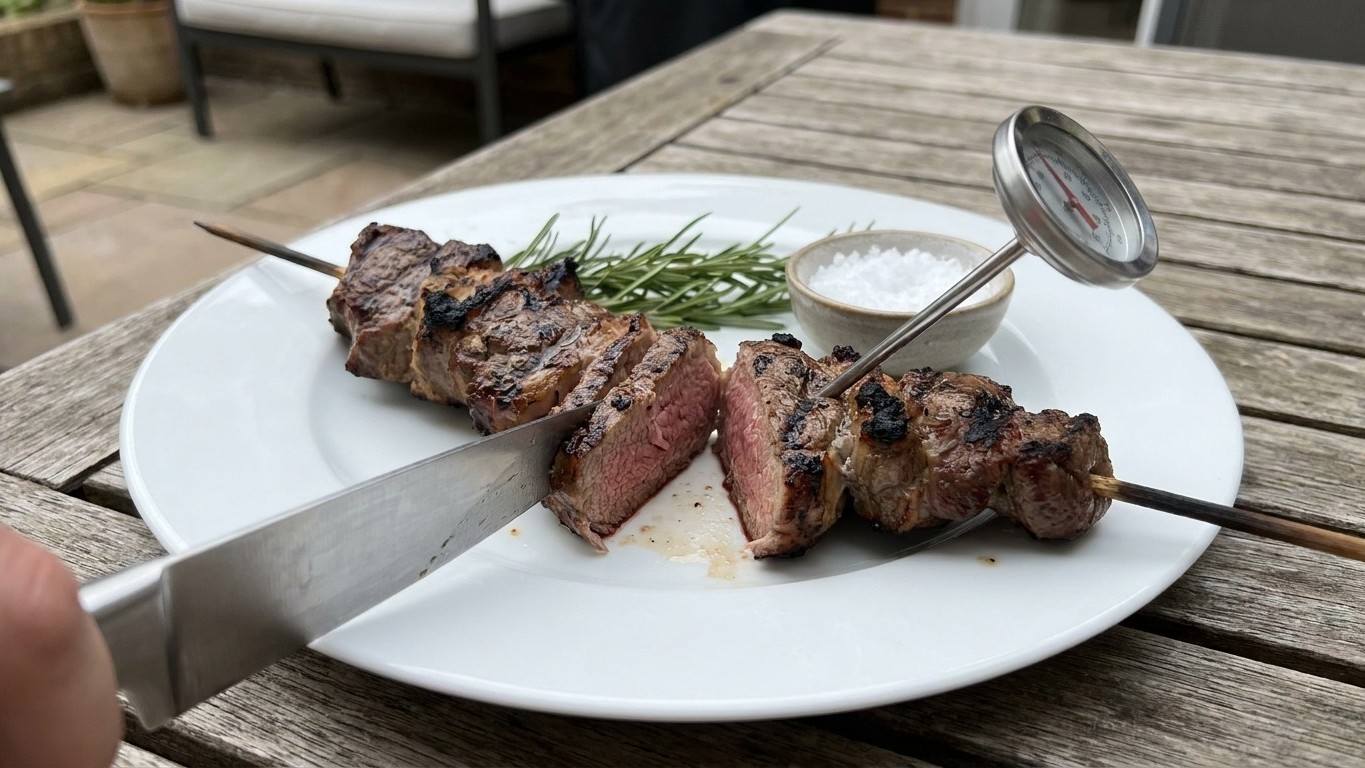
That pink, slightly translucent center inside a grilled lamb or chicken skewer, the one home cooks often defend by saying “it’s been marinating in vinegar for hours, that kills everything”? It doesn’t. The acid in a marinade changes texture and color, but it does virtually nothing to the bacteria that make people sick. Only heat does that job, and only at a specific temperature, held for a specific time.
This is not a fringe opinion. It’s the exact wording used by federal food safety authorities, who have spent years correcting this exact assumption at backyard barbecues across the country.
Key takeaways
- Acid marinades visually ‘cook’ meat but never reach the dangerous center where bacteria actually hide
- The danger zone between 40-140°F is where bacteria multiply fastest—and marinating at room temperature feeds them
- One forgotten step with leftover marinade can undo everything the grill just accomplished
Acid changes the look of meat, not its safety
Washing, rinsing and marinating meat or poultry in saltwater, lemon juice or vinegar will not destroy bacteria. Only cooking to a proper internal temperature will kill harmful bacteria. That single sentence from USDA’s Food Safety and Inspection Service demolishes a belief that’s been passed down through generations of home cooks, the idea that a long soak in something sharp and acidic is basically a chemical oven.
There’s a reason the confusion persists, and it has a name: denaturation. When raw fish is placed in lime or lemon juice, the citric acid denatures the proteins in the flesh. Denaturation is the same chemical process that occurs during cooking, proteins unfold and re-bond, causing the fish to turn from translucent to white and to firm up in texture. Visually, it looks cooked. Ceviche is the textbook example, and even there, food safety specialists are blunt about the limits of what lime juice actually accomplishes.
The citric acid marinade changes its appearance but does not raise the internal temperature, and it is temperature, not acidity, that kills the vast majority of foodborne pathogens. Franchement, that’s the part most home cooks skip right over when they read a ceviche recipe and assume the “cooking” in the title means the dish is pasteurized. It isn’t.
The Science Behind why acid falls short of heat is fairly elegant, actually. If changes to both acidity and temperature can denature proteins, why is acid cooking less effective at rendering the food safe? The short answer is this: the acid can’t cook what it can’t reach. A marinade sits on the surface. It doesn’t drive deep into a thick cut the way heat conducts through the entire piece of meat over time. This softening is called denaturing. Since marinades do not penetrate very far they cannot denature the protein bonds much beyond the surface, so there is little tenderizing beyond the surface. Which means the center of your kabob, the exact spot where salmonella or listeria might be sitting, never actually meets the acid in any meaningful concentration. It only meets whatever heat the grill manages to push through.
The danger zone doesn’t care how good your marinade tastes
The other blind spot in skewer culture is timing. Marinating overnight on the counter “because it’s more traditional” sounds charming until you remember how fast bacteria multiply once meat warms up. Always marinate in the refrigerator, never at room temperature or outdoors when barbecuing, as bacteria can quickly multiply on raw meat if it is warm. Marinating at room temperature causes meat to enter the danger zone, between 40 degrees F and 140 degrees F, where bacteria multiply rapidly. That range isn’t a rough estimate, it’s the exact window where a small, harmless bacterial population turns into a real health risk within a couple of hours.
There’s also a second, sneakier failure point: reusing the marinade itself. Plenty of recipes suggest brushing the leftover liquid onto the skewers as they finish grilling, for extra shine and flavor. Whenever marinade used on raw meat or poultry is to be reused, make sure to let it come to a boil for a few minutes to destroy any harmful bacteria. Skip that boil and you’re essentially painting your fully cooked meat with the exact bacteria the grill just worked to eliminate. It’s a small step, but it’s the one most people forget under the pressure of hosting.
What actually makes a skewer safe
The fix isn’t complicated, but it does require abandoning the visual test (color, juiciness, how “done” something looks on a hot grate) in favor of an actual number. Don’t rely solely on your senses. Use a food thermometer to assure marinated meat, poultry or fish is prepared to a safe minimum internal temperature. When food is cooked to the proper temperature, it won’t be undercooked or overcooked. That last line is worth sitting with. A thermometer doesn’t just prevent illness, it also removes the guesswork that leads to overcooked, rubbery meat.
The actual targets vary by protein, and they’re worth keeping in mind for anyone building mixed skewers with chicken, beef, and shrimp on the same stick:
- Beef, pork, lamb, and veal steaks, chops and roasts: 145°F
- Seafood (fish and shellfish): 145°F
- Ground beef, pork, lamb and veal: 160°F
- Poultry (whole and ground): 165°F
Notice the gap between chicken and beef. That’s exactly why mixed skewers, the kind that look so good on a summer table, are trickier than they seem: chicken chunks threaded next to a piece of steak will hit safe temperature at different moments, and eyeballing the color tells you nothing reliable about either one.
The cross-contamination angle deserves a mention too, since it rarely gets discussed at the grill itself. Never serve cooked meat on the same plate that held raw meat. Bacteria in the raw juices can transfer to the cooked food and cause food poisoning. That plate you carried the raw skewers out on? It needs a wash before the cooked ones go back on it, not a quick wipe with a napkin.
What’s genuinely surprising, once you dig into the science, is how consistent this myth is across cultures and cuisines. Ceviche, ceviche-style ceviches like kinilaw, ike jime marinades in Southeast Asia, vinegar-soaked kebabs in the Mediterranean, all of them rely on the same acid chemistry, and all of them carry the same blind spot when the marinating time gets shortened or the meat gets served rarer than the recipe intended. A thermometer costs less than a decent bottle of marinade oil, and it’s the only tool at that grill actually doing the job people assume the vinegar is handling.
Sources : x.com | kitchentonic.com