
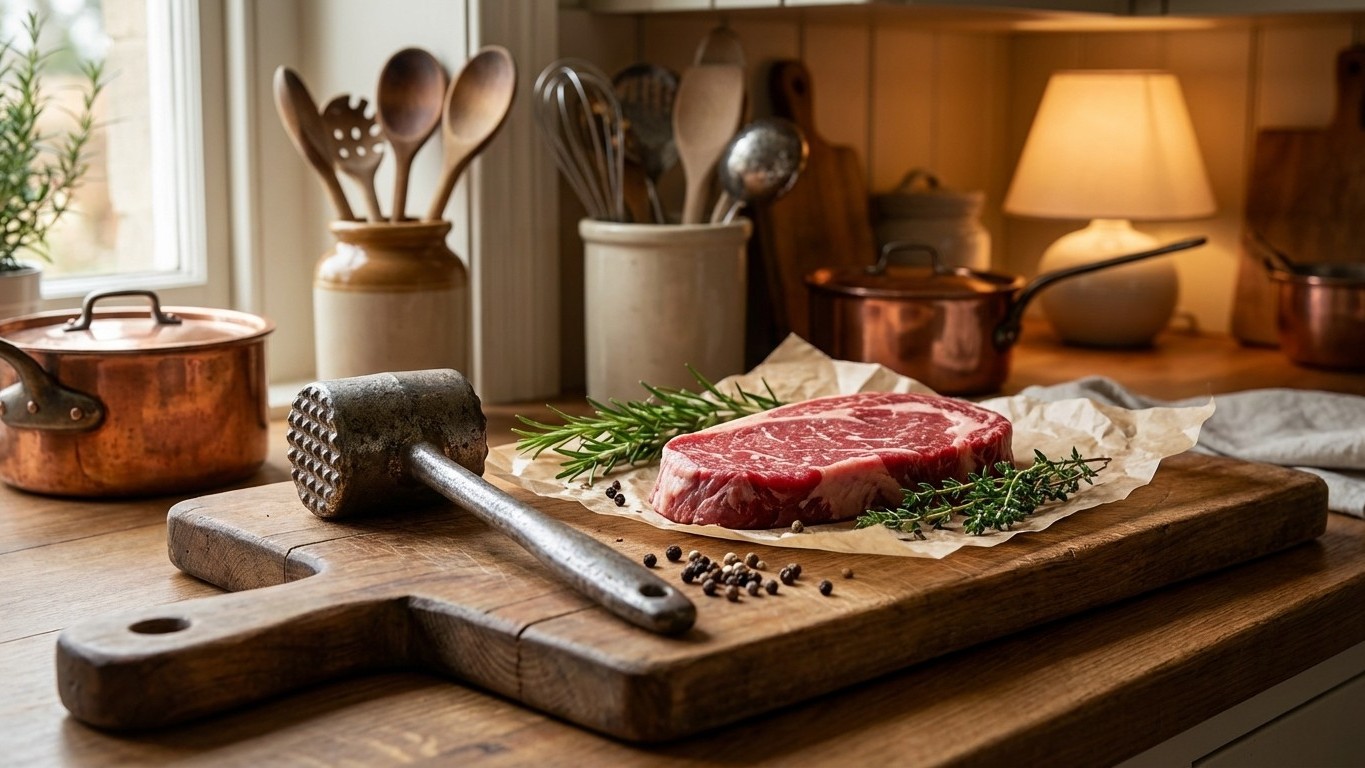
Tucked away in Your grandmother’s Kitchen-gold”>Kitchen-staple-works-miracles-on-my-electric-kettle”>Kitchen-staple-you-usually-throw-away-can-unclog-your-pipes-in-no-time”>kitchen drawer, beneath the collection of wooden spoons and Forgotten gadgets, lies a humble tool that could revolutionize how you prepare red meat. The meat mallet, often dismissed as old-fashioned or unnecessary, is actually one of the most effective ways to achieve restaurant-quality tenderness without relying on Chemical marinades, artificial enzymes, or hours of slow cooking.
This simple tool, typically featuring a flat side and a textured side with small pyramid-shaped teeth, works through mechanical tenderization—a process that breaks down tough muscle fibers by creating tiny perforations throughout the meat. Unlike chemical tenderizers that can alter the meat’s flavor and texture in unpredictable ways, mechanical tenderization preserves the natural taste while dramatically improving the eating experience.
The Science Behind the Hammer
When you pound meat with a mallet, you’re essentially doing what expensive commercial tenderizing machines do in high-end restaurants. The process works by severing the long strands of protein that make certain cuts of beef, pork, and lamb tough to chew. These muscle fibers, particularly prominent in working muscles like the shoulder or leg, are what create that unpleasant chewy texture we associate with poorly prepared meat.
The textured side of the mallet creates small channels throughout the meat, allowing natural juices to redistribute more evenly during cooking. This not only improves tenderness but also enhances flavor penetration, meaning your seasonings and marinades work more effectively in less time. The flat side, meanwhile, is perfect for evening out thickness—crucial for uniform cooking and preventing those dreaded overcooked edges paired with raw centers.
Professional chefs have long understood that mechanical tenderization can transform even the most budget-friendly cuts into restaurant-worthy dishes. A tough round steak, when properly pounded, can rival the tenderness of a expensive filet mignon, making this technique both practical and economical for home cooks looking to stretch their grocery budget without sacrificing quality.
Mastering the Technique
The key to successful meat tenderizing lies in technique rather than force. Place your meat between two sheets of plastic wrap or parchment paper to prevent splashing and contain any small pieces. This also makes cleanup considerably easier and prevents cross-contamination in your kitchen.
Begin with gentle, even strikes using the textured side of the mallet, working from one end of the meat to the other in overlapping patterns. The goal isn’t to pound the meat into submission, but rather to create a consistent network of small perforations. For most cuts, reducing the thickness by about 25-30% is ideal—enough to break down tough fibers without turning your protein into mush.
Different cuts require different approaches. Tougher cuts like chuck roast or bottom round benefit from more aggressive tenderizing, while naturally tender cuts like sirloin need only light treatment to improve their texture. The thickness of your final product Should match your cooking method—thinner for quick searing or stir-frying, slightly thicker for grilling or braising.
Beyond Basic Tenderizing
Once you’ve mastered basic meat tenderization, this versatile tool opens up a world of culinary possibilities. Pounded chicken breasts cook more evenly and absorb marinades faster, while flattened pork chops develop better crusts when seared. Even lamb leg steaks, notoriously tough when improperly prepared, become succulent and flavorful with proper mallet treatment.
The technique also proves invaluable for stuffed preparations. Pounded meat creates the perfect canvas for rolling around fillings, whether you’re preparing classic roulades, stuffed flank steaks, or Italian braciole. The flattened, tenderized surface holds seasonings better and wraps more securely around fillings, preventing the dreaded unrolling disaster that can occur with untreated meat.
For those concerned about food safety, mechanical tenderization actually offers advantages over chemical methods. There’s no waiting time required—you can season and cook immediately after pounding. There’s also no risk of over-tenderizing, which can occur with enzyme-based marinades that continue working even during cooking, sometimes resulting in an unpleasantly mushy texture.
Rediscovering Forgotten Wisdom
In our modern rush toward convenience and technology, we sometimes overlook the simple wisdom of traditional cooking methods. The meat mallet represents generations of culinary knowledge—a time when home cooks understood that The best results often come from understanding your ingredients and treating them with the right techniques rather than relying on shortcuts or artificial enhancers.
This approach aligns perfectly with current trends toward cleaner eating and more natural food preparation. By choosing mechanical tenderization over chemical alternatives, you maintain complete control over what goes into your food while achieving superior results. It’s a technique that works equally well whether you’re preparing a quick weeknight dinner or an elaborate weekend feast.
The next time you’re faced with a tough cut of meat, resist the urge to reach for commercial tenderizers or resign yourself to hours of slow cooking. Instead, embrace this time-Tested method that transforms ordinary cuts into extraordinary meals through nothing more than a few Minutes-since-i-started-this-nightly-habit”>Minutes-daily-since-age-50-what-her-cardiologist-discovered-after-one-year”>Minutes of proper technique. Your taste buds—and Your dinner guests—will thank you for rediscovering this nearly forgotten art.