
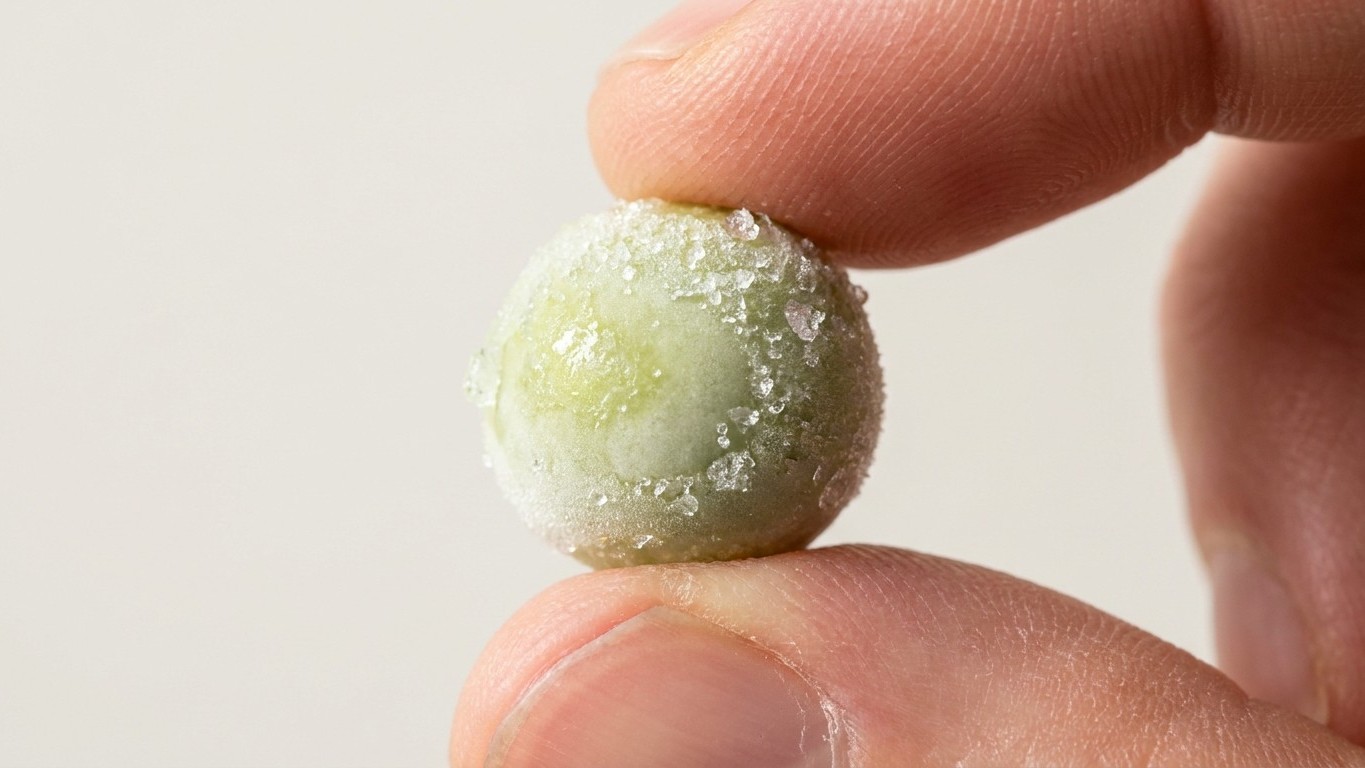
Bacteria in that bag of frozen peas aren’t dead. They’re asleep. And the moment those little green orbs hit room temperature in your mixing bowl, some of them start waking up.
This is the part nobody tells you at the grocery store: freezing is a pause button, not a delete key. The U.S. Department of Agriculture’s Food Safety and Inspection Service is blunt about it. Freezing to 0°F inactivates any microbes, bacteria, yeasts and molds, present in food, but once thawed, these microbes can again become active, multiplying under the right conditions to levels that can lead to foodborne illness. Translation: whatever survived the freezer (and something almost always does) picks up right where it left off once the temperature climbs back into livable territory.
Key takeaways
- Freezing doesn’t kill bacteria—it just puts them to sleep, and they reactivate the second temperatures rise
- The bacterial danger zone (40°F–140°F) is your kitchen counter on any normal day, and bacteria can double in just 20 minutes
- Even pre-blanched frozen peas aren’t safety-sealed, and thawing them wrong turns your salad into a soggy, contaminated mess
The Danger Zone Peas Never Left
Food safety agencies have a name for the temperature range where bacteria throw their party: 40°F to 140°F. It sounds abstract until you realize your kitchen counter, on a summer afternoon, sits comfortably inside it. The USDA has highlighted the “Danger Zone,” a temperature range between 40°F and 140°F in which bacteria can grow rapidly, and certain bacteria can double in as little as 20 minutes in this zone. Twenty minutes. That’s roughly the time it takes to chop the rest of a salad, whisk a vinaigrette, and set the table.
Here’s where the peas-for-a-salad habit gets tricky. Most people dump frozen peas straight into the bowl, let them thaw at room temperature “for convenience,” then walk away to finish other prep. But if food thaws at room temperature, its surface will warm up much faster than its interior, creating a window where the surface reaches temperatures conducive to rapid bacterial growth while the center is still frozen. So you get a pea that’s simultaneously an ice cube at its core and a bacterial incubator on its skin. Not exactly the crisp, fresh bite you were hoping for.
The safety agencies are equally strict about the clock. Per USDA guidelines, perishable foods should not be left in the Temperature Danger Zone for more than two hours total, and if the ambient temperature is above 90°F, that time limit shrinks to one hour. A picnic salad sitting on a hot patio table isn’t a garnish problem anymore. It’s a countdown.
Why Peas Aren’t Quite “Raw” to Begin With
Here’s the contradiction that trips up even careful home cooks: frozen peas aren’t raw vegetables in the strict sense. Before they ever touch a freezer, they go through blanching, a brief dunk in boiling water or steam. Blanching is the most widely used pre-treatment for vegetables before freezing, involving briefly immersing produce in boiling water or steam, then rapidly cooling it in ice water, and it stops enzyme activity that would otherwise cause loss of flavor, color, and texture during frozen storage. This step is why frozen peas taste sweeter and greener than you’d expect from something that spent months at subzero temperatures.
But blanching isn’t pasteurization, and it isn’t a permanent safety seal. Blanching improves food safety by killing bacteria that might be on the vegetables, since many bacteria are sensitive to heat and are destroyed when exposed to the high temperature of boiling water or steam. Still, some heat-resistant organisms can survive, and anything the peas pick up afterward, during packaging, storage, or your own kitchen handling, doesn’t care that the peas were once blanched. That’s why extension food Scientists keep repeating the same instruction even for pre-treated frozen vegetables: food safety experts from university extension services consistently recommend cooking frozen vegetables before eating them. The University of Maine’s Cooperative Extension is even more direct about it, noting that cooking your frozen vegetables kills the bacteria, making them safe to eat.
There’s also a texture story hiding underneath the safety one, and it’s honestly the more interesting piece for anyone trying to build a decent pea salad. Freezing produce crystallizes internal water, rupturing plant cell walls, and upon thawing or heating, this leads to a limp, watery, and mushy texture. That’s why a bag of thawed peas dumped straight into a bowl of lettuce so often turns the whole thing soggy within the hour. It’s not your dressing ratio. It’s physics.
The Fix Isn’t Complicated. It’s Just Not Instant.
So what actually works, if you’re set on peas in a cold salad rather than a hot side dish? Skip the counter entirely. Cold water thawing sidesteps the danger zone almost completely. Cold water below 70°F prevents bacterial growth while gently thawing. Submerge the sealed bag, or peas in a bowl of cold tap water, for a few minutes, drain thoroughly, and they’re ready. No mush, no bacterial head start.
A quick blanch-and-shock does even more for texture, essentially re-running the same trick the processing plant used. Drop the peas in boiling water for sixty to ninety seconds, then plunge them into ice water to stop the cooking instantly. Rapid cooling in ice water stops the cooking process before the peas turn soft, locking in that snap you actually want in a salad.
A few habits are worth building into muscle memory regardless of method:
- Never let thawed peas sit out longer than two hours, one hour if it’s a hot day or an outdoor gathering
- Drain thoroughly before mixing them in, since leftover water dilutes dressing and waters down flavor
- Use them within 24 hours of thawing, and don’t refreeze once they’ve warmed up
- Skip hot or warm water shortcuts, which partially cook the outer layer and guarantee mushiness
None of this means frozen peas are a liability. They’re actually a smart pantry staple, picked and blanched within hours of harvest, often retaining more nutrients than the “fresh” peas that traveled for days to reach a produce aisle. The real lesson is smaller and a little more humbling: that bag in the freezer door isn’t inert. It’s biology on hold, waiting for the exact moment you set it on the counter to remember what it was doing before you put it there.
Sources : extension.umaine.edu | nchfp.uga.edu