
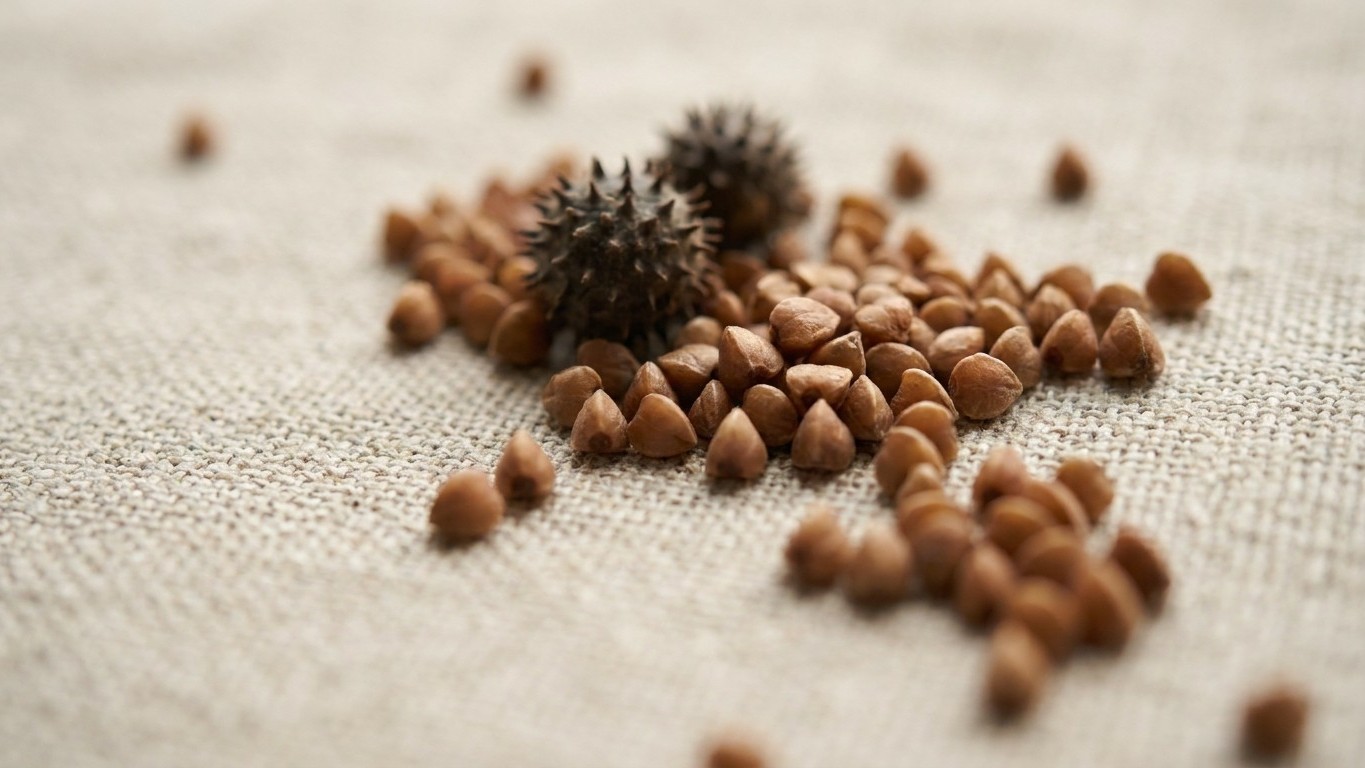
A single Datura seed slipped into a batch of buckwheat flour can survive a griddle heated to 400°F without losing its punch. That’s the uncomfortable truth behind a string of food safety alerts tied to buckwheat galettes and crêpes, the same nutty, gluten-free staple that’s been quietly taking over brunch menus and health food aisles on both sides of the Atlantic. The culprit isn’t a pesticide or a mold. It’s a wild plant that grows right alongside the grain, gets harvested with it, and refuses to break down no matter how hot the pan gets.
The plant in question is Datura stramonium, also known as jimsonweed or thorn apple. It’s a member of the nightshade family that thrives in the same fields as buckwheat, millet, sorghum and corn. Thorn Apple or Jimson Weed is a tropane alkaloid containing widespread pest plant that predominantly occurs in millet, buckwheat and maize cultivation. Left unchecked, it can grow over a meter tall, roughly the same height as a mature buckwheat plant, which means it doesn’t just compete for sunlight and nutrients. Its seeds end up mixed into the harvest almost by design.
Key takeaways
- A weed called datura grows alongside buckwheat and its seeds look almost identical to grain—but they contain powerful toxins
- Cooking temperatures that kill bacteria and most contaminants leave these toxins completely untouched
- Recent poisoning incidents in France, Slovenia, and India sent hundreds to emergency rooms with hallucinations, confusion, and cardiac symptoms
A weed that impersonates the grain
What makes this contamination so hard to catch isn’t just where the plant grows. It’s what it looks like once it’s threshed. Whole buckwheat grain is grey-brown and pyramidally shaped, roughly 3-4 mm in size, while Datura seeds are dark brown, kidney shaped and approximately 2-3 mm in length, similar enough to buckwheat grain that they can be difficult to distinguish and separate. A single seed pod on one plant can produce up to 200 seeds, so a modest weed infestation translates into a real contamination risk once the harvest hits the mill.
Sorting equipment can filter out plenty of foreign material, but not always this. Good agricultural and harvesting practices minimize contamination by seeds of species containing tropane alkaloids such as Datura stramonium, and for some cereals those seeds can be removed by sorting and cleaning, but they cannot easily be removed from sorghum, millet, maize and buckwheat. That’s not a minor technicality. It’s the reason buckwheat flour keeps showing up in recall notices year after year, in France, in Slovenia, in India, regardless of how careful the supply chain claims to be.
Why the griddle doesn’t save you
Here’s the part that upends the usual food safety logic. Most contaminants, bacteria especially, get neutralized by heat. Tropane alkaloids don’t play by those rules. Heat resistance of atropine and scopolamine from datura was demonstrated in a study where bread made from contaminated flour retained between 72 and 100% of the alkaloids present in the flour after baking. Pour that batter onto a hot griddle, flip it, brown it to a crisp edge, and the toxic compounds are still there, essentially untouched.
Atropine and scopolamine act directly on the nervous system, and the effects aren’t subtle. Datura contains naturally high levels of tropane alkaloids such as atropine and scopolamine, which can contaminate crops and provoke acute intoxication with symptoms including dry mouth, dilated pupils, blurred vision, confusion, hallucinations, an accelerated heart rate, incoherent speech and balance problems. This isn’t a theoretical risk buried in a lab report. In Slovenia, a mass poisoning incident involving 73 consumers with symptoms such as dry mouth, hot red skin, blurred vision, tachycardia, disorientation and visual hallucinations occurred in 2003, after consumers had eaten buckwheat flour products contaminated with thorn-apple seeds. More recently, a 2025 incident in New Delhi sent close to 200 people to emergency rooms after eating buckwheat flour, prompting local health authorities to launch door-to-door warnings.
France has its own long paper trail. An intoxication that sent 18 people to emergency rooms in the Provence-Alpes-Côte d’Azur region was traced to organic buckwheat flour contaminated with datura, a wild plant known for its high toxic alkaloid content, according to an investigation by the regional health agency. The pattern has repeated itself since, with dozens of product recalls issued for buckwheat flour and pancake mixes since late 2018, and a fresh wave of poisonings linked to an organic brand’s buckwheat flour reported by Brittany’s regional health authority as recently as 2024.
The organic irony nobody wants to talk about
Franchement, this is the part of the story that flips the usual assumptions on their head. Organic buckwheat is, statistically, more likely to carry this contamination, not less. Herbicides had until now resolved the problem, but their prohibition, while beneficial for the environment, is closely tied to the resurgence of these alerts, compounded by the weed’s high capacity to proliferate. Without chemical weed control, Datura simply grows more freely among the crop, and hand-sorting or mechanical sieving can only catch so much when the intruder seed is nearly the same size and color as the grain it’s hiding in.
Regulators have responded by tightening the numbers rather than banning anything outright. With effect from September 2022, the European Commission set new maximum levels for tropane alkaloids under Regulation (EU) 2021/1408, extending the existing 1 µg/kg limit for atropine and scopolamine in cereal-based foods containing millet, sorghum or buckwheat to baby foods containing maize as well. Those thresholds were later folded into the EU’s broader contaminants regulation. In France, food safety agency ANSES went further for buckwheat flour specifically, dropping its recommended threshold from 100 µg/kg to just 16 µg/kg in 2019, a sixfold tightening that reflects how seriously the agency now treats even trace contamination.
None of this means buckwheat itself deserves to be blacklisted from the pantry. It remains one of the more nutritionally dense gluten-free grains available, and the vast majority of galettes served in creperies or sold in stores never come near a contaminated batch. But the next time a recall notice flags a specific lot number of buckwheat or millet flour, it’s worth actually checking the date and lot code instead of shrugging it off, because unlike almost every other food safety issue in your kitchen, this is one that browning, boiling or baking simply cannot undo.
Sources : researchgate.net | semanticscholar.org