
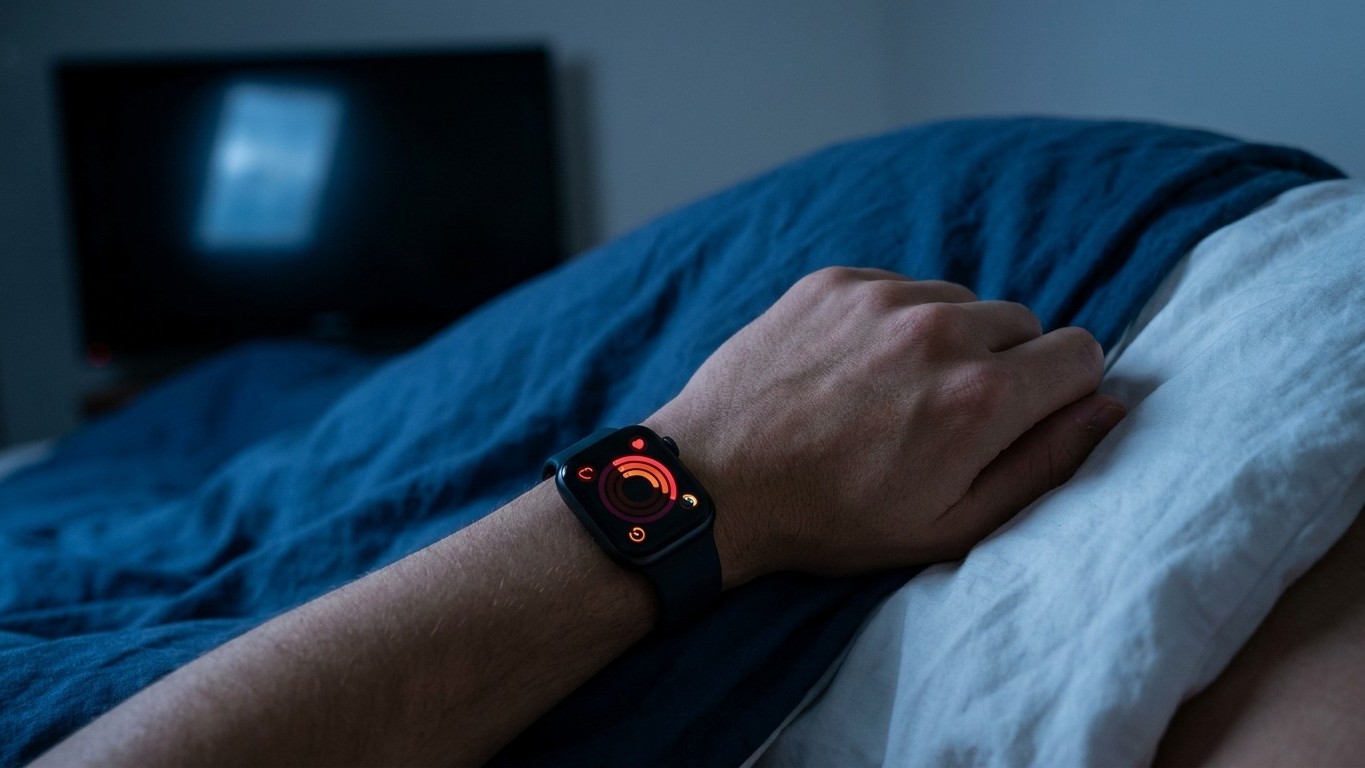
Two years. Seven nights a week, sometimes more, “one more episode” kept pushing bedtight past midnight, then past 1 a.m., then well into territory that no amount of coffee the next morning could fully undo. Nobody forced the habit. Nobody even framed it as a problem until a wrist monitor spent seven days quietly counting what that stolen hour was actually costing.
The habit has a clinical name now, and it isn’t flattering: bedtime procrastination. The first form involves delaying the act of getting into bed, while another is delaying the time of trying to fall asleep once in bed, a problem tied to rising electronic device use. A person may engage in one or both, each of which can reduce nightly sleep. The “revenge” part of the phrase didn’t come from a therapist’s office. The English term “revenge bedtime procrastination” emerged as a translation of an expression in Chinese reflecting frustration tied to long, stressful work hours that left little time for personal enjoyment. It’s a strangely accurate description for a decision made at 11:45 p.m. with a remote in hand, half-convinced that staying up is the only real leisure time available.
Key takeaways
- A two-year late-night streaming habit masked itself as personal freedom—until the numbers told a different story
- That one stolen hour triggers a cascade of biological damage: heart attacks spike 24% after losing just 60 minutes, and memory consolidation crumbles before you even feel tired
- The trap is chemical: the more sleep-deprived your brain becomes, the worse it gets at making the decision to actually stop
The Hour That Feels Free but Isn’t
A sleep specialist put it more bluntly than most streaming platforms would like. “Revenge” was added to the term recently and is a more descriptive term for the motivation for bedtime procrastination, identifying it as related to work/life balance and the need to “reclaim” personal time, becoming a form of rebellion against work and daytime schedules, according to Dr. Ivy Anderson, a sleep medicine specialist with Banner Health. That framing matters because it explains why willpower lectures rarely work. The urge isn’t laziness, it’s a stress response dressed up as self-care, and it comes with a documented cost. The effects of sleep deprivation may become even more worrisome with procrastination, since sleep deprivation has been linked to reduced self-regulation and impulse control, meaning it can become part of a reinforcing negative cycle of reduced sleep and worse overall health.
That’s the trap, exactly. The tireder the brain gets, the worse it becomes at making the very decision (close the laptop, turn off the light) that would fix the tiredness. Two years inside that loop stops feeling like a choice at all.
What the Wrist Data Actually Showed
Strapping on a tracker doesn’t just measure sleep, it appears to change it. In a randomized crossover trial testing a wearable device against sleep logs alone, researchers found something unexpected. Perceived sleep disturbance scores improved noticeably during the week participants wore the tracker compared with the week they didn’t, with an adjusted difference between conditions of 1.69. Simply watching the numbers seemed to nudge behavior toward better habits, even before any coaching was involved.
But the numbers themselves deserve a dose of skepticism. Consumer wearables are notoriously imprecise about certain metrics, particularly the deep breakdown of sleep stages, and a national survey found something almost counterintuitive about who reaches for them in the first place. Compared to nonusers, wearable users reported 13 minutes longer sleep onset latency, slept about 1 hour less, and endorsed more severe insomnia symptoms. People strap on the monitor precisely because something already feels off. The device doesn’t create the problem; it just finally puts a number on the one-hour deficit that late-night streaming had been quietly running for two years straight.
One Hour, Compounding Every Single Night
Sixty minutes doesn’t sound like much until it’s stacked against a body’s actual machinery. The clearest real-world proof comes not from a lab but from an annual national experiment nobody signed up for: the spring clock change. A widely cited Michigan Medicine analysis of hospital admissions found that there is a 24 percent jump in the number of heart attacks occurring the Monday after we “spring forward” for daylight saving time compared with other Mondays throughout the year. Cardiologists point to a specific mechanism behind that spike. “When we sleep, our heart is able to rest and go into a restoration mode where it can restore itself, and our entire cardiovascular system can rest and repair,” explains Kelsie Full, a behavioral epidemiologist at Vanderbilt University Medical Center. Steal that hour long enough, night after night, and the restoration window simply never fully opens.
The brain pays its own separate tax. Cognitive testing after sleep restriction shows measurable damage well before anyone would call themselves “sleep deprived” in the dramatic, all-nighter sense. Poor sleep impairs memory consolidation by disrupting the normal process that draws on both NREM and REM sleep for building and retaining memories, and evidence increasingly suggests sleep enhances most types of cognitive function. REM sleep specifically, the stage most likely to get truncated when bedtime shifts an hour later, has a documented next-day payoff. Results from a 14-day diary study indicated that during nights when individuals had more REM sleep minutes than was typical, they performed better on a working memory task the next morning. A shortened REM window doesn’t announce itself the next morning as fatigue. It shows up sideways, as a forgotten name, a fumbled sentence, a decision made a beat too slowly.
Breaking a Two-Year Habit Without Hating the Habit
The fix isn’t dramatic, and frankly the internet oversells the idea that quitting screens cold turkey solves everything overnight. Sleep hygiene experts keep circling back to the boring basics: rather than powering through days with caffeine and sugar, limiting daytime naps to 30 minutes or less taken earlier in the day makes a measurable difference, as does setting up a relaxing pre-bedtime routine, whether that’s brushing teeth, reading, or gentle stretches, and following the same routine each night. None of that is glamorous. None of it involves a single app subscription.
What the week of wrist data actually revealed wasn’t some hidden disease. It was arithmetic. One stolen hour, repeated 730 times over two years, adds up to roughly a month of missing sleep, and the body keeps a ledger whether or not anyone’s watching. The tracker didn’t fix anything. It just made the bill impossible to ignore any longer, one restless heart-rate spike at 2 a.m. at a time.
Sources : ncbi.nlm.nih.gov | ynetnews.com