
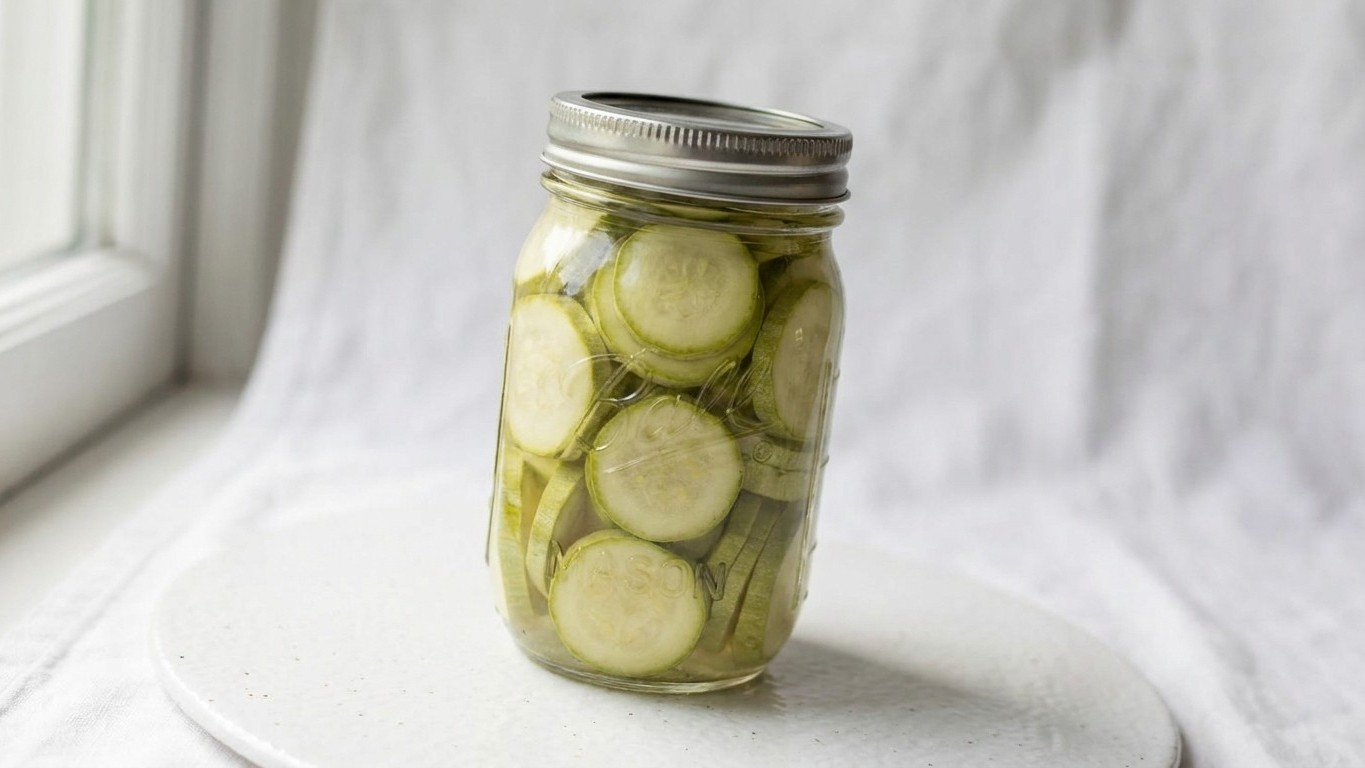
Home canners across the country are getting the same warning this summer: courgettes sealed in jars through a simple boiling water bath are not safe to eat, no matter how careful the recipe looks. The U.S. Department of Agriculture actually pulled its own zucchini canning instructions years ago, and extension offices from Georgia to Wisconsin have spent the years since trying to get that message to stick.
The reasoning comes down to chemistry, not tradition. The USDA withdrew recommendations for canning zucchini and summer squash because of uncertainty about adequate processing times, since squash are low-acid vegetables that require pressure canning to destroy the bacteria that cause botulism. Researchers went back to check the old recipes and could not find documentation for the previous processing times, and attempts to reproduce the old process did not result in adequate heating to ensure safety. That’s not a small technicality. It means decades of family recipes, the ones passed down on index cards, were built on numbers nobody can actually verify.
Key takeaways
- Your grandmother’s courgette recipe may have worked by luck, not science—the USDA abandoned its own zucchini canning guidelines
- Botulism produces zero warning signs: no smell, no taste, no visible clues, making the sniff test completely useless
- A sealed mason jar is the ideal home for anaerobic botulism bacteria, and boiling water baths cannot reach the 250°F required to kill the spores
Why boiling water simply isn’t hot enough
A rolling boil tops out around 212°F at sea level. That’s plenty to kill most food-spoilage organisms, and it’s exactly why water bath canning works beautifully for jams, pickles, and tomatoes with added acid. Zucchini’s pH tells a different story. Home-canned vegetables, which are low-acid foods, are the most common cause of botulism outbreaks in the United States, and pressure canning is the only recommended method for canning low-acid foods because a boiling water canner will not protect against botulism.
Here’s the part that catches people off guard. Clostridium botulinum doesn’t need oxygen to thrive, it actually prefers the opposite. The bacteria are anaerobic, meaning they live and grow in low oxygen conditions, and they form protective spores with a hard coating that lets the dormant bacterium survive for years. A sealed mason jar, packed tight with soft-cooked squash, is essentially a five-star hotel for this organism, an oxygen-free, room-temperature environment left undisturbed on a pantry shelf for months.
The spores themselves are almost absurdly tough. Botulism bacteria die at boiling, but spores die at 250°F, and the toxin that actually causes the disease breaks down at 185°F or by boiling for 10 minutes. That temperature gap between “boiling” and “250°F” is exactly the gap a pressure canner closes and a water bath never can. A pressure canner heats food to 240°F, hot enough to destroy Clostridium botulinum, which is why it’s required for safely canning zucchini.
The scariest part: you’d never know
Franchement, this is the detail that should worry home preservers more than any pH chart. Botulinum toxin gives no warning whatsoever. Botulinum toxin cannot be seen, smelled, or tasted, and it’s one of the most lethal substances in the world. No off smell when you open the jar. No cloudy liquid, no bulging lid, no sour tang to make you pause with the spoon halfway to your mouth. The jar can look, smell, and taste completely normal while quietly harboring a neurotoxin that attacks the nervous system.
Federal health agencies are blunt about what that means in practice. If in doubt, throw it out, and never taste food to see if it’s safe, because you cannot see, smell, or taste the toxin that causes botulism, and taking even a small taste of food containing it can be deadly. That single sentence upends the instinct most cooks trust most: the sniff test. With courgettes canned this way, your nose is useless as a safety check.
There’s also a myth worth killing off here, the idea that a splash of lemon juice or vinegar can rescue a water bath recipe. Adding acid like lemon juice or vinegar can help preserve zucchini and enhance flavor, but it isn’t enough to make it safe for water bath canning, since it may not sufficiently lower the pH to prevent Clostridium botulinum growth. Squash’s naturally low acidity and dense, water-heavy texture make it stubbornly resistant to the kind of acidification that works for cucumbers or green tomatoes.
What to do with a mountain of zucchini instead
None of this means courgette season has to end in the compost bin. It just means redirecting that abundance toward methods that are actually tested and proven.
- Freezing after a quick blanch remains the simplest, most reliable option for cubed or shredded zucchini destined for soups and baked goods.
- Pickling works, but only with a tested recipe designed around vinegar’s acidity, like bread-and-butter style squash pickles processed in a boiling water bath specifically because the added acid changes the equation entirely.
- Pressure canning is the one path that allows plain, unpickled zucchini pieces to go into jars, though even extension experts note the texture often turns disappointingly mushy by the time it’s safe.
Most home economists, if pushed, will admit freezing wins on both safety and quality. Squash canned under pressure for the required time can end up being such poor quality that it’s basically unusable, a mushy, waterlogged version of the vegetable that started fresh from the garden.
One more detail worth tucking away: even properly canned low-acid foods carry a backup safety net. Boiling home-canned food 10 minutes at elevations below 1,000 feet should destroy the toxin if it’s present, with one additional minute added per 1,000 feet of elevation above that. It’s not a substitute for correct processing, but it’s the kind of five-minute habit that costs nothing and, in rare cases, could matter enormously.
Sources : hgic.clemson.edu | cookingexpertise.com